Kypseli in one paragraph
Kypseli lies north of Victoria, between Patission Avenue and the streets around Fokionos Negri. In the 20th century it went through periods of urban prosperity, with apartment buildings, cinemas, cafes, and a strong street life. From the 1990s onward, many migrant communities settled here, bringing different languages, cuisines, shops, and daily habits from different parts of the world. In recent years it has also attracted younger Athenians, small creative offices, and cultural initiatives.
Fokionos Negri: the pedestrian spine
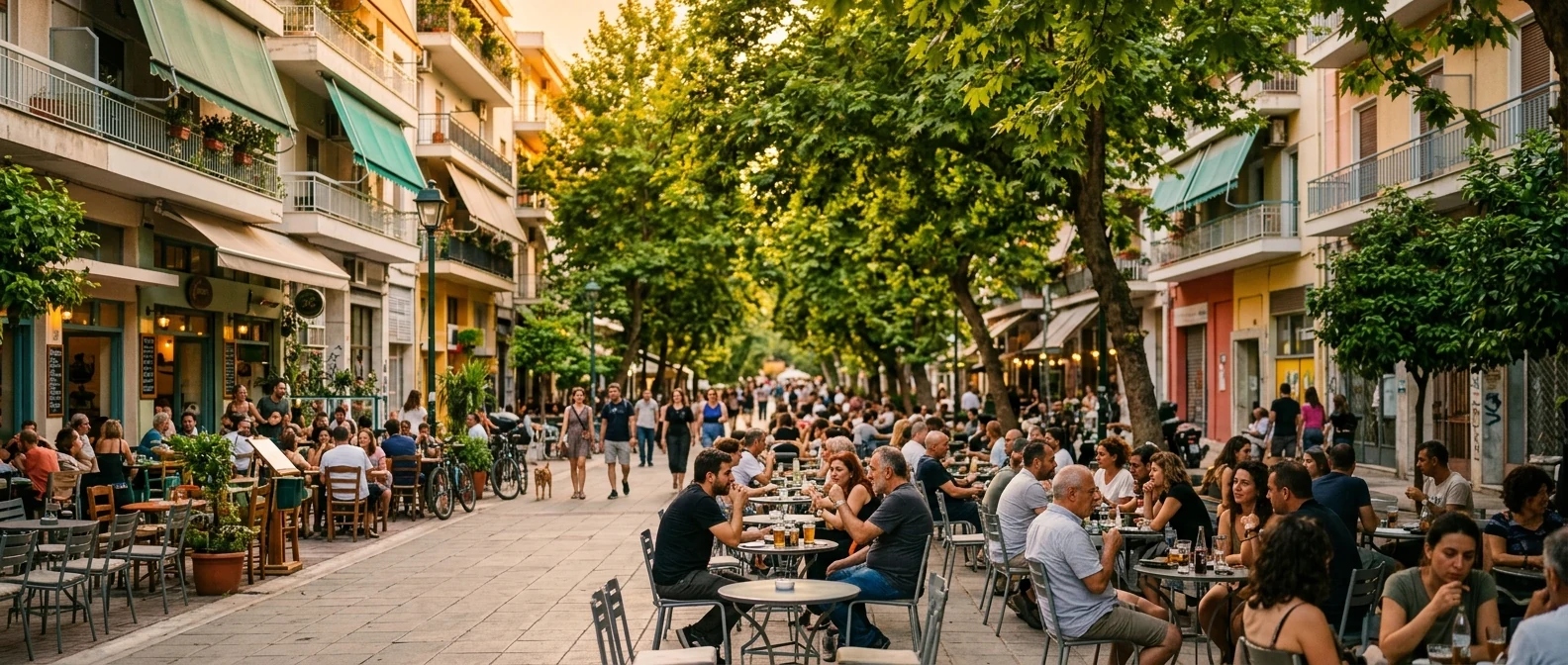
Fokionos Negri is the most recognizable axis of Kypseli: a long pedestrian street with trees, benches, cafes, small shops, and steady movement. During the day you will see older residents in the cafes, families, younger groups, people on work breaks, international groceries, and Greek bakeries. Its strength is this everyday coexistence, not a single “sight” that is finished after one photo.
📍 From Angels Athens to Kypseli · Fokionos Negri
See at a glance how to get from the apartment at Iouliánou 50 to the heart of the neighborhood. Drag the map and zoom for detail.
The neoclassical and modernist architecture
Kypseli's preserved buildings
The neighbourhood has notable neoclassical and modernist apartment buildings, with curved balconies, geometric details, older ground-floor shops, and entrances worth noticing. Some buildings are protected or have particular architectural interest, while others need more care. For a walk, look at the streets around Fokionos Negri, Patission, Pringkiponnison, and Aristotelous.
The food map
African + West African
Small places with West African and other African dishes, often simple and family-run. Ask what is being cooked that day.
Filipino karinderyas
Food shops and small kitchens serving adobo, pancit, and dishes aimed mainly at the community, but open to curious visitors too.
Egyptian + Sudanese
Fuul, ta'amiya, shawarma, juices, and simple plates in smaller everyday shops.
Bangladeshi + Pakistani
Curry, biryani, halal butchers, and smaller shops with bread or snacks. The options change, so it is worth walking around and seeing where people are going.
Greek tavernas
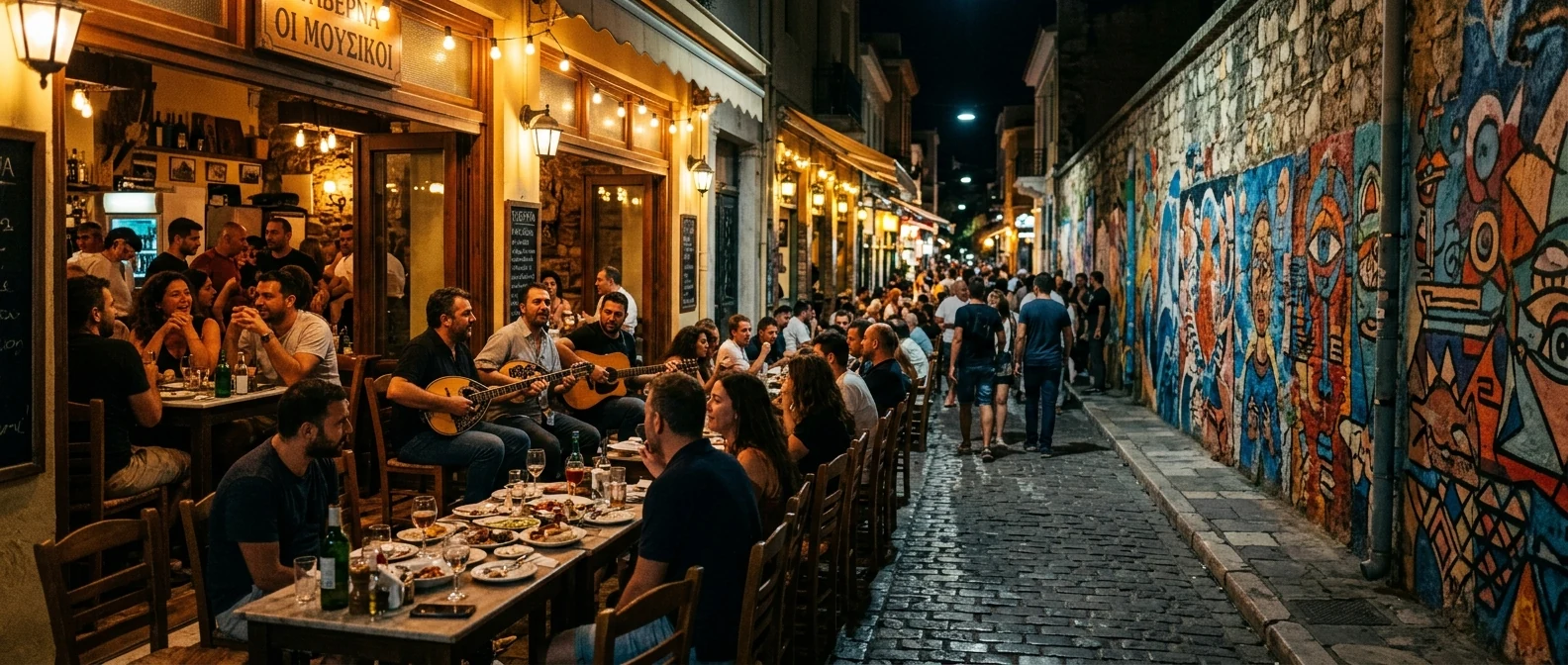
Meze, grilled dishes, salads, wine, and simple neighbourhood food, usually in a lower-key style than in the tourist areas.
Greek bakeries
Bakeries for bread, cheese pies, spinach pies, koulouri, and breakfast on the go.
Cafe culture
The cafe strip of Fokionos Negri runs almost the full length of the pedestrian route:
- Traditional cafes for Greek coffee, newspapers, and tavli.
- More modern cafes for espresso, filter coffee, and a younger crowd.
- Brunch spots with eggs, sandwiches, salads, and sweets.
- Pastry shops for galaktoboureko, baklava, cakes, and ice cream.
Cultural venues
- Kypseli Municipal Market is a restored historic building hosting cultural events, exhibitions, and markets. The programme changes, so check online first.
- Historic cinemas and older buildings still hold part of the old urban image of the area, whether they are active or waiting for a new use.
- Small theatres and music venues host performances, music, and smaller productions.
- Kypseli Park is small but green, and works well for family walks on weekends.
What gives Kypseli its character
Many communities
The neighbourhood includes residents from different countries and generations, something you notice in the shops, the languages, and the food.
Old and new together
Neoclassical houses, modernist apartment buildings, older cafes, newer spaces, and small creative offices can all exist on the same block.
Fokionos Negri
The pedestrian route is the natural walk of the neighbourhood. It is better not to rush through it; the value is in the pauses.
Close to Victoria
From Victoria Square you can reach Kypseli on foot in reasonable time, depending on which part of the area you want to see.
The Kypseli walk
- Start at Plateía Kypséli — the central square. Cafés around the perimeter. Watch local life.
- Walk along Fokionos Negri without rushing and stop for a coffee somewhere in the middle.
- Turn off toward Patission or Aristotelous to look at apartment facades and the older ground-floor shops.
- Try an international cuisine in one of the smaller places if you want something beyond the usual choices.
- Visit the Kypseli Municipal Market if there is an exhibition or a local food event on.
- Have a coffee in a traditional cafe if you want a slower rhythm.
- Finish at a Greek bakery and return on foot toward Victoria.
How to get there
From Victoria
15-20 minutes on foot via Patriarchou Ioakeim. This is the standard route and a pleasant, residential one.
Metro
The most useful station for most visitors is Victoria on Line 1, followed by walking or a bus or trolley.
Bus / trolley
Several lines run on Patission and Patriárchou Iōakeím. Check OASA app for routes.
Walking from city centre
From Syntagma it is a longer walk. It is better combined with the Archaeological Museum, Patission, or Pedion tou Areos.
Safety
Kypseli is a busy residential area. During the day and early evening, the main streets and Fokionos Negri have plenty of movement. Late at night, use well-lit streets and avoid emptier side streets, as you would in any dense central neighbourhood. Watch your phone and wallet in busier areas.
The slow gentrification
- Prices are rising in some parts as Kypseli becomes better known.
- New work spaces are opening, from small studios to cafes and cultural initiatives.
- The balance is delicate: the neighbourhood still has residents, everyday shops, and communities that should not turn into simple scenery.
- The renewal of the municipal market is a central point for cultural investment.
Suggestions for one dinner
For one evening in Kypseli
- 17:00-18:00: Walk along Fokionos Negri from end to end and decide where you want to eat.
- 18:00-19:00: Coffee in a traditional cafe or in a more modern one.
- 19:30: Dinner in a Greek or international place in the area.
- 21:00: Dessert in a pastry shop or a second coffee on Fokionos Negri.
- 22:00: Return toward Victoria through the well-lit streets, or take a taxi if you are tired.
Frequently asked questions
Is Kypséli safe at night?
The main streets and Fokionos Negri stay active into the evening. Very late at night, use well-lit routes or take a taxi.
Tourist-friendly?
Yes, but it is not a tourist showcase. In some small shops, English may be limited. Politeness, simple words, and a little patience are usually enough.
Best meal here?
If you want something different, try one of the smaller international kitchens in the area. If you prefer Greek food, there are tavernas, bakeries, and traditional cafes for more familiar choices.
Family-friendly?
Yes. Fokionos Negri helps because it is pedestrianized, but watch for bicycles, scooters, and the general movement.
Where do creative Athenians live?
Kypseli attracts quite a few younger professionals, artists, and small creative offices, mainly because of cost, buildings, and the liveliness of the neighbourhood.
Best time of year?
Spring and autumn are the easiest seasons for walking. Summer has some shade on the pedestrian route but also more heat, while winter is quieter.
Sources:
— Kathy