Plaka in one paragraph
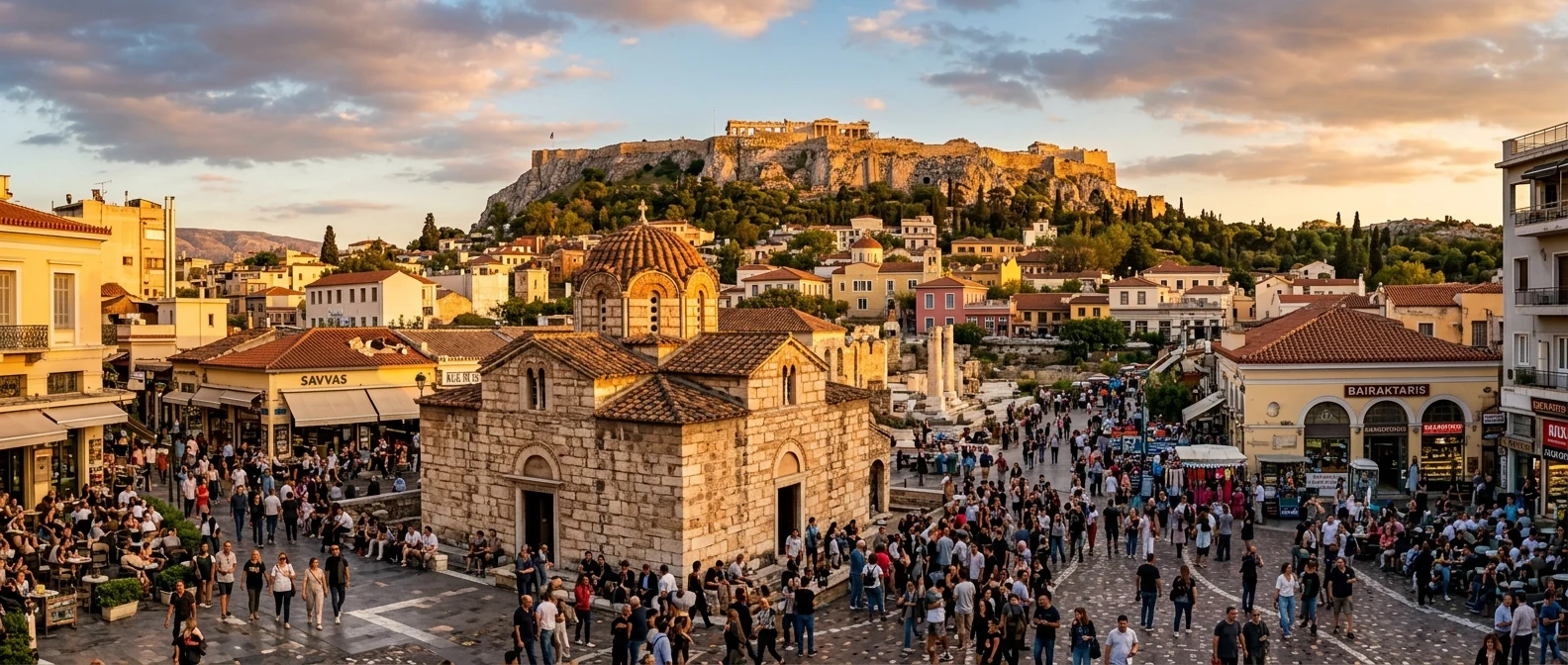
Plaka is the historic neighborhood below the northern and eastern slopes of the Acropolis. The area has a very long continuity of settlement, but its present form mainly keeps traces of Ottoman street planning, neoclassical houses, Byzantine churches, and archaeological sites visible inside the modern city. For a visitor, it helps to think of it in two zones: Lower Plaka, more commercial and tourist-oriented, near Syntagma and Monastiraki, and Upper Plaka / Anafiotika, more uphill, residential, and quiet.
The two parts of Plaka
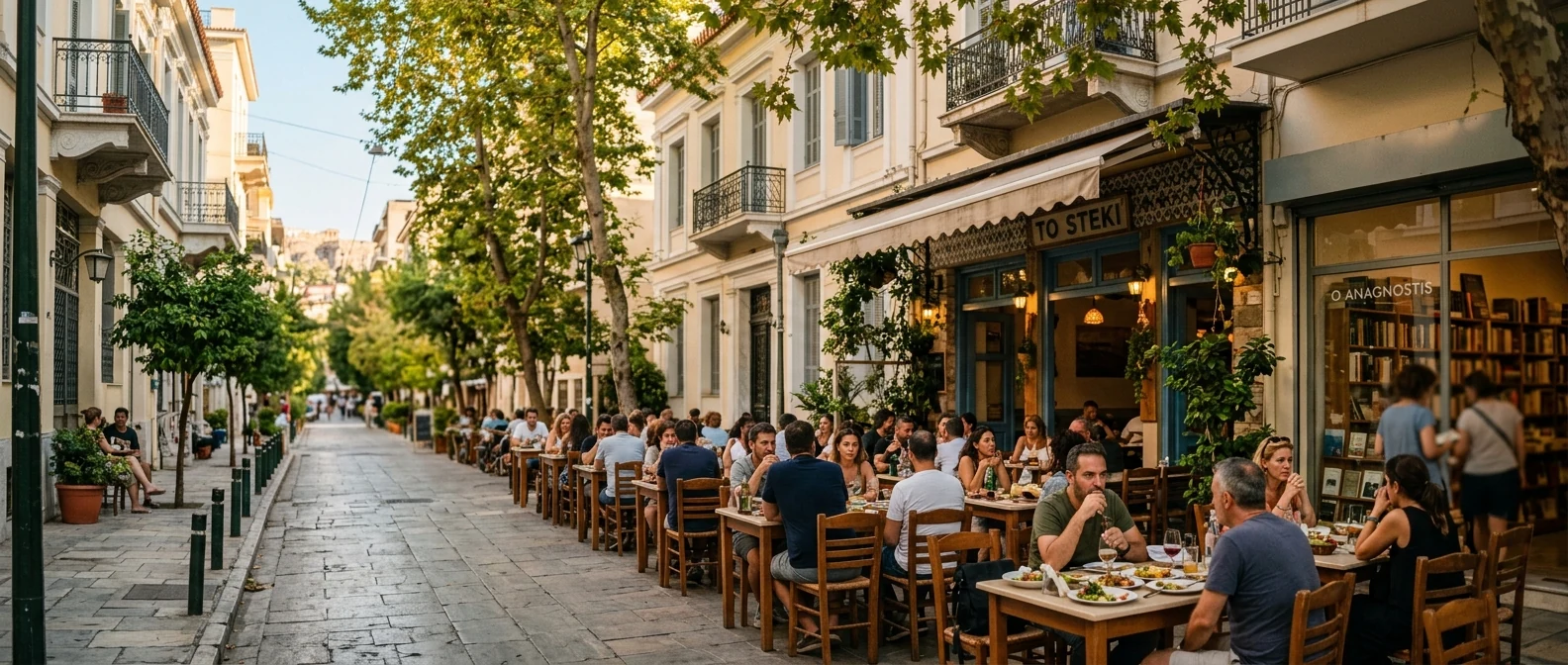
Lower Plaka (Adrianou Street)
Adrianou and the nearby streets have restaurants, souvenirs, leather goods, evil-eye trinkets, and heavy movement. It is a convenient area, but prices often follow tourist demand.
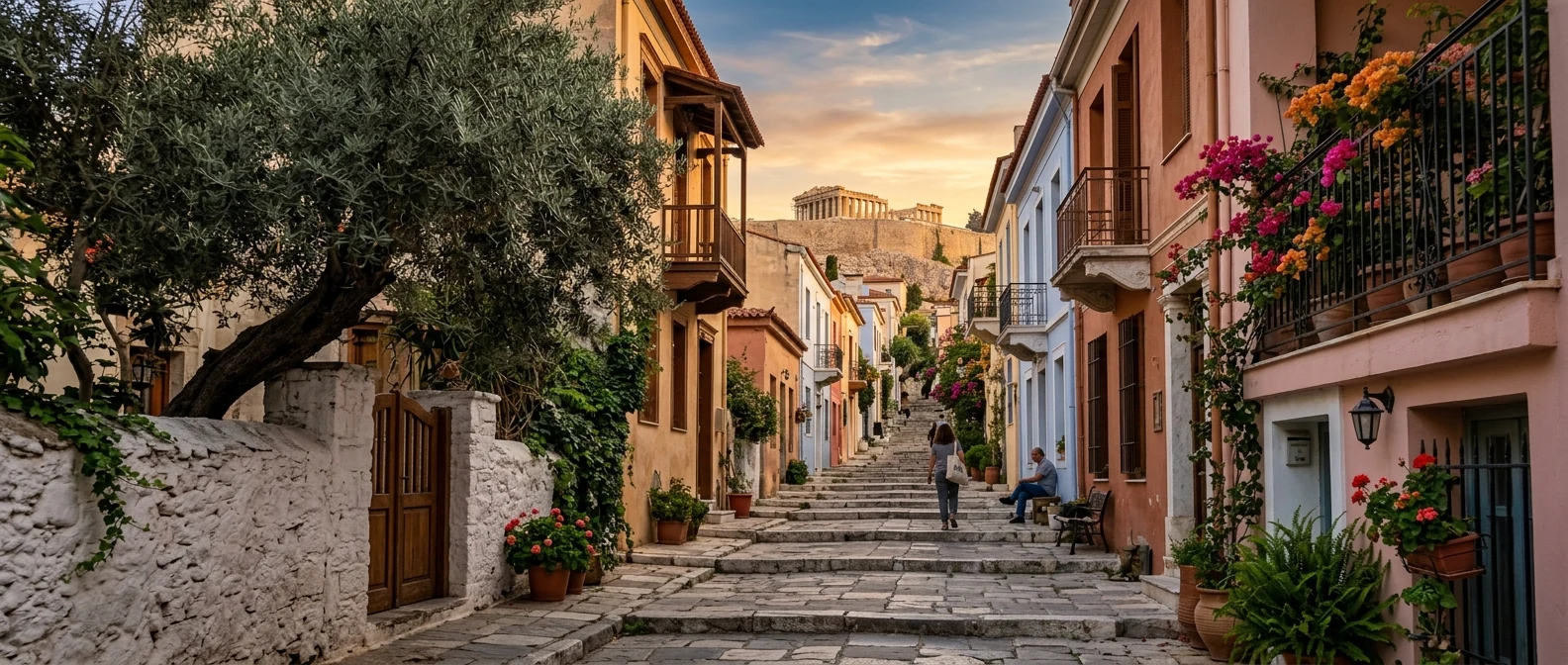
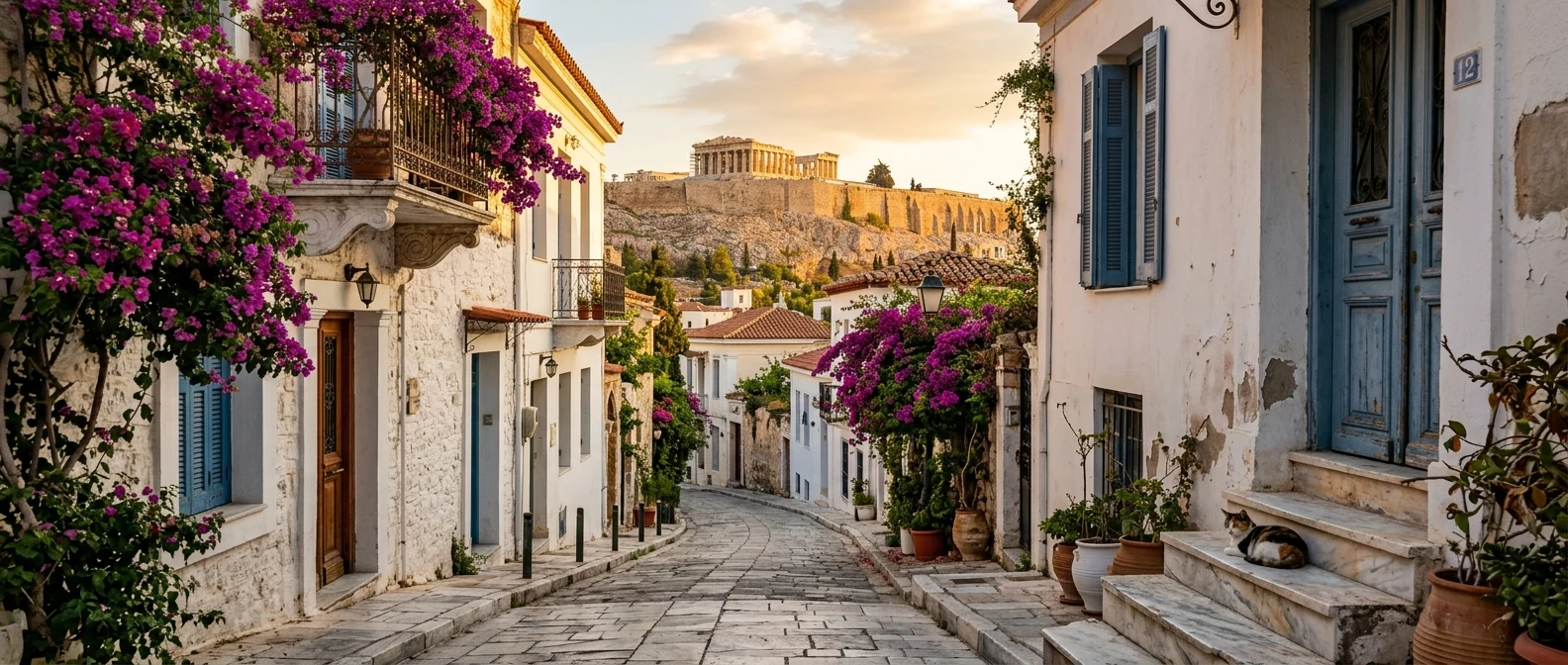
Upper Plaka (residential)
Above the Roman Agora, the streets narrow, the shops become fewer, and residential life shows more clearly. This is where Plaka is better read with slower walking.
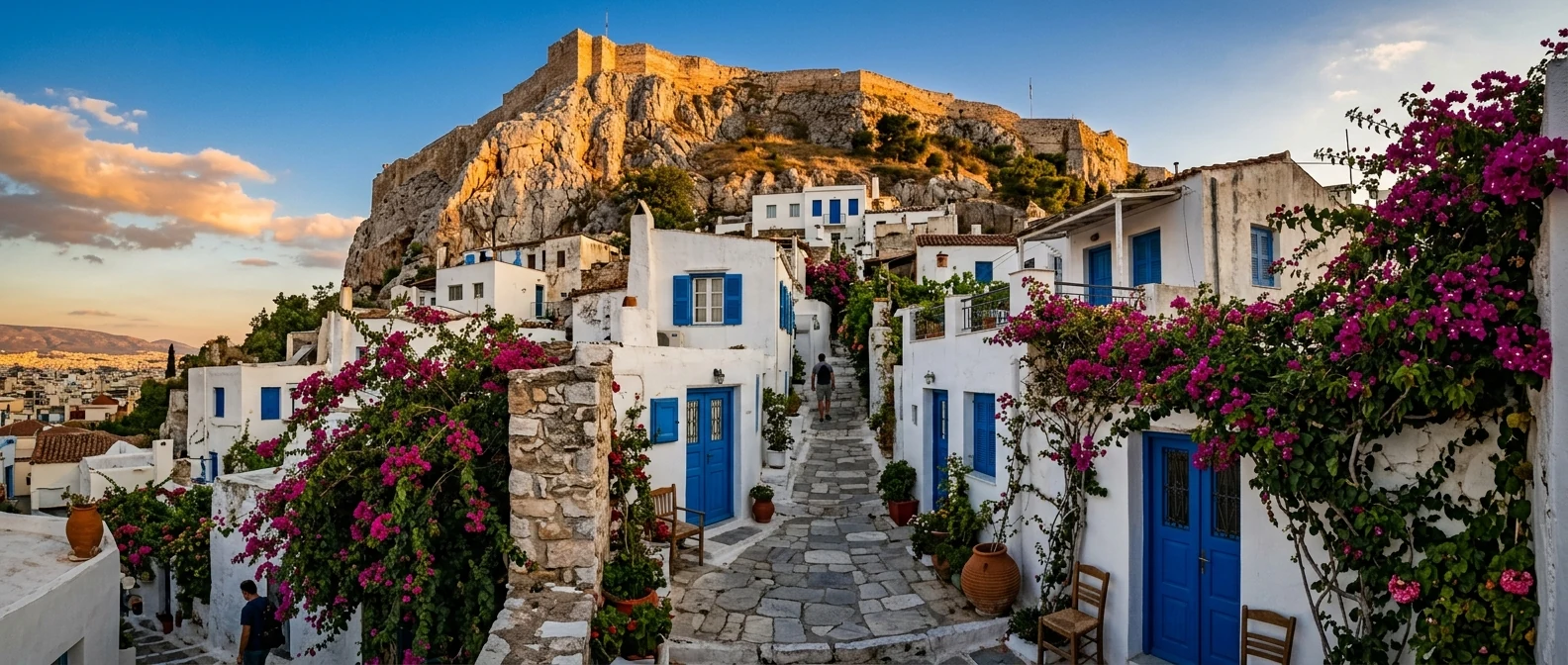
Anafiótika
A small enclave with a Cycladic feel on the northern slope of the Acropolis. It is a residential area, not a set, so it needs discretion. See the Anafiotika guide.
Plaka's edges
Filellinon, Mitropoleos, Kydathinaion, and Adrianou give you the main orientation. From there, smaller lanes branch off in every direction.
📍 From Angels Athens to Plaka
See at a glance how to get from the apartment at Iouliánou 50 to the heart of the neighborhood. Drag the map and zoom for detail.
The archaeological sites you will pass
- Roman Agora and the Tower of the Winds: a Roman commercial center and the Tower of the Winds, the well-known octagonal monument that worked as a clock and weather instrument. See the Roman Agora guide.
- Hadrian's Library: a 2nd-century CE Roman complex, with large columns visible from the street. Check tickets and opening hours before going inside.
- Lysicrates Monument: a small choregic monument from the 4th century BCE, in a quiet square in southeastern Plaka.
- Ancient Agora: west of Plaka, with entry from the area of Adrianou or Areos Street. See the Ancient Agora guide.
- Walk along the north and east slope of the Acropolis: a pedestrian route on the edge of Plaka, useful as a transition toward Anafiotika or Dionysiou Areopagitou.
The Byzantine churches woven into Plaka
Metamorfosi tou Sotiros
A small Byzantine church on the northern slope of the Acropolis. It is easy to miss, which is exactly why a quiet stop is worth it.
Agios Nikolaos Ragavas
A Byzantine church on a residential lane in Upper Plaka. If it is open, go in quietly and photograph with respect.
Kapnikarea
A Byzantine church on Ermou, near the edge of Plaka. It is an active church and a good place to see how old Athens still stands inside a commercial street.
Mitropolis (Cathedral)
The 19th-century Greek Orthodox cathedral. Next to it stands the much smaller and older Little Metropolis, which is worth a short stop.
Where to eat in Plaka with some care
A practical rule for restaurants
Plaka has many restaurants, and quality varies a lot. You do not need to avoid the area, but it helps to choose with some care:
- A multilingual menu and strong invitation at the entrance: not always bad, but it often suggests a place that depends on passersby.
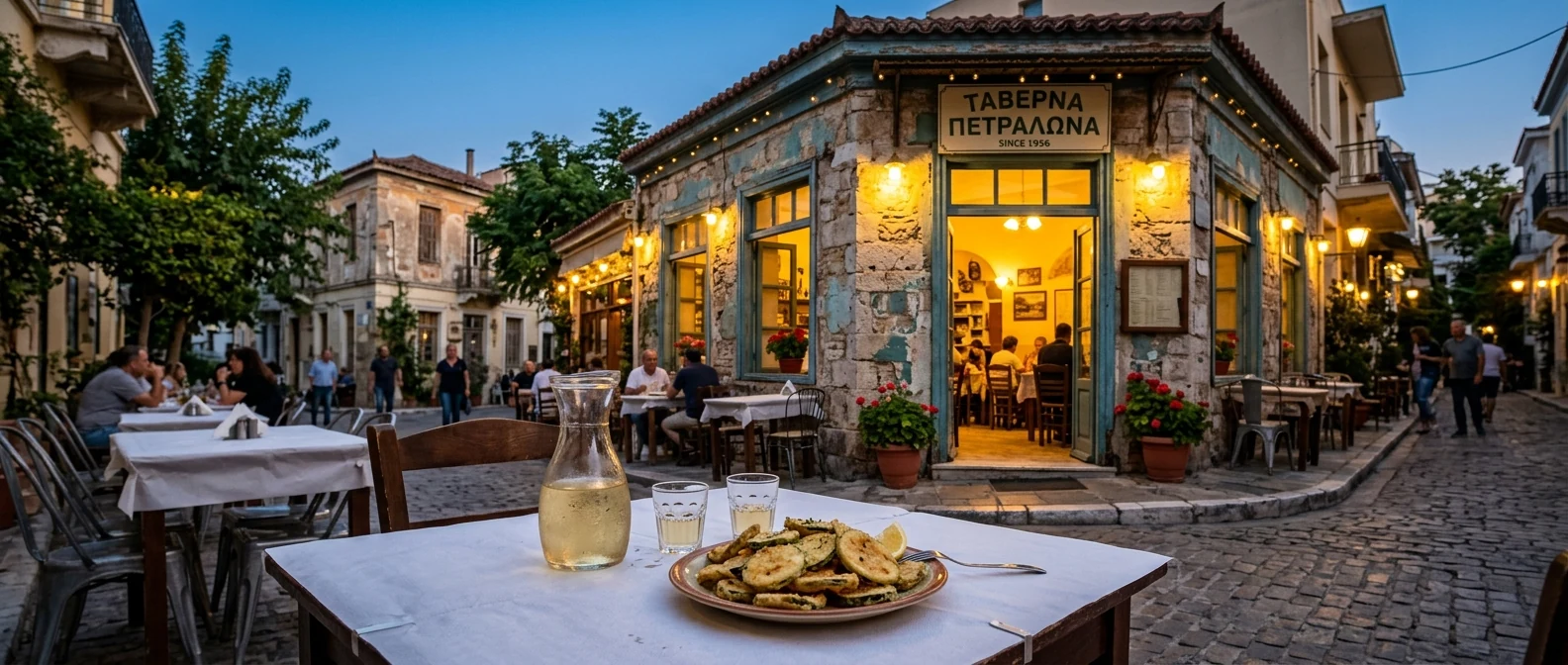
- Side streets: they often have calmer tables and a better price-to-quality balance than central Adrianou.
- Look at the menu before sitting down: check prices, portions, and any bread or cover charges.
- Steady clientele: if you also see Greek-speaking groups, that is usually a better sign.
- A smaller menu: this is often more reassuring than a huge list that promises everything.
Restaurants and cafes worth checking
- Taverna tou Psarra: an old Plaka name with history and atmosphere. Check the menu first, because it is still in a tourist area.
- Yiasemi: a cafe-restaurant in Upper Plaka, known for its steps and more relaxed stop within a walk.
- Liondi: an option for traditional food on a quieter street, depending on the hour and the crowds.
- Daphne's: a historic name in the area for a more expensive outing. Check whether it is open, the current menu, and recent reviews.
- Glykys: a cafe-meze place on a small lane, useful for a simpler stop.
- What to avoid: places where the pressure at the entrance is strong and the menu promises everything.
A photographic walk through Plaka
- Lysicrates Monument square: early in the morning, when there are fewer people and the monument reads clearly.
- The lanes of Anafiotika: as early as possible and always with respect for the residents.
- The steps of Mnisikleous Street: for movement, stairs, and small angles toward the Acropolis.
- The Tower of the Winds: late in the afternoon, when the light falls more softly on the monument.
- Agios Nikolaos Ragavas: a good stop on a morning route through Upper Plaka.
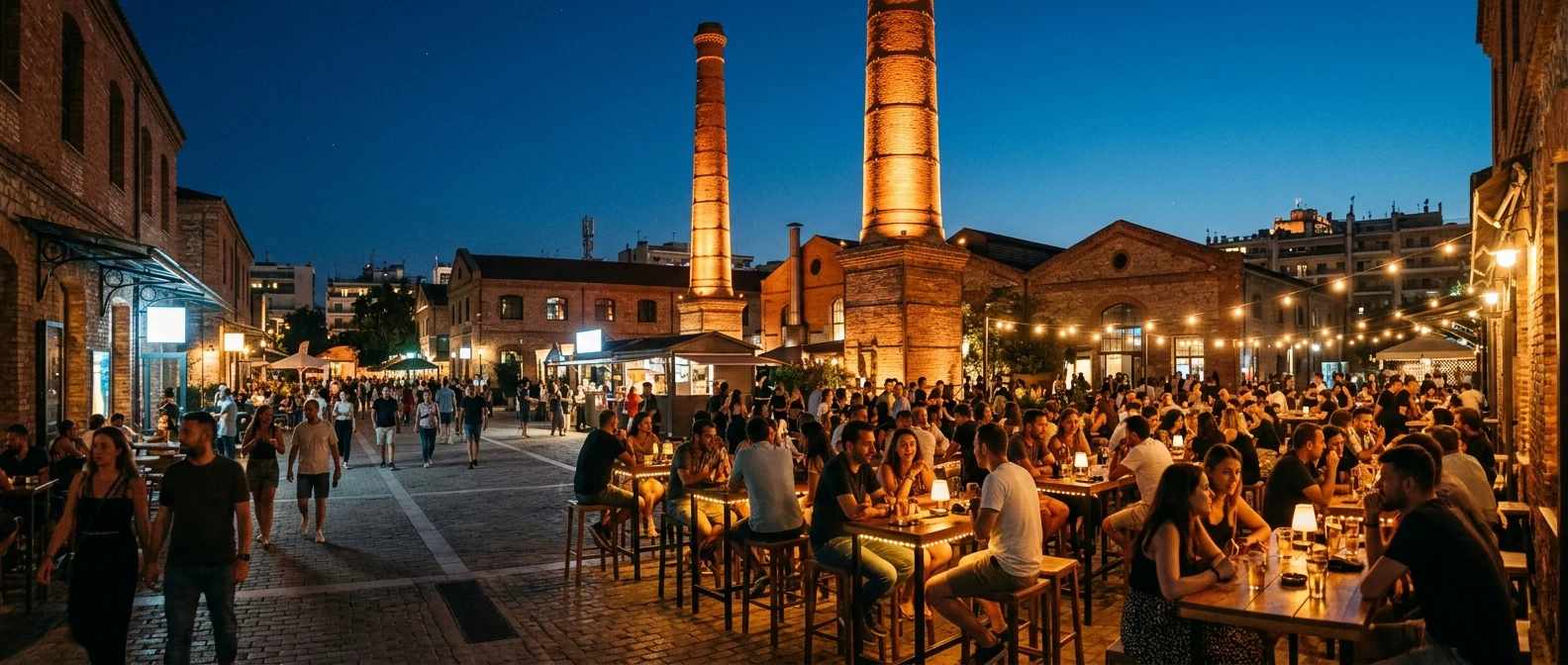
- Pikilis or Adrianou in the evening: light from restaurant tables and a livelier atmosphere, with plenty of people around.
How to enter and move around
- Syntagma metro (Lines 2 and 3): a good entrance for eastern Plaka and the Cathedral, with only a few minutes of walking.
- Monastiraki metro (Lines 1 and 3): practical for western Plaka, Adrianou, Pandrosou, and the Roman Agora.
- Acropolis metro (Line 2): a good entrance for the southern side, Dionysiou Areopagitou, and the Lysicrates Monument.
- Inside Plaka: mostly on foot. There are cobblestones, steps, narrow pavements, and uphill stretches, so comfortable shoes make a difference.
Best times for Plaka
07:00-09:30
Quieter streets, better light, and fewer groups. A good time for Anafiotika and Upper Plaka.
10:00-15:00
The fullest part of the day. In summer, Adrianou can become hot and tiring.
17:00-19:30
A good time for photos, coffee before dinner, and milder temperatures.
20:30-23:00
Dinner time, with full restaurants. On the main streets, prices are usually higher.
Pickpockets and practical caution
- Metro and crowded streets: keep your wallet and phone in a closed bag or front pocket.
- Persistent invitations into restaurants: walk past politely if you do not want to sit down.
- Suggestions for bars or clubs from strangers: better to avoid them, especially if they come with pressure or a "special price."
- Bracelets, roses, and small vendors: do not take something in your hand if you do not intend to pay for it.
- The restaurant bill: check prices before ordering and ask if anything is unclear.
Shopping in Plaka: what is worth a look
- Leather sandals: there are workshops and shops with handmade work, but also many mass-produced products. Ask clearly where and how they are made.
- Silver jewelry: look for a material mark and, where possible, a maker's or workshop stamp.
- Komboloi: quality changes a lot depending on the material. More specialized shops explain the differences better.
- Mastiha products: safer to buy from specialist shops than from general souvenir places.
- Olive oil, honey, and spirits: check the producer, date, and packaging, especially if you are traveling with hand luggage.
- Mass-produced souvenirs: magnets, key rings, and t-shirts are everywhere. Buy them only if you already know you want something simple and touristy.
Plan for "Plaka in 4 hours"
Half-day Plaka loop
- 09:00: Start at Syntagma and walk via Mitropoleos toward the Cathedral.
- 09:30: Stop at the Little Metropolis next to the larger church.
- 10:00: Walk toward Pandrosou and Lower Plaka.
- 10:30: Roman Agora and the Tower of the Winds, if you want to enter an archaeological site. Check tickets and opening hours.
- 12:00: Walk up toward Anafiotika via Mnisikleous, with respect for the residents.
- 12:30: A short photo stop in Anafiotika, without entering courtyards or private spots.
- 13:00: Lunch on a side street, after checking the menu first.
- 14:30: Walk down toward the Lysicrates Monument and Agios Nikolaos Ragavas.
- 15:30: Coffee in Upper Plaka or continue out toward Acropolis, depending on your energy.
Plaka compared with alternatives
- Plaka vs Anafiotika: Anafiotika is a small part of Plaka. See it early and with discretion.
- Plaka vs Monastiraki: Plaka is more historical and walking-oriented, while Monastiraki is more market-focused and a metro hub. They sit next to each other, so they combine easily. See the Monastiraki guide.
- Plaka vs Petralona: Plaka is more tourist-oriented and closer to the ancient sites. Petralona is more residential and better for tavernas without such heavy tourist movement.
- Plaka vs Koukaki: Plaka offers a historical walk. Koukaki is more practical for staying, cafes, and everyday food. See the Koukaki guide.
How to get there from Angel Athens (Ioulianou 50)
From Ioulianou 50, take the metro from Victoria to Monastiraki on Line 1 and continue on foot toward Adrianou or Pandrosou. That is the simplest route for western Plaka. For eastern Plaka, you can go via Omonia and Syntagma. On foot from Victoria to Plaka, plan on around 30-35 minutes, depending on your route and pace.
Frequently asked questions
Should you eat in Plaka?
Yes, but choose carefully. Prefer side streets, check the menu first, and avoid heavy pressure at the entrance. There are good places, but the area also has many average tourist options.
What is the best time to photograph Plaka?
Early in the morning or late in the afternoon. Summer midday brings heat, harder light, and more crowds.
Should I stay in Plaka?
If you want to be close to the ancient sites and walk almost everywhere, it is a practical choice. If you want a quieter residential neighborhood, look at Pangrati, Mets, or Koukaki.
Are pickpockets really a problem?
There is some risk of petty theft on the metro and on crowded streets. A closed bag, a secured phone, and normal awareness are enough in most situations.
Anafiotika or main Plaka first?
Anafiotika first and early, before the narrow lanes fill up. Then walk back down toward Upper Plaka and the Roman Agora.
Is it wheelchair accessible?
Difficult in much of the area because of cobblestones, stairs, narrow pavements, and uphill sections. Mitropoleos and parts of lower Adrianou are easier, but Upper Plaka and Anafiotika have serious limits.
Sources:
— Kathy