Seven Greek sweets you will see in Athens
1 · Loukoumades (λουκουμάδες)
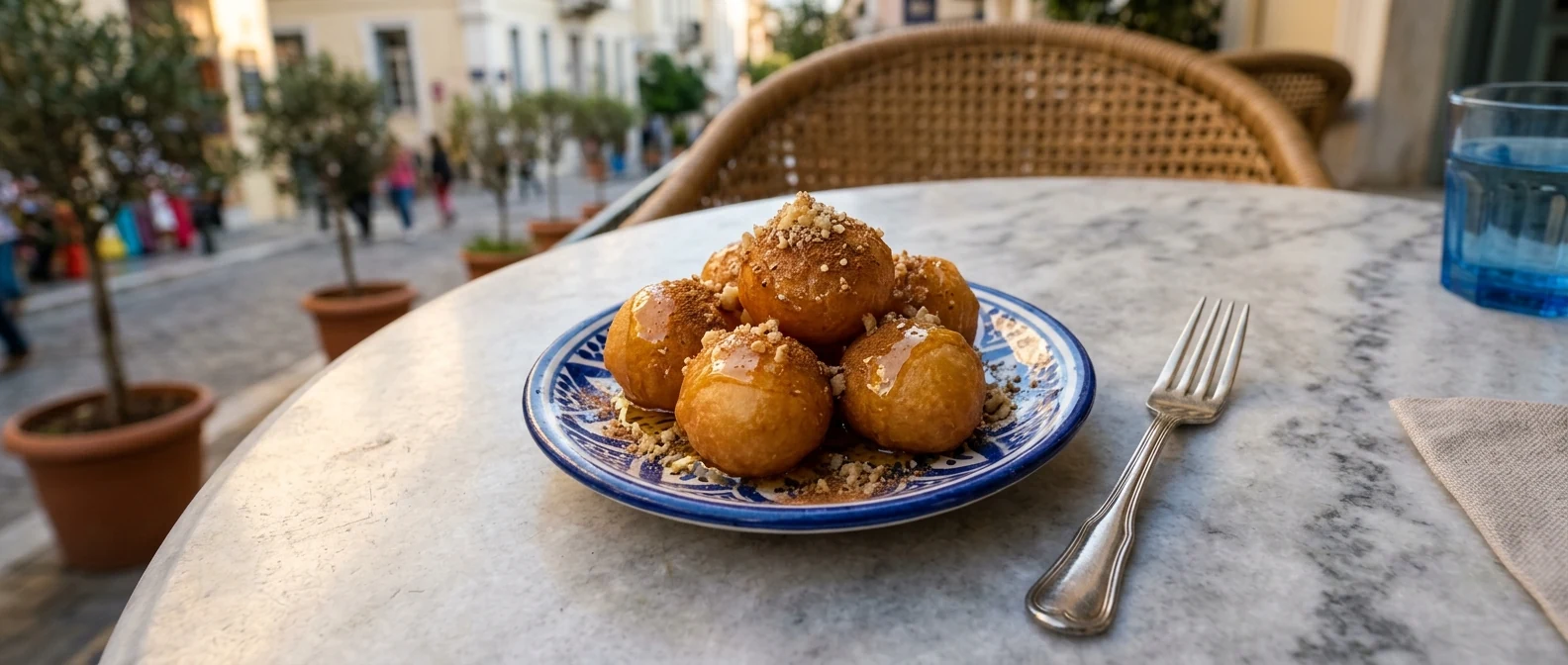
Small fried dough balls with honey, cinnamon and sometimes walnuts. Eat them hot, because the contrast between the crisp outside and soft centre matters most. The better loukoumades shops fry them when you order.
2 · Galaktoboureko (γαλακτομπούρεκο)
Semolina custard baked between layers of buttered phyllo and syruped after baking. A good piece needs balance: crisp phyllo, custard that holds its shape and syrup that does not feel too heavy. It is often nicest slightly cool.
3 · Baklava (μπακλαβάς)
Layers of buttered phyllo with walnuts or pistachio, baked and then syruped. In Athens you will find different versions depending on the pastry shop: nuttier, more buttery or more fragrant with spices.
4 · Bougatsa (μπουγάτσα)
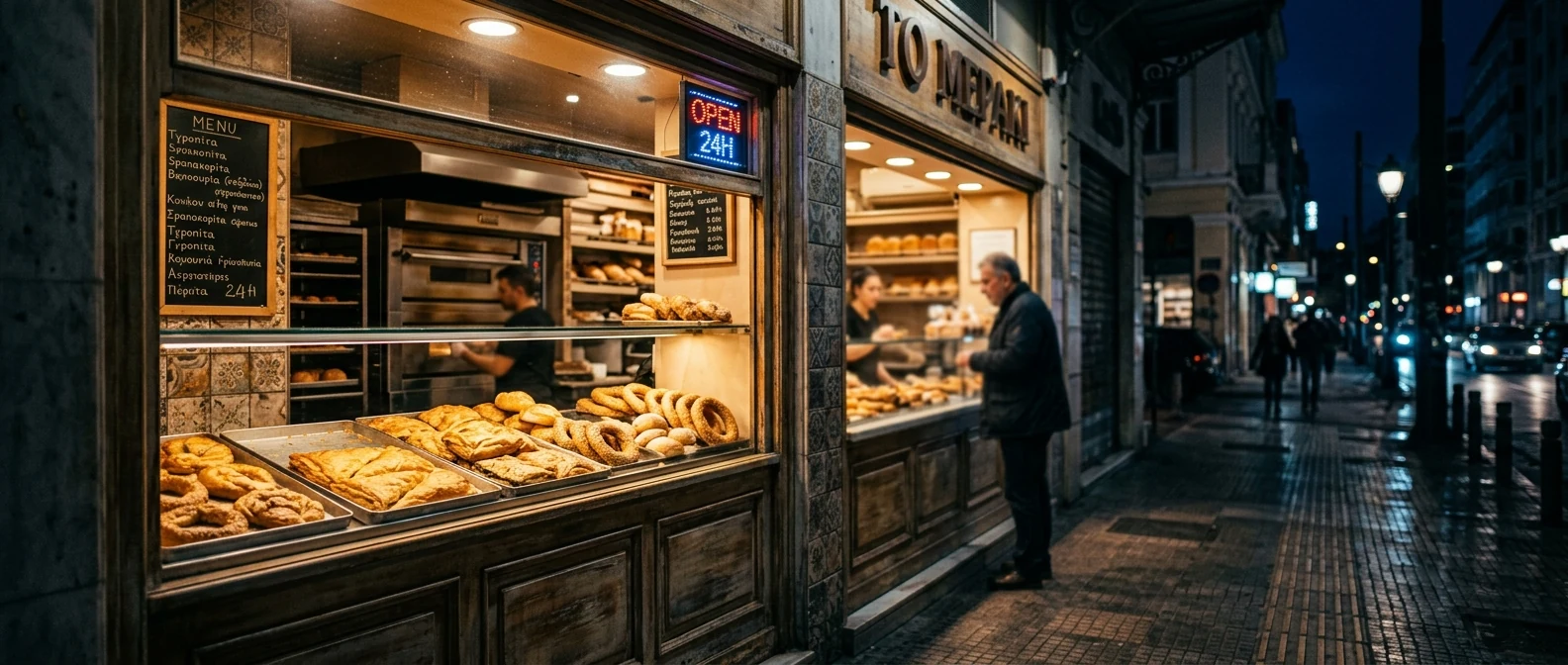
Phyllo wrapped around custard or sweet cheese, cut into squares and dusted with powdered sugar and cinnamon. Northern Greece has the strongest bougatsa tradition, but in Athens it is still easy to find in bakeries and specialist shops. People often eat it in the morning or late at night.
5 · Kataifi (καταΐφι)
Thin pastry strands wrapped around nuts, baked and then syruped. It is airier than baklava, but still rich and sticky.
6 · Ravani / Revani (ραβανί)
Semolina cake from a tray, often scented with lemon or orange. It is usually milder than the heavier phyllo desserts, though still clearly sweet.
7 · Ekmek kataifi (εκμέκ καταΐφι)
A base of syruped kataifi with custard on top, often finished with whipped cream and chopped pistachio. It is a rich dessert, so a small piece is usually enough.
A short history of Greek sweets
Many Greek sweets belong to a shared eastern Mediterranean tradition built around phyllo, nuts, honey and syrup. In Athens, pastry-shop culture was strongly shaped by refugees from Asia Minor after 1922. Recipes and techniques from Smyrna, Constantinople and Cappadocia passed into Athenian shops, and some still continue as family businesses today.
Where to eat them
- Zaharoplasteío (ζαχαροπλαστείο) — the classic choice for galaktoboureko, baklava, kataifi and ravani. Desserts are sold by the piece or by weight. A single piece is usually around €2.50-€4.50.
- Loukoumadopoleío (λουκουμαδοπωλείο) — a shop focused on loukoumades. In good places, the fryer is working in front of you and the dough goes into the oil when you order.
- Galaktopoleío (γαλακτοπωλείο) — the older style of shop for custards, rice pudding, yoghurt and milk-based desserts. There are fewer than in the past, but central Athens still has a few good examples.
- Bougatsadiko (μπουγατσάδικο) — a specialist bougatsa bakery, usually open from early morning until late. A practical stop for a sweet breakfast or a late snack.
Loukoumades on Aiolou
Old loukoumades shops near Aiolou
Near Aiolou Street and the Ancient Agora you will find some of the best-known older loukoumades shops in Athens. The interesting part is how simple the process still is: fried to order, drained, finished with honey and cinnamon, then brought to the table on a small plate. With a Greek coffee on the side, it is one of the clearest classic sweet stops in the centre.
How to order them properly
- Loukoumades — ask for "Μία μερίδα λουκουμάδες με μέλι και κανέλα", which means one portion with honey and cinnamon. They are best eaten right away while still hot.
- Galaktoboureko — ask whether it was made today: "Είναι σημερινό;" The phyllo loses crispness if it sits in syrup for too many hours.
- Bougatsa — sweet bougatsa is common in the morning, while savoury versions work any time of day. At the counter they usually cut it into squares.
- Baklava and kataifi — sold by the piece or by weight. A small 250 g box is usually enough for two people to try.
Prices and what to expect
€2.50–€3.50
One piece of baklava, kataifi, or galaktoboureko at a traditional zaharoplasteío.
€3.50–€5.00
A plate of loukoumades (10–14 puffs) at a specialist shop.
€2.00–€3.50
Sweet bougatsa from a bakery (usually a single large square wedge).
€8–€18 / kg
By-weight purchases to take home from good pastry shops.
Two summer sweets
- Granita / sorbet — some older pastry shops make their own granitas, especially lemon and watermelon. Usually around €2.50 a scoop.
- Submarine (υποβρύχιο) — a spoonful of thick sweet paste, usually mastiha or vanilla, served in a glass of cold water. You eat it slowly from the spoon as it softens. In an older kafeneio it may cost around €1.50.
What to take home
- Vacuum-packed baklava — keeps 2–4 weeks at room temperature. €15–€25 for a tray of 12 pieces.
- Mastiha (μαστίχα) sweets — Chios mastic in spoon sweets, candy or liqueur. The flavour is resinous and distinctive, so it is worth trying a small amount first.
- Loukoumi (λουκούμι) — Greek loukoumi, usually rose, mastiha, or bergamot. Syros makes the most famous version.
- Pasteli — a sesame-and-honey bar, an older Greek snack that travels easily in a suitcase.
How to get there from Angel Athens (Ioulianou 50)
From Ioulianou 50, pastry shops and bakeries around Patision and Acharnon are about 5-10 minutes away on foot. For loukoumades on Aiolou, take Line 1 from Victoria to Monastiraki and then walk about 5 minutes. In total, expect around 15-20 minutes.
FAQ
Is everything really that sweet?
Most syrup-based sweets are quite sweet. They usually work better in small portions, especially with strong coffee on the side. One piece of galaktoboureko with an unsweetened Greek coffee is often enough.
Are there modern or less sweet versions?
Yes. In neighbourhoods like Exarchia, Pangrati, and Koukaki, some pastry shops make the classics with less syrup, better butter, and cleaner custards. The base stays Greek, but the result feels milder.
What about Greek yoghurt with honey as a "dessert"?
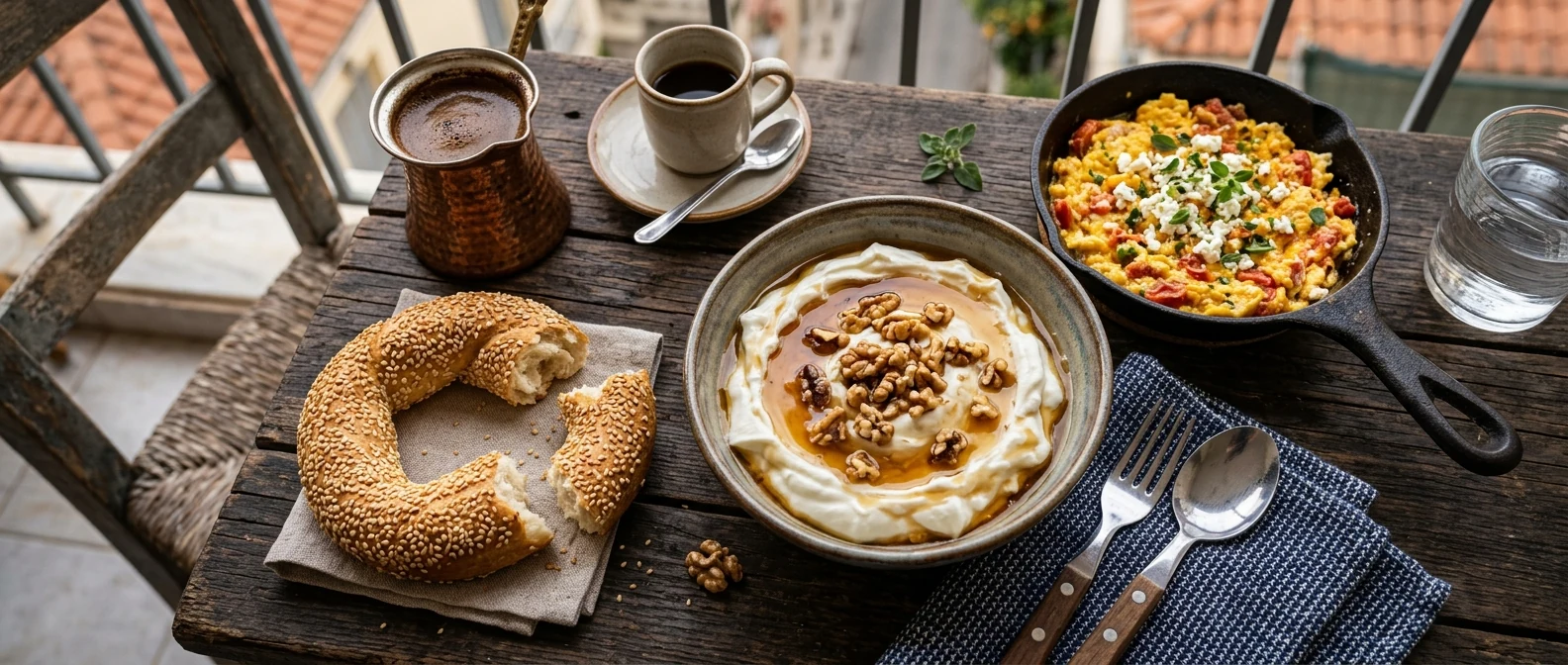
Strictly speaking, that is more of a breakfast (see Greek breakfast guide). Still, it works very well as a light dessert after a meal and is the home-style alternative to syrupy phyllo sweets.
Are these sweets vegan?
Not always. Baklava and kataifi often use butter, so they are not vegan unless the shop uses oil or another plant-based fat. Loukoumades may be vegan, but it is worth asking about the dough and toppings. Galaktoboureko contains milk and eggs. During Lent, vegan versions are easier to find.
— Kathy