🎫 Tickets and time slots
Before buying, check the official ticket platform for the current price, opening hours and available time slots. In busier periods, entry is organized by time window. You enter during the slot you selected and, once inside, you can stay as long as the site remains open.
Start with hhticket.gr, the official platform. Resellers can still be useful if they include a guide or another service, but they often cost more than a simple entry ticket. Always check what you are buying: basic admission, combined ticket, guided tour or bundled package.
The combined ticket may be worth it
If you plan to visit more archaeological sites, check whether a combined ticket is available. It usually covers the Acropolis and several main sites in the historic centre, such as:
- Acropolis and the south slope (Theatre of Dionysus, Odeon of Herodes Atticus)
- Ancient Agora & Stoa of Attalos
- Roman Agora & Tower of the Winds
- Hadrian's Library
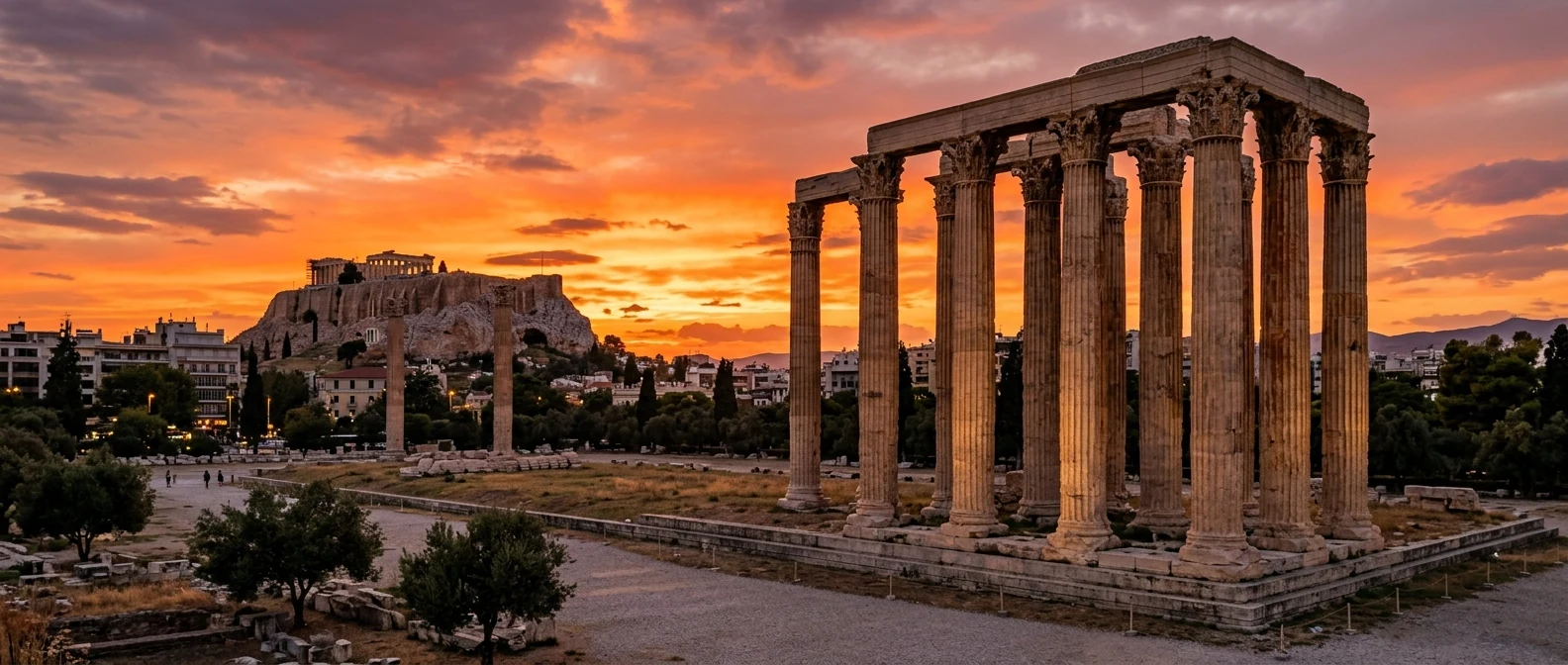
- Temple of Olympian Zeus
- Kerameikos archaeological site & museum
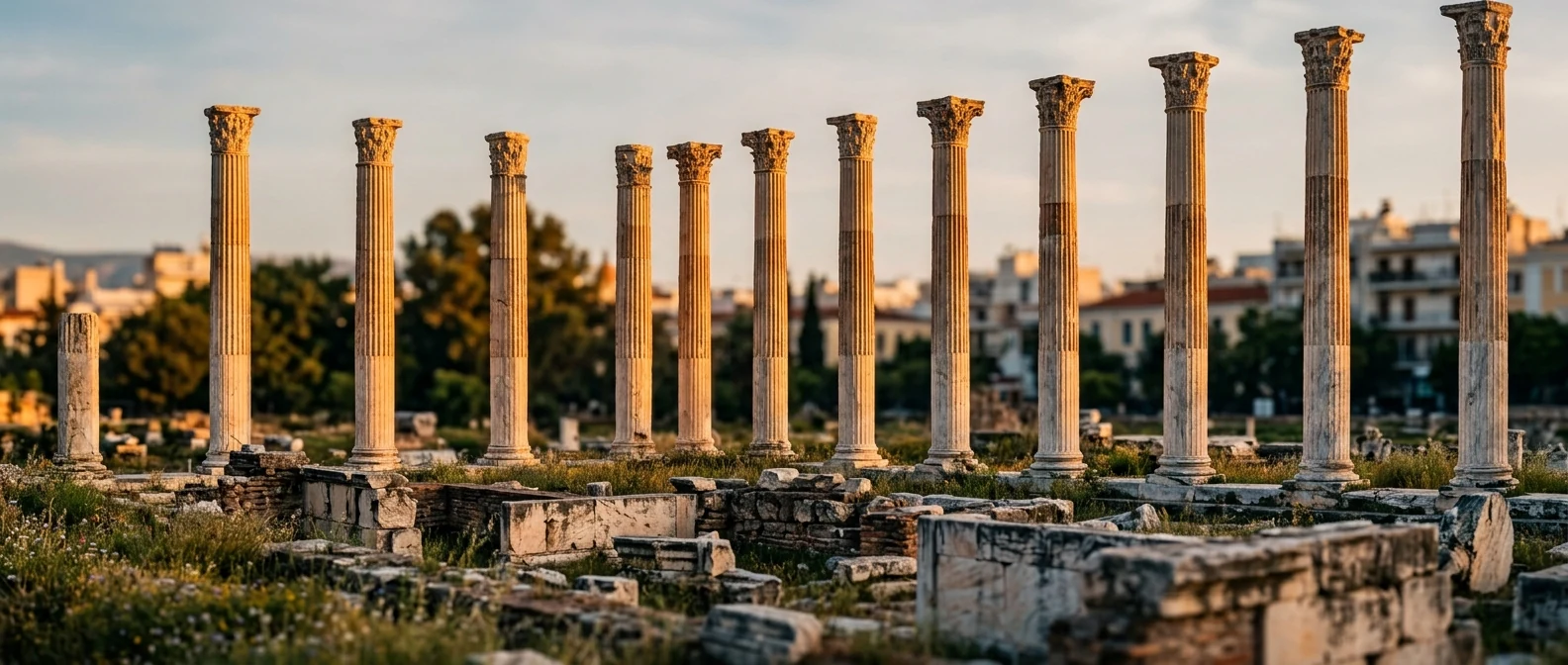
- Aristotle's Lykeion
The terms can change, especially around the Acropolis time slot. Do not buy a combined ticket without checking that it matches the exact day and time you want.
The best time of day
Opening hours change by season, but the basic logic stays the same: in summer, the earlier you go, the better. The last entry is before closing, and the busiest hours feel more tiring than they look on a map.
First morning slot
Cooler, less crowded and with better light. It is usually the calmest option in summer.
Midday
More heat, more groups and slower movement through the narrow parts of the site. Best avoided if you have a choice.
Late afternoon
Softer light and usually less pressure than midday. Just check the time of the last entry.
📍 From Angels Athens to Acropolis · Parthenon
See at a glance how to get from the apartment at Iouliánou 50. Drag the map and zoom in for details.
How the visit works in practice
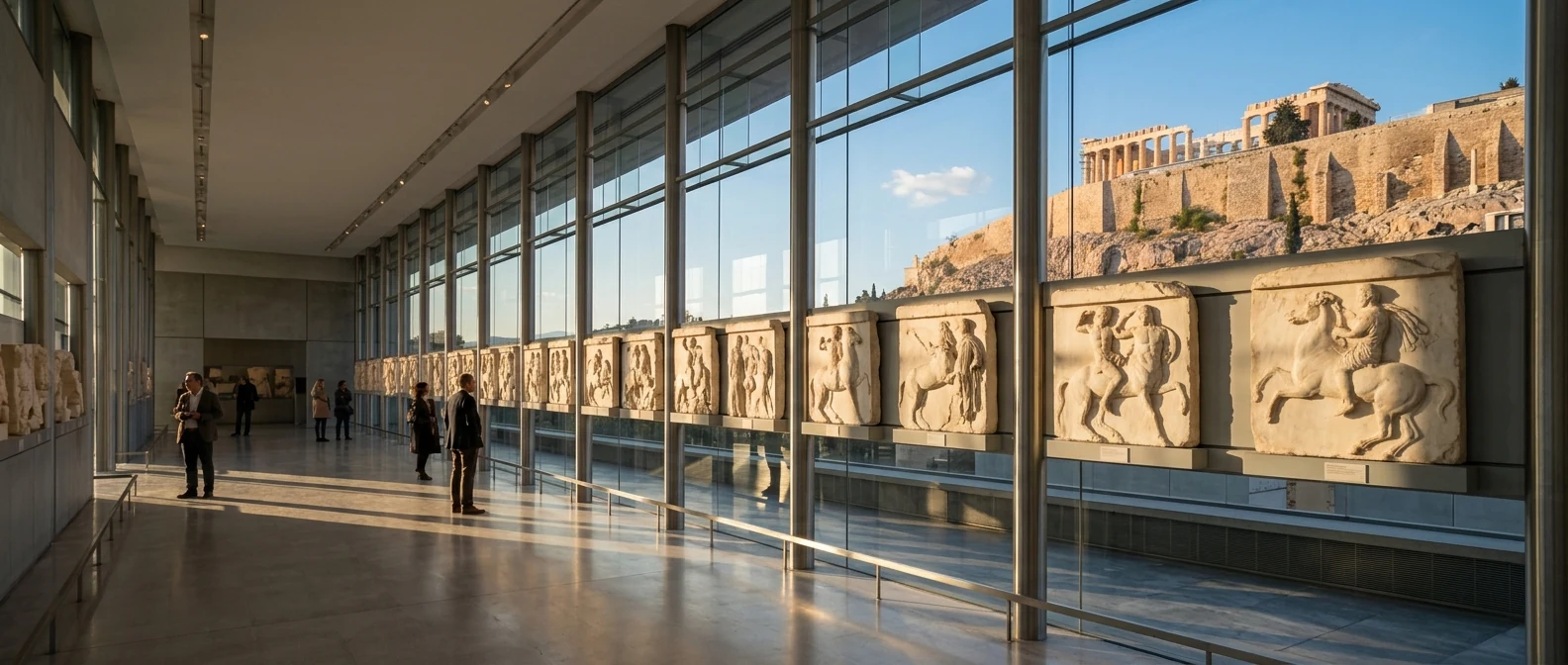
You enter from the western side, walk up a turning path and pass through the Propylaea, the monumental gateway built by Mnesicles between 437 and 432 BC. To your right, on a small bastion, stands the Temple of Athena Nike. Its original sculptures are in the Acropolis Museum below.
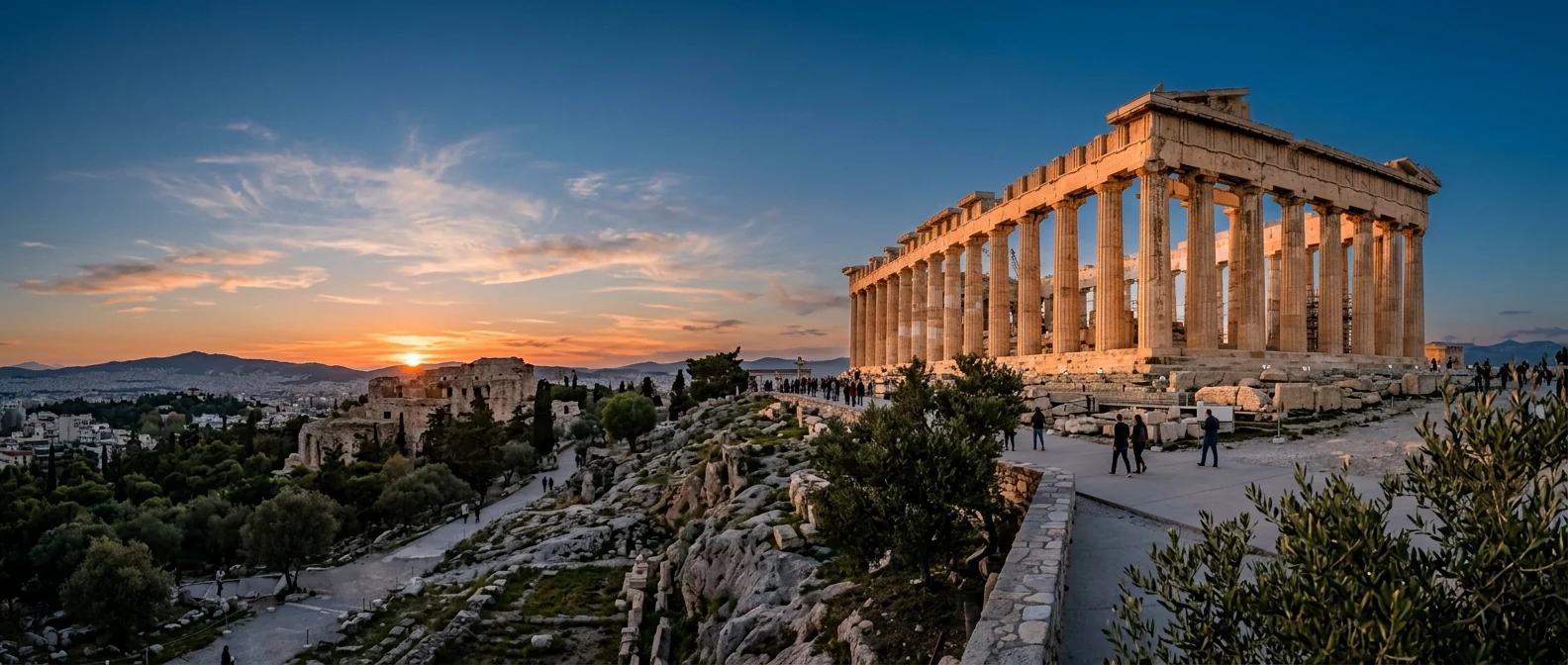
Once you pass the gateway, the rock opens in front of you. The Parthenon dominates on the right. The Erechtheion stands on the left, with the Caryatid porch you already know from the museum. The figures you see there are copies. The originals are below in the museum. Between them once stood the nine-metre bronze Athena Promachos by Phidias, whose spear tip was said to glint as far as Sounion. It was melted down centuries ago, and only its base survives.
The Parthenon was built between 447 and 438 BC by Iktinos and Kallikrates, with sculpture supervised by Phidias. Across the centuries it served as a temple, a Christian church, a mosque and, later, a powder store. On 26 September 1687, a Venetian shell caused the explosion that destroyed much of the monument. Since 1975, restoration has continued, and you can still see that work on the rock today.
What is not allowed on the rock
- No drones. The archaeological site is not a place for flights without special permission.
- No tripods or professional filming without permission. Commercial photography requires a separate process through the Ministry of Culture.
- No food inside the site. Bring water, but respect the rules posted at the entrance.
- No high heels. The marble can be slippery and thin heels are not suitable for the site.
- No sitting or climbing on the masonry. Guards intervene quickly and properly.
Accessibility
There is an elevator and an accessibility route, but it is worth checking their operation before your visit. If you are travelling with a wheelchair or have serious mobility concerns, contact the site service or read the official guidance first. In peak hours there may be some waiting.
The view from the top
The Acropolis is not only about the monuments themselves. It is also a viewpoint over the city. From different edges you can see the Temple of Olympian Zeus, the Panathenaic Stadium, Lycabettus Hill, the Saronic Gulf on a clear day, the Theatre of Dionysus and the Odeon of Herodes Atticus. Keep a few minutes for the wider view before you come down.
The Parthenon is not only the object of the visit. It is also the place from which the city begins to arrange itself around you again.
— Visit note
How to get there from Angel Athens
From Ioulianou 50 in Victoria, the route is simple:
- Walk to Victoria Station on Line 1 — about 3 minutes on foot.
- Take one stop to Omonia.
- Change to Line 2 toward Agios Dimitrios.
- Ride three stops: Panepistimio → Syntagma → Akropoli.
- From Akropoli station to the entrance, allow about five minutes on foot, with an uphill section.
In practice, allow around 25 to 30 minutes from the apartment to the gate, depending on waiting times and station traffic.
Combining it with the rest of the day
A good summer sequence is simple: Acropolis early, then the Acropolis Museum, lunch in Plaka, and later, if you still have energy, the Ancient Agora. Do not try to force all of it into the midday heat. The heat usually wins.
Frequently asked questions
Are children free?
There are free and reduced tickets for certain ages and visitor categories, with the right documents. Check the current rules before booking.
What about the free days?
Each year there are days of free admission at public archaeological sites. The dates and terms can change, and free entry does not always mean entry without a time slot. Check the official announcement for the year you are travelling.
Is a guide worth it?
For a first visit, often yes. A licensed guide helps you see the site as a historical whole rather than as a series of stones and photos. If you do not want a guide, a good audio guide is a reasonable alternative.
How long should I plan for?
Allow at least 90 minutes for the rock itself, not including queue and security. If you also want the south slope, the Theatre of Dionysus and the Odeon, keep more time aside.
Sources:
— Kathy