The theatre itself
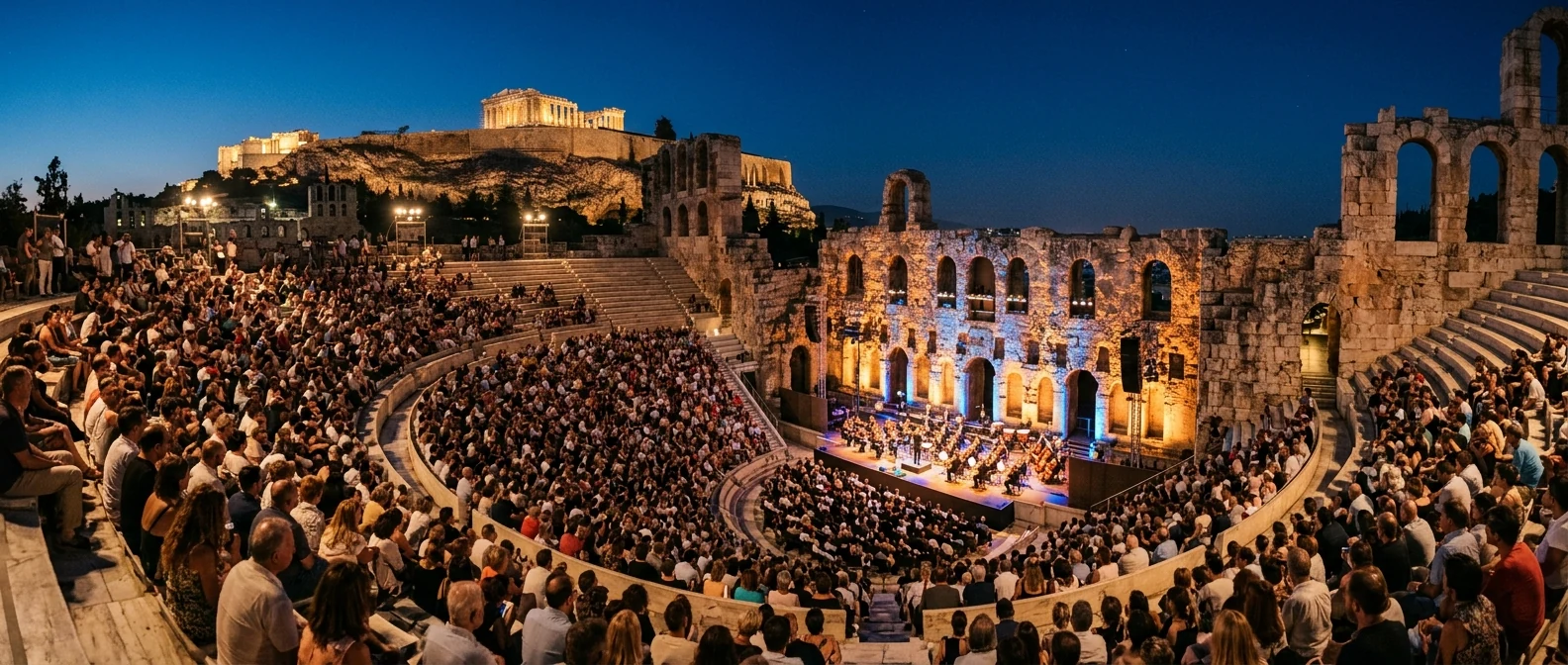
The Odeon of Herodes Atticus, known to Athenians simply as the Herodion, was built in the 2nd century AD by Herodes Atticus in memory of his wife Regilla. It was a Roman odeon for musical and theatrical events, with marble seating on the southern slope of the Acropolis and a large stage building. What you see today also owes a great deal to 20th-century restoration.
After antiquity, the site went through destruction, abandonment, and excavation. Today it is used mainly for selected performances, especially within the Athens Epidaurus Festival. That matters in practical terms too: it is not open like a normal sight throughout the day. To experience it properly, you need a performance ticket.
What you can see there
The program is usually announced in spring and the season stretches across the warm months, with dates that change every year. At the Herodion you usually get the larger or more formal evenings of the festival:
- Opera — often with productions by the Greek National Opera or international collaborations.
- Dance and ballet — Greek and international companies, depending on the season.
- Ancient drama — tragedy or comedy, in Greek or visiting productions.
- Concerts — symphonic, choral, world, jazz, Greek art music, or international nights, depending on the program.
📍 From Angels Athens to Odeon of Herodes Atticus
See at a glance how to get from the apartment at Iouliánou 50. Drag the map and zoom in for details.
Tickets — how it works in practice
Read this before you book
Always start with aefestival.gr or with the official link given by the organizer. Presales open at a different moment each year, usually in spring. The most popular nights can sell out quickly, so do not expect to find good seats at the last minute.
Prices vary a lot depending on the production, seating zone, and organizer. Look carefully at the seating map before you pay. The Herodion is not the kind of venue where every seat feels the same.
Which seats to buy
The seating is divided into the lower tier (rows A-H, closest to the stage) and the upper tier (from row I upward, separated from the lower section by a passage). Practical advice from regular visitors:
The sweet spot
The middle rows of the lower tier, a little off center, usually give the best balance between stage view, sound, and the feeling of the space.
Avoid row A
Too close to the stage can mean losing movement and the overall picture. For opera, dance, or a large concert, a little distance helps.
Avoid the highest upper tier
The highest rows mean more steps and harder access. If you have knee, height, or mobility concerns, choose a lower zone.
The cushion question
You sit on marble for quite a while. If the organizer allows it, a small flat cushion can make a real difference. Check the entry rules before bringing one.
What to wear
There is no dress code — Greek summer dressy-casual is the norm — but practical considerations matter more than style:
- A light layer. Even in summer, after 22:00 it can feel cool, especially if you are sitting high up.
- Closed shoes for the climb up. The walk from the entrance to the upper tiers is on rough stone steps. Sandals are fine; flip-flops a mistake.
- Check the weather. The Herodion has no roof, so rain affects the evening directly and can change the organizer's rules.
Practical details for the evening
- Start time: usually in the evening, but check your ticket and the performance page.
- Entrance: on Dionysiou Areopagitou, the pedestrian avenue under the Acropolis. The closest metro is Akropoli (Red Line, M2), 8 minutes' walk. From Angel Athens, the usual route is Victoria to Omonia on Line 1, then Line 2 to Akropoli.
- Arrive 30 minutes early. The climb to your seats and the entry check both take time.
- Bags and cameras: rules can change depending on the production. Avoid large backpacks and professional equipment unless clearly allowed.
- Food and drink: do not count on eating inside. Plan something before or after the show.
Where to eat after
Dinner after the show fits very well with a night at the Herodion, but do not leave it entirely to chance. Plaka and Koukaki are close and have plenty of options, but after the bigger performances they fill up quickly. If you want a view or a quieter meal, book ahead.
Frequently asked questions
Can you visit the theatre during the day if there's no performance?
Generally not in the same way you visit an archaeological site. When performances are taking place, the venue operates under theatre and production rules. You can see it from points around the Acropolis and Dionysiou Areopagitou, but to sit in the theatre you need an event ticket.
Are subtitles provided for Greek-language drama?
Many productions have surtitles, but not all of them and not always in the same languages. Check the listing on aefestival.gr before you buy.
What if it rains?
Decisions are made by the organizer depending on the intensity and duration of the rain. Check your email, any SMS updates, and the official performance page on the same day. Do not rely on generic assumptions.
Is it worth going if you don't know the programme?
Yes, but choose with a little care. Even if the main reason is the setting, a performance that does not interest you at all can make the evening feel long. Pick something that at least sparks a bit of curiosity.
Sources:
— Kathy