📍 The Athens scam reality
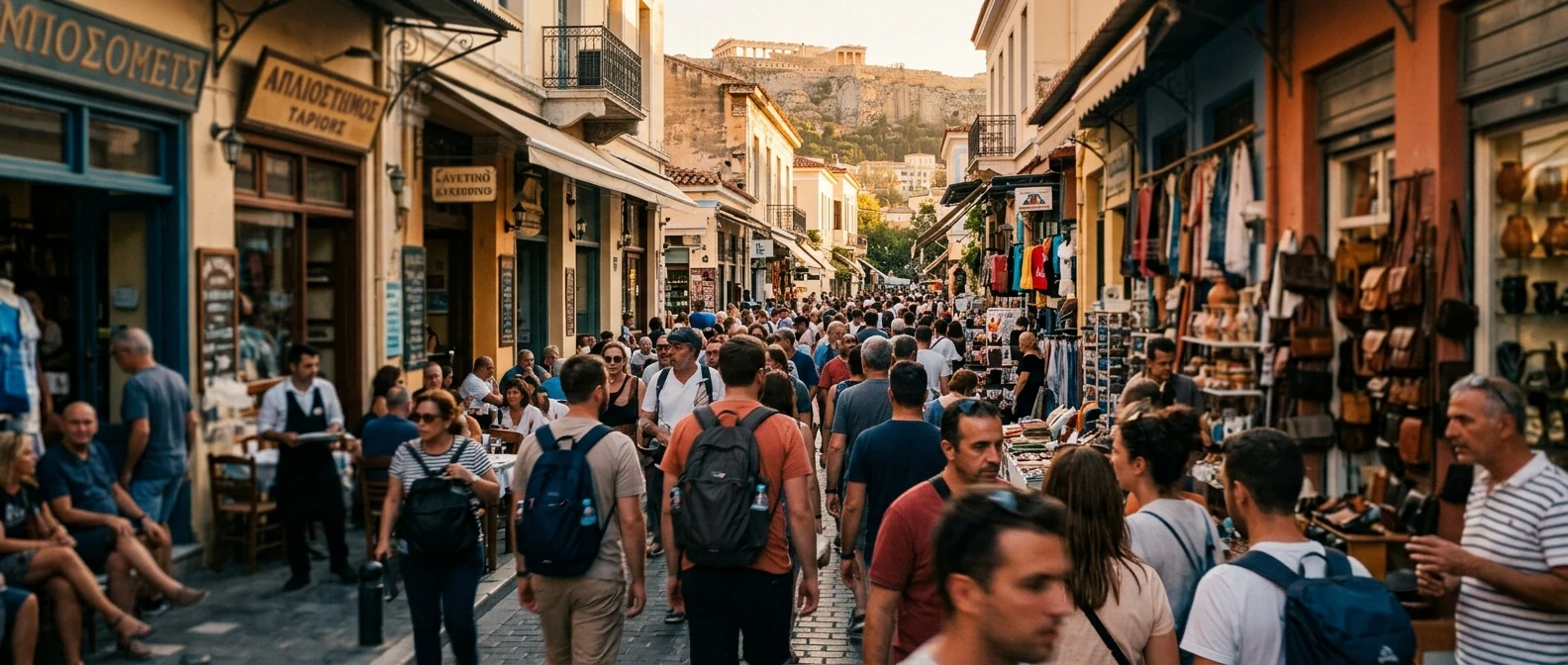
Athens is generally safe — violent crime against tourists is rare; most "scams" are petty financial deceptions targeting newly-arrived visitors who haven't yet calibrated to the city. The same playbook has run for years; the scammers' tactics rotate but the categories don't change. Most are recognisable once you know to look. None are physically dangerous. The defensive posture is calm + polite + firm — Greeks themselves call out scammers, and tourist police actively work the most-affected areas (Sintagma, Pláka, Monastiráki).
⚠️ The classic six scams
1. The "friendly bar" scam
How it works
A friendly Greek man approaches in central Athens (often near Sintagma, Monastiráki, Omónoia). He asks where you're from, says he has family there, suggests you have a drink together at "his favourite local bar." You agree. Inside, two attractive women join the table. Drinks arrive. Your bill arrives — €200-€500 for what should be €40. Hostile staff insist on payment, sometimes block exit. You pay with card or cash to escape.
Defense: never go to a bar with a stranger you've just met. If approached, smile + decline + walk away. Especially in Athens, friendly strangers offering drink invitations are nearly always scams.
2. The taxi meter scam
- How it works: taxi driver doesn't start meter, or "meter is broken," or starts on Tariff 2 (double rate, only legal 00:00-05:00 + outside city limits) when it should be Tariff 1.
- Defense: always insist meter is on Tariff 1 unless legitimate Tariff 2 conditions. Use Beat / Uber instead of street hails — tariff visible + payment via app. Verify route on phone map; honest taxi takes direct route.
- Airport flat rate: there's a legal flat rate (€40 day, €55 night) Athens airport ↔ central. Nothing more. Refuse anything higher.
3. The petition / clipboard scam
- How it works: someone (often woman or child) approaches with a clipboard asking you to sign a petition for "deaf charity" or "homeless children." While you're distracted writing, accomplice picks your pocket OR the petition-holder pressures you for €5-€20 cash donation.
- Defense: ignore + walk away. Do not engage. Real charities don't operate this way on tourist streets.
4. The friendship bracelet / ring scam
- How it works: someone approaches and ties a "friendship bracelet" on your wrist before you can react, or "finds" a gold ring at your feet and offers to sell it cheap. After bracelet is on, demands €10-€20. Ring is fake brass.
- Defense: keep hands in pockets; refuse anything offered in street.
5. The restaurant + bar overcharge
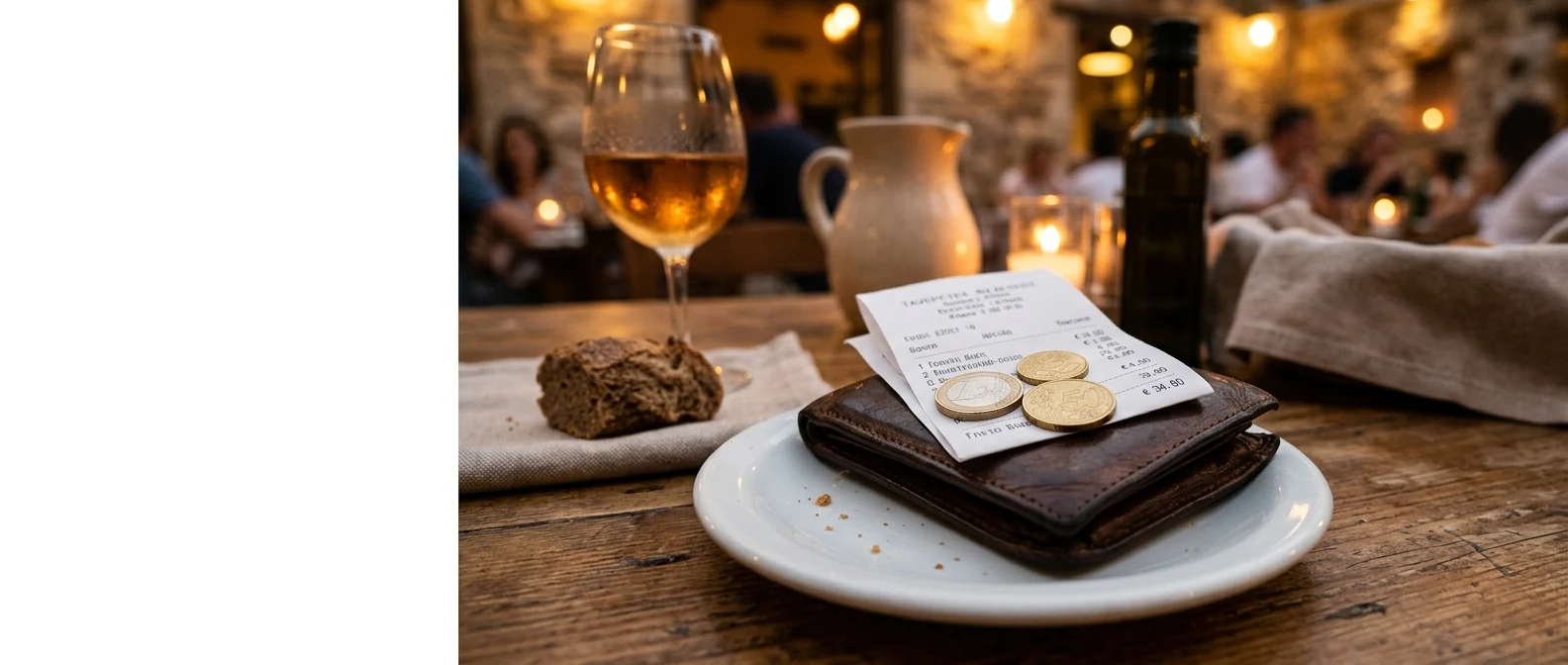
- How it works: bill arrives without itemised list. Items appear that you didn't order. Drinks were ordered without seeing prices first; suddenly they're €15-€20 each.
- Defense: always check prices on menu before ordering. Refuse to order without itemised written menu. Ask for itemised receipt; check before paying.
- Especially watch: Pláka tourist tavernas, Monastiráki square restaurants. Modern Athenians eat at much better-priced neighbourhood tavernas.
6. The pickpocket on metro / crowded street
- How it works: classic crowded-environment pickpocketing on Line 1 (Pireus-Acropolis), Monastiráki, Omónoia, busy tourist sites.
- Defense: front pockets or zipped bag. Money belt under clothes. Never wallet in back pocket.
🚖 The taxi navigation playbook
Use Beat / Uber
Eliminates 90% of taxi scams. Price visible up-front. Card payment. GPS-tracked route.
Verify meter Tariff 1
Tariff 1 daytime (05:00-24:00) within Athens limits. Tariff 2 (60-80% more) only legal nights or outside city.
Know airport flat rate
€40 day / €55 night to/from city centre. Not negotiable.
Verify route on map
If driver takes obvious detour, politely ask "shorter route?" Honest drivers correct course.
🍴 Restaurant scam prevention
- Always see written menu with prices. Reject restaurants that present food without prices.
- Confirm prices before ordering. Especially for fish (often priced per kilogram, can balloon).
- Avoid being seated by aggressive street touts. Tavernas with people pulling you in from street usually overcharge.
- Itemised bill. Refuse non-itemised. Compare to what you ordered.
- Cards: most restaurants accept; those that "don't take cards in season" are red flag.
- Tipping: 5-10% standard. Some upscale add 10% service automatically — verify before tipping more.
📊 At a glance
Tourist Police: 1571
English-speaking, free to call from any phone. For scam reports + tourist issues.
112 emergencies
Pan-European emergency number. Police, ambulance, fire.
€40 / €55
Airport-Athens taxi flat rate (day/night). Anything more is a scam.
5-10%
Standard restaurant tip. Round up at cafés. Always verify "service charge" not already included.
🚇 Metro + ticket inspections
- Always validate your ticket before boarding. Inspectors fine €72-€144 for invalid tickets. They're real, not scammers.
- Don't believe "I'm an inspector" without uniform + ID. Real inspectors wear uniforms + show ID.
- "Friendly" passenger offering ticket may be selling stolen/used tickets — buy only at machines + windows.
💰 ATM + currency exchange tips
- Use bank ATMs (NBG, Eurobank, Alpha Bank, Piraeus Bank) inside or attached to bank branches. Independent ATMs charge inflated fees + sometimes manipulate exchange rates.
- Refuse "Dynamic Currency Conversion" at ATM or card terminal. Always pay in EUR. Greek bank's exchange rate worse than your home bank's.
- Currency exchange shops: rates often poor. ATM + card transactions usually better.
- Card skimmers: rare in Greek banks. More common at small shop terminals + tourist-area ATMs.
📅 The calm-defense playbook
What to do when approached
- Stay calm + polite. Smile + decline + walk away.
- Don't engage in conversation. The longer you talk, the more they have to work with.
- Don't accept anything offered. Bracelet, drink, "free gift," ride.
- Trust your instincts. If it feels wrong, walk away.
- If pressured: walk into nearest hotel lobby, café, or shop. Scammers don't follow.
- Tourist Police 1571 for any scam attempt or completed scam. They're effective + speak English.
🛡️ General safety tips
- Money belt or zipped front pocket in crowded areas.
- Photocopy passport + cards. Keep originals separate from copies.
- Walk in groups in late evenings — Athens generally safe but Omónoia + parts of Exárcheia have rougher reputation late nights.
- Avoid known troubled areas after midnight: Omónoia square, parts of Exárcheia, some Pireus port areas.
- Hotel safe: use for passport + extra cash + jewelry.
- Travel insurance: real cover for theft + emergency medical.
🎯 What's NOT a scam
- Acropolis ticket queues: real wait. Pre-book at hhticket.gr to skip.
- Restaurant cover charges: "kouvér" (€1-€3 for bread + olive oil) is common, listed on menu, legitimate.
- Tipping at cafés: small change is appreciated; not mandatory.
- Greek hospitality: locals genuinely helpful. Asking for directions, restaurant tips, etc. is welcome. Distinguish genuine help from sales pitches.
🎯 FAQ
How common are tourist scams in Athens?
Common enough to know about; rare enough that most visitors don't experience them. Awareness + simple precautions eliminate ~95%.
Is the Acropolis area safe at night?
Yes — well-lit + busy + tourist-policed. Major sites + Pláka are safe late evening.
Should I avoid the metro?
No — metro is safe + clean + reliable. Just keep valuables secure.
Are taxis dangerous?
Not dangerous; can be financially scammy. Beat / Uber eliminates this risk entirely. Or insist on Tariff 1 meter.
What if I've been scammed?
Tourist Police 1571 (English-speaking). Get receipt if any. File report. Your home embassy can help with passport/document loss.
Is Athens safer than other European capitals?
Comparable to Mediterranean European cities. Safer than Naples or Marseille for petty crime. Less safe than Helsinki or Vienna for casual scams. Awareness suffices.
Sources:
— Kathy