What Varvakeios is
The Varvakeios Central Market, officially the Municipal Market of Athens, sits between Athinas, Sokratous, Aiolou and Evripidou streets. It has been operating since the late 19th century and takes its name from the Varvakeios School, which was linked to the bequest of Ioannis Varvakis. Inside the building there are two main sections: the meat hall and the fish hall. Across Athinas Street you find fruit and vegetables, while the surrounding blocks are full of spices, cheese, nuts and other food shops.
When to go
06:00–09:00
More trade buyers, a faster rhythm and a clear view of the market before more visitors arrive. The fish hall floor can be slippery.
09:00–14:00
The easiest time for visitors. Stalls are full, prices are visible and the market is lively without feeling too early.
14:00–16:00
Quieter. Some stalls may offer a better price on products that need to be sold the same day.
Sundays
Closed. The market does not operate on Sundays. Saturday morning is usually the busiest time of the week.
The meat hall
The hall on the Athinas side is the one most visitors see first. Under the high roof you find counters with lamb, goat, beef, pork, rabbit and chicken, as well as offal for more traditional cooking. If you want to buy something, butchers can usually cut the piece the way you need it and explain how it is usually cooked.
- Cut to order. Larger pieces are often divided on the spot instead of arriving pre-packed.
- Tell you the origin. On many counters you will hear the region, producer or type of farming.
- Suggest how to cook it. Ask about a cut and you will often get practical advice rather than a vague answer.
The fish hall — the most intense part of the building
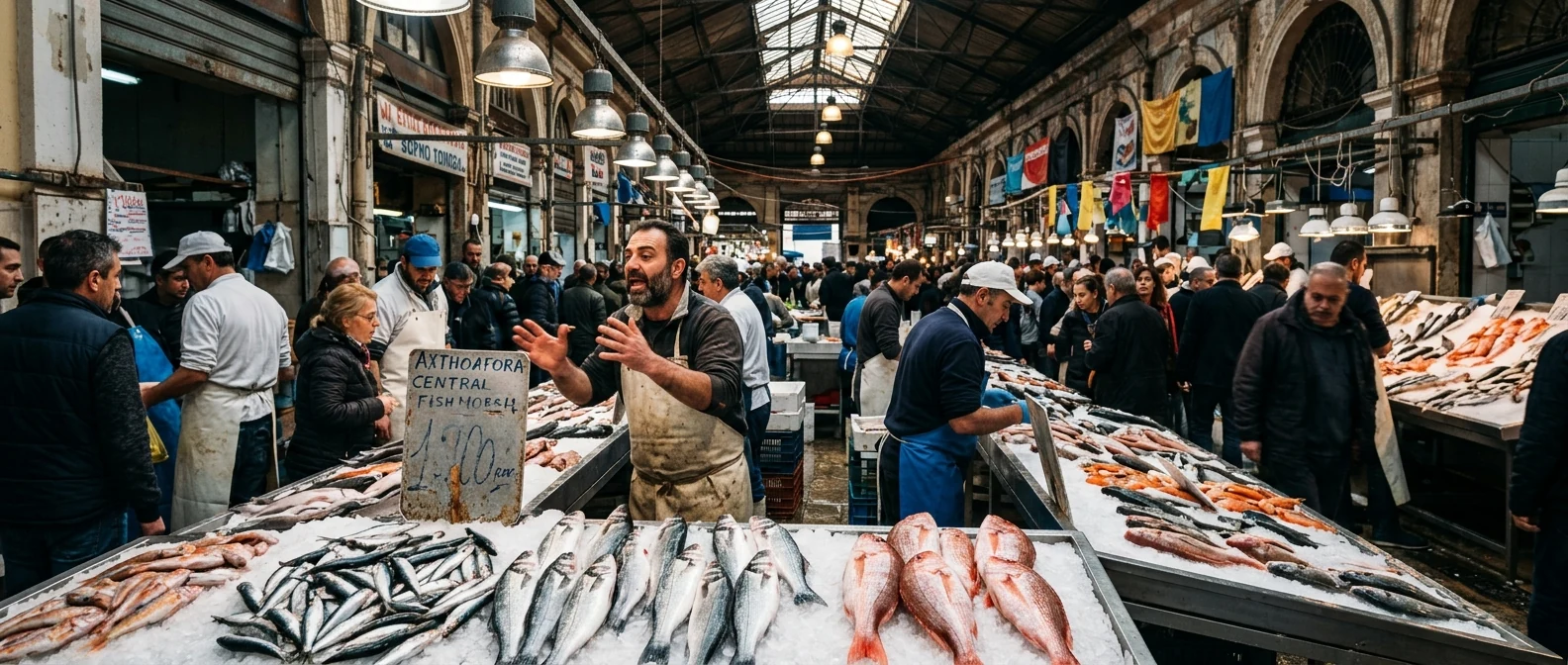
In the fish hall, fish lie on crushed ice: sea bream, sea bass, red mullet, swordfish, octopus, squid, marída and gávros. Selling is loud, fast and direct. Prices are shouted, they can change during the day, and on Saturday around midday the hall usually feels at its busiest.
How to read fish quality at the Varvakeios
- Eyes — should be clear and convex, not cloudy or sunken.
- Gills — bright red. Brown or grey gills mean old fish.
- Smell — fish should smell of sea, not of fish.
- Texture — flesh should spring back when pressed lightly.
If you ask the fishmonger to clean and gut the fish for you, it is usually done without extra charge.
Around the market — the spice and dry-goods streets
The blocks around the market extend the food district:
Evripidou Street
The spice street. Saffron, dried herbs, nuts, halva, taramá and spice blends for cooking. In many shops you can smell or taste before buying.
Sokratous Street
Cheese shops, cured meats and traditional kitchen tools such as briki coffee pots, copper pans and mortars.
Athinas Street produce market
Vegetables, fruit, eggs and herbs. Prices are often lower than for similar products in a supermarket.
Aiolou Street
The route toward Omonia, with restaurants, more food shops and easy access to the spice side of the district.
Eating inside the market
Inside and around the meat hall you will find simple tavernas and lunch places that mostly work at midday. The best-known stop is Diporto, a basement taverna near the market. In the same area there are a few other places with daily food, house wine and a small number of dishes on offer.
- No fixed menu — the cook or waiter tells you what is available that day, such as chickpeas, gigantes, fish soup or lamb.
- House wine from the barrel (retsina or red), €4–€5 per half-litre.
- Open at lunch only in most cases (closed by 17:30).
- Cash only at the most traditional places.
- Reasonable prices — often around €10–€18 per person for food and wine.
What to buy as a visitor
If you are staying in an apartment with a kitchen, Varvakeios can be useful even for small purchases. Practical things to buy include:
- Olives — Kalamata, throumba, green Halkidiki, in oil or brine. €4–€8/kg from the dry-goods stalls.
- Greek olive oil — extra virgin from a Peloponnesian or Cretan producer. €8–€15/litre, depending on quality and packaging.
- Cheese — feta from a barrel (sliced to order), graviera, kasseri, anthotyro. €10–€18/kg.
- Cured meats — loukaniko (sausage), pastourma (spiced cured beef), apaki (Cretan smoked pork). €15–€30/kg.
- Honey — thyme honey or pine honey from a small producer. €10-€18 per jar. See also the Greek breakfast guide.
- Halva and loukoumia — sesame halva, rose loukoumi and other sweets that travel easily.
- Spices and herbs — Greek oregano, bay leaves, sage, mountain tea. €1-€3 per bag, depending on the item.
Practical tips
Six things to know before visiting
- Bring some cash. Many larger stalls accept cards, but not all of them.
- Wear shoes you don't mind getting wet. The fish hall floor is constantly hosed.
- Photograph respectfully. Stallholders are used to it; ask first if you want a portrait shot.
- Bargaining is mild. If you buy quantity, ask simply for a "good price" rather than pushing hard.
- Greek language helps but isn't required. Most younger stallholders speak workable English.
- Bring a tote bag. Plastic bags are charged at €0.10–€0.20 each by Greek law.
How to get there from Angel Athens (Ioulianou 50)
From Ioulianou 50, take Line 1 from Victoria to Omonia and then walk 5-7 minutes toward Athinas Street. The total trip is about 12-15 minutes. You can also walk the whole way via Patision or 3is Septemvriou in about 18-22 minutes.
Frequently asked questions
Is it touristy?
It gets plenty of visitors and cameras, but it still works as a real market. You will see trade buyers, local shoppers and people doing normal food shopping, not only tourists.
Vegetarian options?
Yes, especially around the produce market, spice shops, nut stalls and cheese counters. In nearby tavernas you will often find gigantes, gemista, horta and other vegetable dishes. See also the vegetarian and vegan guide.
Open during August?
Yes, though in August the pace drops and some stallholders may be away on holiday. After public holidays the market can also feel quieter.
Combine with what?
Varvakeios sits a few minutes north of Monastiraki. You can combine a morning market walk with lunch nearby and then continue to Monastiraki or Plaka. It also works well with the National Archaeological Museum or the Acropolis if you want a fuller day.
Sources:
— Kathy