Nistisimo does not always mean vegan
The Orthodox fasting tradition has shaped Greek cooking very deeply. During many periods of the year, people avoid meat, dairy and eggs, which is why there are so many dishes based on legumes, vegetables, olive oil and herbs. For vegan travellers, the word nistísimo is very useful, but it is not an absolute guarantee. In some fasting periods seafood is allowed, and honey appears often in sweets.
The good news is that Greek cooking has a large repertoire of dishes that are often already vegan: legumes, ladera vegetable dishes, greens pies without cheese, bean soups, dolmades without meat and halva. In a traditional magireio you will usually find a few of these all year, and even more during fasting periods.
Dishes you can ask for
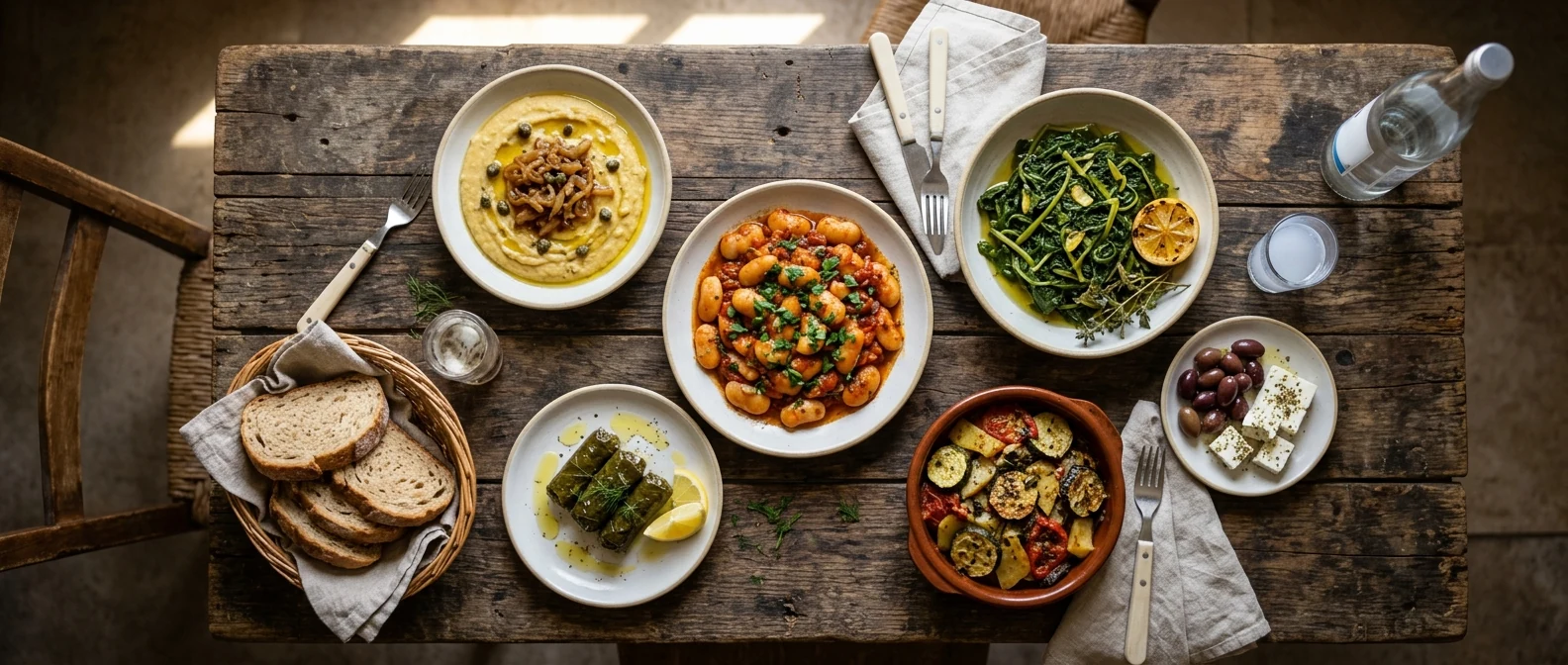
Gigantes plaki
Large beans baked with tomato, herbs and olive oil. One of the safer vegan orders in a magireio. €6–€9.
Fasolakia ladera
Green beans cooked with tomato, potato and olive oil. A common summer dish. €6–€8.
Briam
Tray-baked vegetables such as courgette, aubergine, potato, pepper and tomato with olive oil and herbs. €7–€9.
Gemista (specify "without minced meat")
Tomatoes and peppers stuffed with rice, herbs, raisins or pine nuts. Ask for them without minced meat. €7–€9.
Fava
A smooth purée made from yellow split peas, usually served with raw onion, capers, olive oil and lemon. €5–€7.
Spanakorizo / prasorizo
Spinach-and-rice or leek-and-rice pilaf with olive oil and dill. €6–€8.
Dolmades (fasting version)
Vine leaves stuffed with rice, herbs and lemon. Specify "without minced meat". €7–€9.
Horta vrasta
Foraged or farmed greens (vlita, radikia, dandelion) boiled and dressed with olive oil and lemon. €4–€6.
Fasting street food and snacks
- Koulouri — sesame bread ring sold from street carts. €0.50–€0.80. (See Greek breakfast guide.)
- Fasting spanakopita — spinach pie made with olive-oil filo and no cheese. Common in Lent; usually marked "νηστίσιμη" (fasting). €1.50–€2.50.
- Tahinopsomo — a common fasting breakfast or snack. If it contains honey, it is not vegan.
- Halva — a sweet made from tahini or semolina. It is often vegan, but check the ingredients.
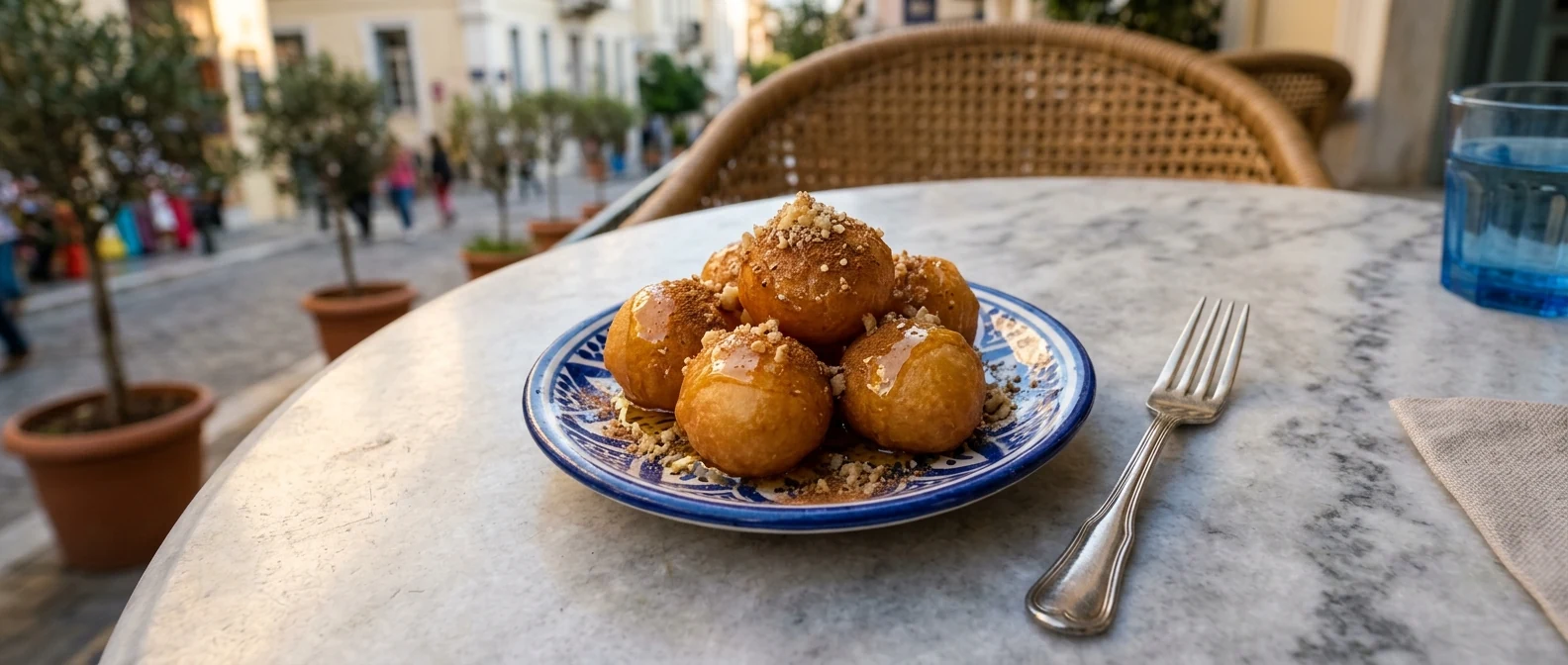
- Loukoumades — fried dough balls with honey or syrup. For a vegan version, ask for syrup without honey. (See Greek sweets guide.)
- Loukoumi — sugar, starch and flavourings, usually without gelatin.
- Olives, bread with tomato or herbs — taramosalata is fish-based, but bread and olives are easy to find almost anywhere.
Vegan and vegetarian restaurants
In recent years Athens has picked up more places with a clearly vegan or vegetarian focus. You will find most of them in Exarchia, Koukaki, Pangrati and Psyrri. The main categories are:
Modern vegan bistros
Casual restaurants with full plant-based menus — burgers, bowls, pasta and bao buns. €10–€16 mains. Many of them are in Exarchia and Koukaki.
Vegan-friendly Greek tavernas
Traditional tavernas with clearly marked vegan options or several fasting dishes. Mains are often around €8–€14.
Health-food / juice bars
Smoothie bowls, salads and vegan pastries. €6–€12. You find many of them in Pangrati and on the more modern streets of Exarchia.
International vegan
Vegan pizza, vegan sushi, vegan Indian. €12–€18 mains. Scattered across Kolonaki, Pangrati, Glyfada.
Plant milks at coffee shops
Greek coffee chains and many third-wave shops now stock at least one plant milk, usually oat and sometimes soy or almond. The extra charge is often around €0.40–€0.60. What to expect:
- Mikel — usually oat or almond milk is available. Most pastries are not vegan, so ask.
- Coffee Island — oat, soy or almond, depending on the branch. Only a few baked goods have clear vegan labelling.
- Gregory's — oat milk and some vegan sandwich options.
- Third-wave shops in Exarchia — usually more choice in plant milks and often a few vegan sweets. See also the Exarchia guide.
The Greek you need
Useful Greek phrases for plant-based eating
- Είμαι vegan / χορτοφάγος — the basic first sentence.
- Χωρίς κρέας — without meat.
- Χωρίς ψάρι — useful if you are strictly vegetarian.
- Χωρίς αυγό / γαλακτοκομικά — necessary for a vegan order.
- Νηστίσιμο — very useful, but still ask about fish, seafood and honey.
- Λαδερά — the category of vegetables cooked in olive oil, often vegan.
- Έχει βούτυρο / γάλα; — an important question for pies and sweets.
Ingredients to watch for
- Avgolemono — the egg-and-lemon sauce that finishes many soups and chicken dishes. Not vegan.
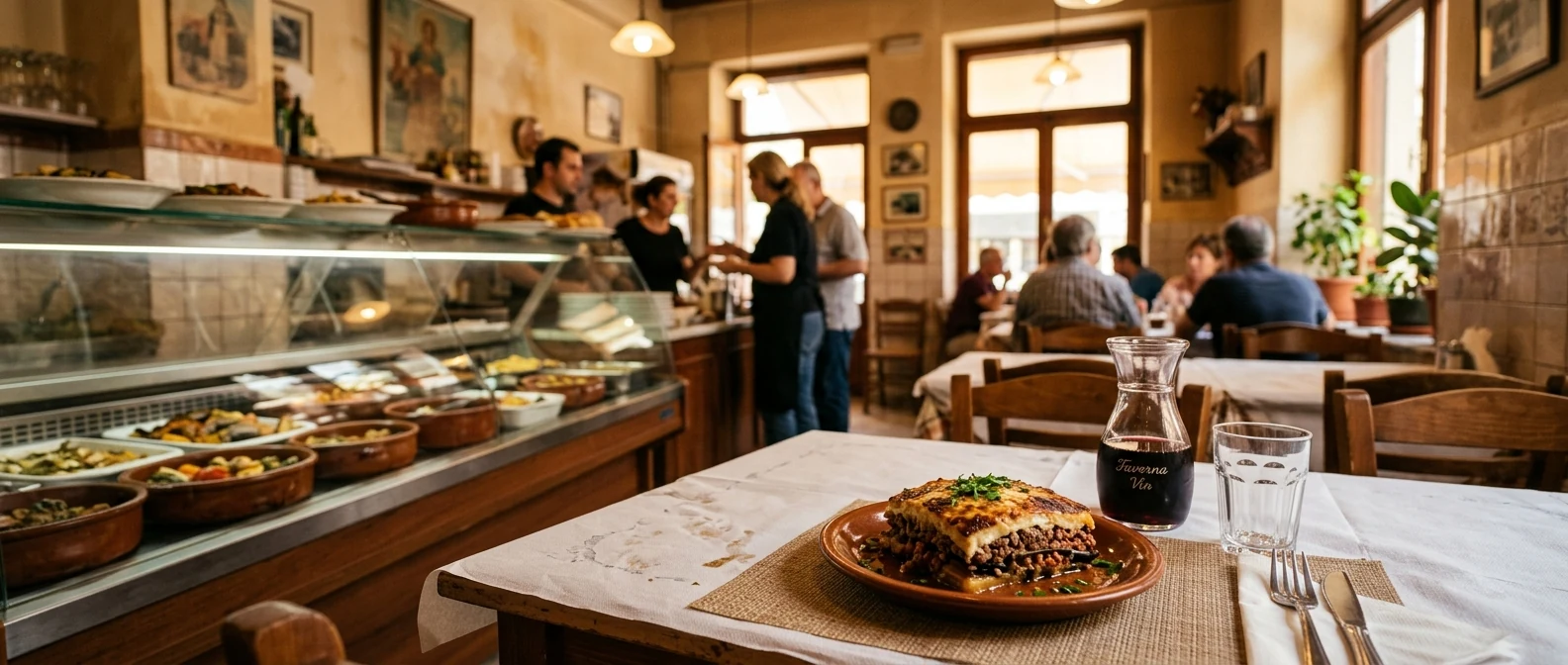
- Béchamel — the dairy sauce in pastitsio and moussaka. Not vegan. Vegan versions exist, but ask.
- Honey on loukoumades — not vegan. Ask for syrup without honey.
- Filo with butter — many traditional pies use butter rather than olive oil filo. Ask for the nistísimi version.
- Anchovies / fish-paste in some dressings — uncommon but possible. Ask if uncertain.
- Lard in some traditional pastry doughs — rare today, but still worth asking about in older bakeries.
Vegan shopping
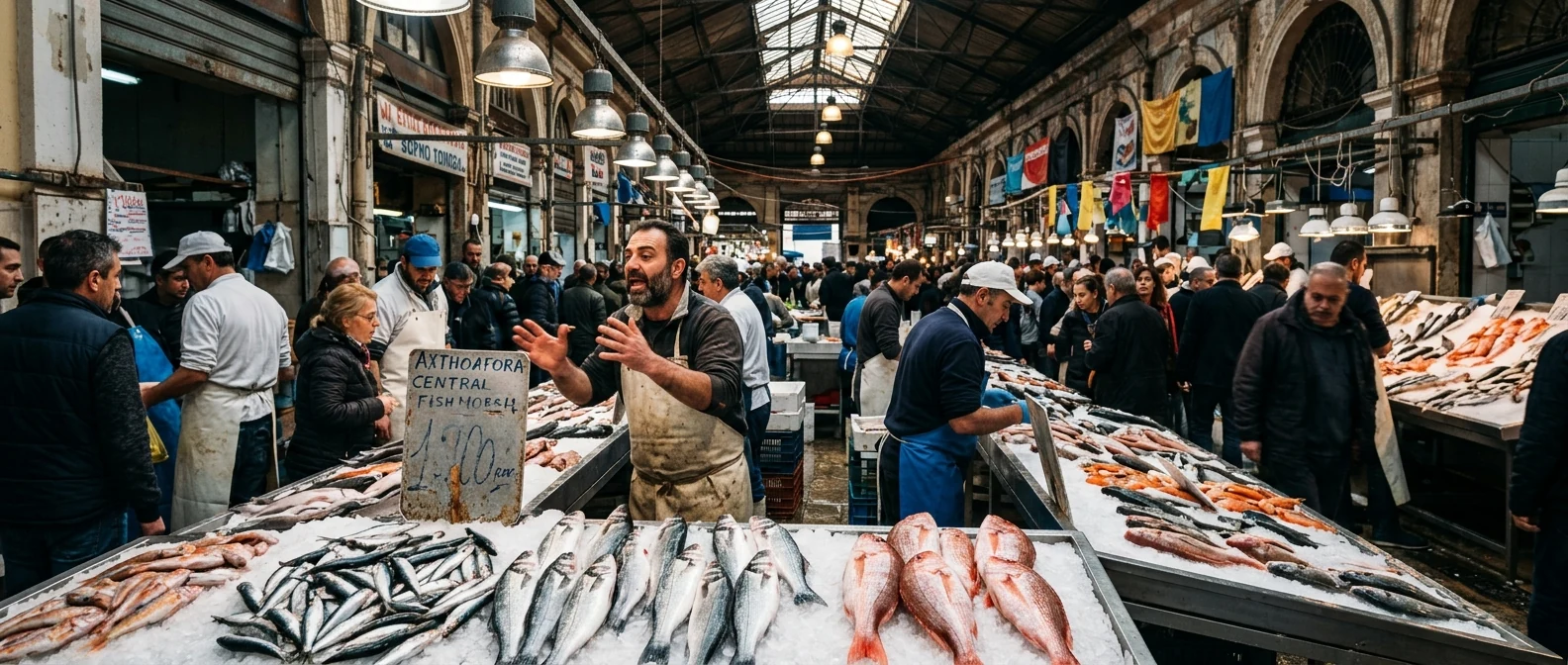
The Varvakeios Central Market, together with Evripidou Street, is a useful stop for legumes, grains, dried herbs, halva, tahini, olive oil and olives in bulk. See the Varvakeios guide. For plant-based substitutes, vegan cheeses and more specialised products, look for health-food shops in Kolonaki, Pangrati and Exarchia.
How to get there from Angel Athens (Ioulianou 50)
From Ioulianou 50, Exarchia is about 12-15 minutes away on foot and has several vegan or vegan-friendly options. For Pangrati, allow around 20-25 minutes via metro to Syntagma and then a bus. For Koukaki, take the metro to Syntagma and change to Line 2 for Acropolis. For a nearby magireio with fasting dishes, see Krouskas, about 6-9 minutes away on foot.
Frequently asked questions
Is feta really in everything?
Less than many visitors expect. Feta is in Greek salad and cheese pies, but many cooked vegetable dishes do not include cheese. In a magireio you will often find a few fasting dishes without needing any changes. See also the Krouskas guide.
What about Greek breakfast in a hotel?
Most hotel breakfast buffets include fruit, bread, olives, tahini, halva, jam and sometimes a plant milk for coffee. For pies and sweets, ask about egg, butter and honey. See also the Greek breakfast guide.
Are taverna staff used to vegan customers?
More and more, yes. The word "nistisimo" helps a lot, but for a vegan order it is better to add "without meat, without fish, without egg, without dairy" so there is less room for misunderstanding.
Best neighbourhood for vegan eating?
Exarchia is a good choice for variety and prices, Koukaki for newer bistros, and Pangrati for health-food options and several tavernas. Plaka and Monastiraki also have options, but they are often more expensive.
Sources:
— Kathy