Before you go in
The museum is in the neoclassical building at 44 Patission Street, a short walk from Angel Athens and close to Omonoia. The permanent collections cover Greek culture from the Neolithic to the Roman period, along with Egyptian and Cypriot antiquities. Before you go, check opening hours, tickets, and any closed galleries on the official site, since details can change with the season.
Tip: start with the Prehistoric Antiquities. That is where you will find the Mask of "Agamemnon," the Mycenaean finds, and the Cycladic figurines. Early in the day the route is usually calmer, and you can spend a little longer with the best-known objects.
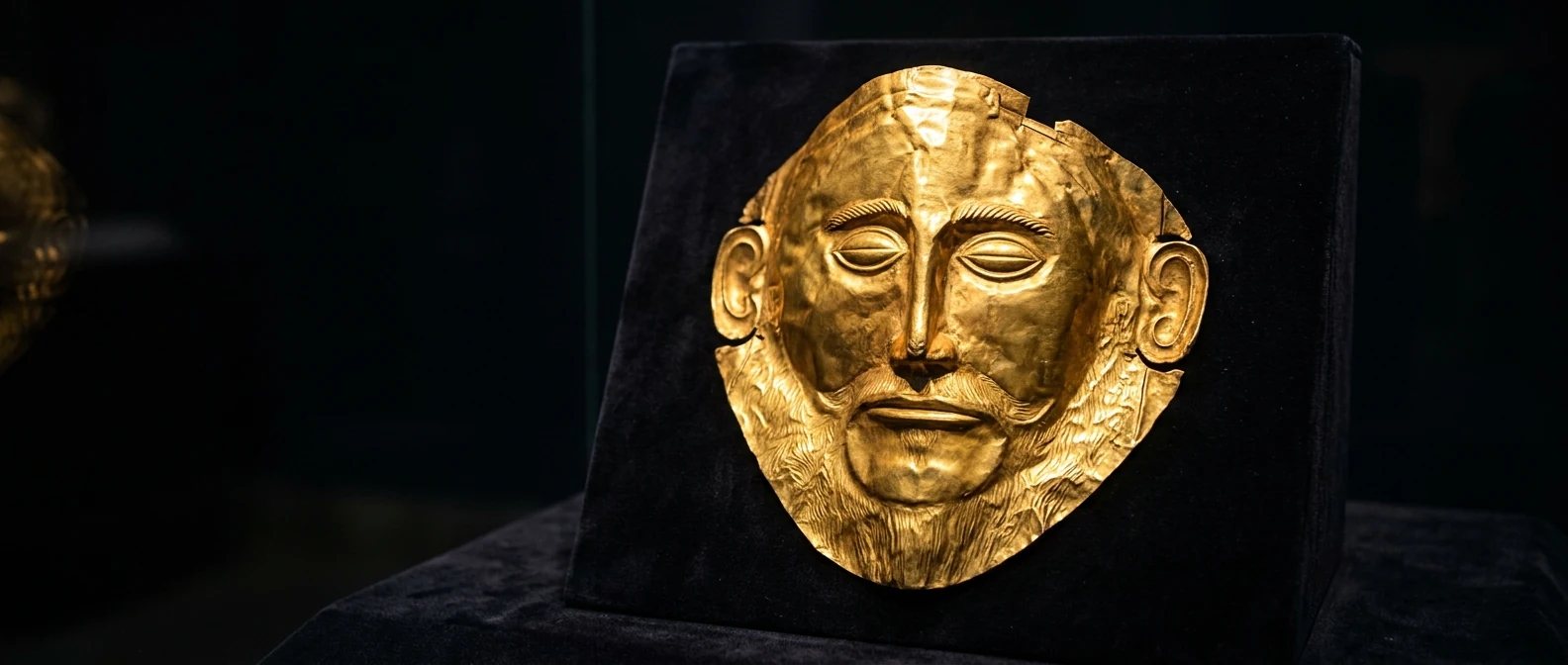
1. The Mask of "Agamemnon" — Room 4
Heinrich Schliemann found it in a shaft grave at Mycenae in 1876 and immediately connected it with Agamemnon. The dating, however, places it several centuries before the Trojan War as we know it from epic tradition. The name remained, but the mask becomes more interesting if you look at it as a Mycenaean funerary object: a thin sheet of gold, closed eyes, and a face that feels more like a ritual image than a portrait.
📍 From Angels Athens to National Archaeological Museum
See at a glance how to get from the apartment at Iouliánou 50. Drag the map and zoom in for details.
2. The royal tombs of Mycenae — Rooms 3–4
In the same rooms you will also see gold cups, daggers with inlaid scenes, libation vessels, and other Mycenaean objects that show wealth, technical skill, and contact with the wider Bronze Age world. The famous Vapheio Cups, with bull scenes in fine relief, do not come from the same tombs at Mycenae, but they belong to the same broader story of Mycenaean art.
3. Cycladic figurines — Room 6
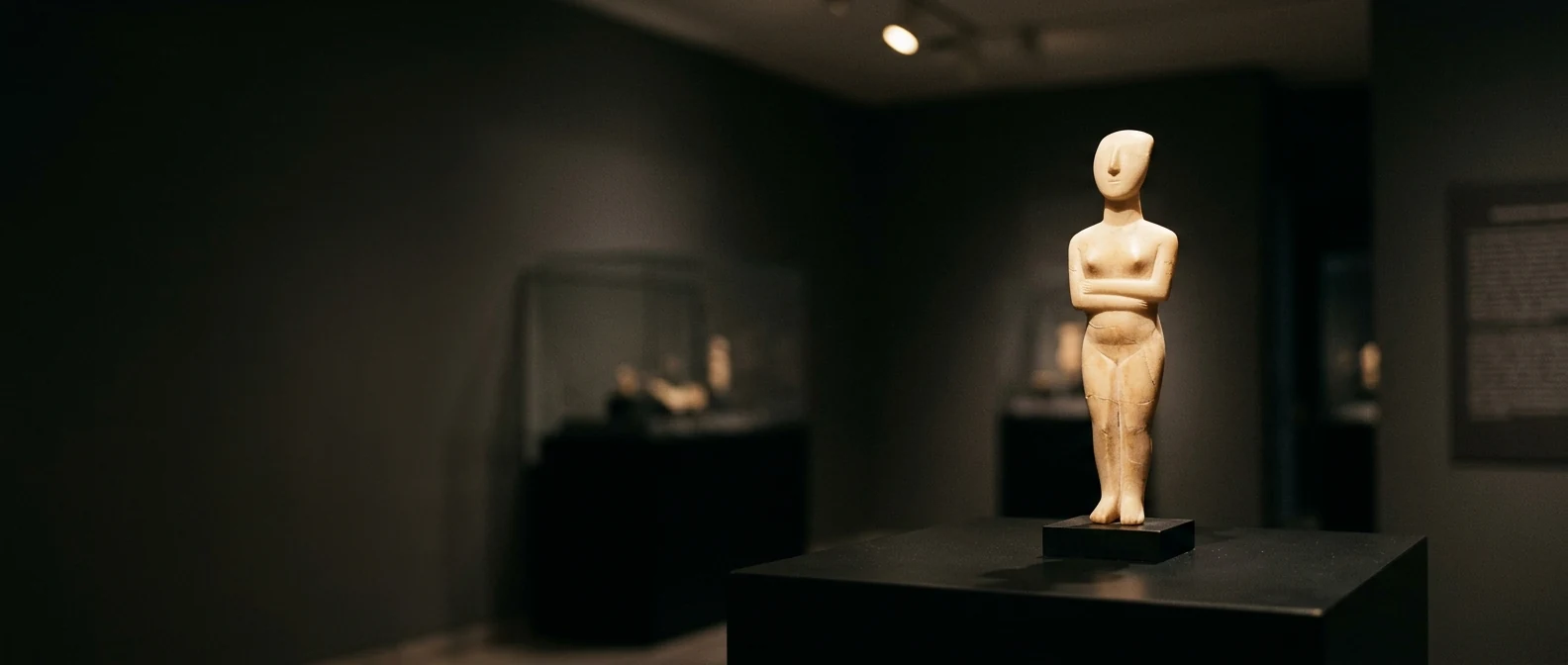
The marble Cycladic figurines (3200-2000 BC) are small, stripped back, and more complex than they first appear. Look for the "harp player," a seated male figure playing a triangular harp. This room is also a good pause before you move into the sculpture galleries.
4. The Akrotiri frescoes — Rooms 48 & 49
Akrotiri on Thera
The volcanic eruption on Thera buried the prehistoric town of Akrotiri under ash, preserving frescoes with unusual freshness. The "Boxing Boys," the "Fisherman," and the scenes with plants, birds, and ships show an Aegean world that feels colorful, maritime, and much more familiar than many visitors expect from the Bronze Age.
5. Linear B tablets — Prehistoric galleries
Small clay tablets, some no larger than a credit card, inscribed with the earliest deciphered Greek writing. This syllabic script was used from around 1450 to 1200 BC for accounting in the Mycenaean palaces. They survived almost by accident: the palaces burned, the unbaked clay was fired, and the administrative notes endured. Michael Ventris's decipherment in 1952 pushed the history of the Greek language back by about 700 years.
6. The Kouros of Sounion — Room 8 (Archaic Sculpture)
Once you move from the Prehistoric section into Sculpture, the Kouros of Sounion shows the archaic form at its strictest: frontal, upright, with the familiar archaic smile and the body arranged in clear lines. Keep him in mind when you later reach the bronzes in the next rooms. The difference tells you a great deal about the development of Greek sculpture.
7. The Artemision Bronze (Zeus or Poseidon) — Room 15
Recovered from a shipwreck near Cape Artemision, this larger-than-life bronze figure is caught in the moment of throwing. Whether he once held a thunderbolt or a trident remains open, which is why you will see him identified as either Zeus or Poseidon. He matters for a simple reason too: original Greek bronzes survive only rarely, because so many were melted down in later centuries.
8. The Marathon Boy — Room 28
Another original bronze, recovered from the sea near Marathon. The young athlete stands with a slight lean and originally held something that is now lost. It has been linked to the circle of Praxiteles, though not with full certainty. Look at it after the Kouros of Sounion: the distance between the two works shows how much the relationship between body and movement had changed.
9. The Jockey of Artemision — Room 21
The Jockey of Artemision is one of the works worth actively looking for, because it is not always on the quickest route through the museum. The small rider and the horse convey tension, speed, and movement in a way that stands out in the collection. If you have trouble finding it, ask a member of staff.
10. The Antikythera Mechanism — Room 38
The Antikythera Mechanism is one of the main reasons many people visit the museum. Its bronze fragments, with interlocking gears, come from a shipwreck near Antikythera and are linked to astronomical calculation. Its complexity is unusual for the ancient world. Do not stop at the first glance: the reconstructions and explanation panels help a lot.
11. Bronze philosopher from Antikythera — Room 28
From the same shipwreck comes the so-called bronze philosopher: the head and torso of an older bearded man with wrinkles and an intense expression. We do not need to know with certainty whom he represents to understand why he matters. Hellenistic art is no longer looking only at ideal youth here; it is turning toward the face with greater psychological intensity.
12. Vase collection: the Dipylon Amphora — Room 41 (1st floor)
Upstairs, in the Vase Collection, the Dipylon Amphora shows Geometric art on a monumental scale: bands of pattern, mourners, and a funerary scene that organizes the whole surface. It is a good final stop, because it takes you away from the most famous names and reminds you how powerful pottery can be.
Practical visit information
- Address: 44 Patission (28 October) Street, Athens 106 82. From Angel Athens, you can simply walk there in a few minutes, without needing metro or taxi.
- Hours: these can change by season, holiday, or restoration work. Check the official site before you go.
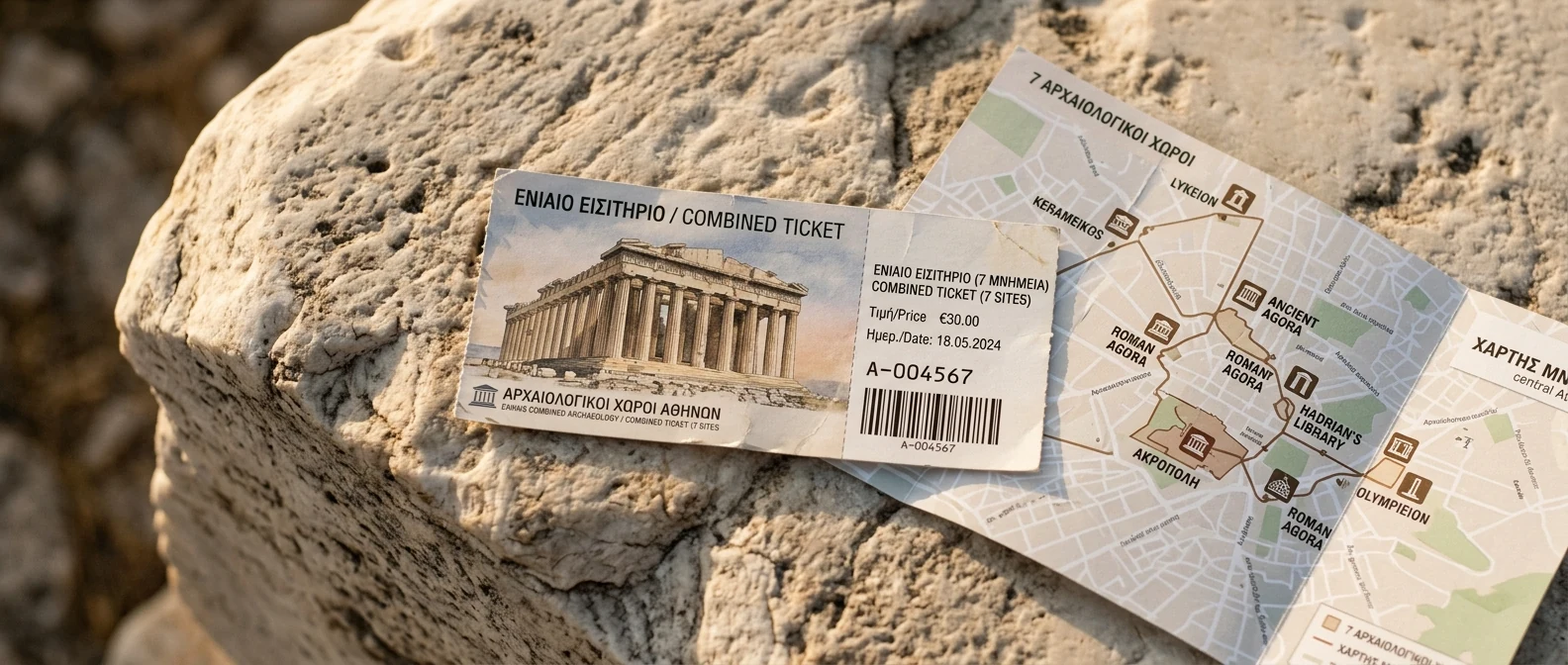
- Tickets: there are standard, reduced, and free visitor categories. Confirm the current policy on hhticket.gr or namuseum.gr.
- Booking: for a regular visit it is usually not difficult, but during peak periods or special exhibitions it is worth checking ahead.
How much time to allow
90 minutes — fast
The 12 exhibits above and nothing more. Possible if you walk quickly and do not stop for every label.
3 hours — recommended
Prehistoric collections, Sculpture, and Bronzes at a calmer pace, plus the frescoes upstairs. Accept that you may leave out the Egyptian and Cypriot collections.
5+ hours — full
All six collections, with breaks at the cafe. Best for visitors who already know they love Greek archaeology.
Frequently asked questions
Is the Antikythera Mechanism worth the trip on its own?
For anyone interested in the history of science or technology, yes. It is not the most visually dramatic object at first glance, but the more you understand what it did, the more impressive it becomes.
Can the museum be done with kids?
Yes, but with a short route. For younger children, choose a few exhibits with a clear image: the Antikythera Mechanism, the Cycladic harp player, the Akrotiri frescoes, and one or two of the bronzes. If you try to do the whole museum, they will probably tire quickly.
Is the museum closer to the Acropolis or Omonoia?
Omonoia. About 12 minutes' walk north of Omonoia metro. From the Acropolis area it's a 30–35 minute walk through downtown — easier to take metro Red Line two stops to Omonoia and walk from there.
Sources:
— Kathy