Four lives for one stadium
The same horseshoe-shaped site has been linked with games and public ceremonies since antiquity, even if the form we see today is mostly the result of the 19th-century reconstruction. Its history fits into four main phases:
- 330/329 BC — first construction, by the Athenian orator and politician Lycurgus, to host the Panathenaic Games in honour of Athena.
- 140-143 AD — complete rebuilding by Herodes Atticus, who covered the seating in white Pentelic marble for the Great Panathenaea. From that phase comes the nickname Kallimarmaro, or "beautiful marble."
- 1869/1870 — the first organised excavation of the by-then-buried site, by the German architect Ernst Ziller.
- 1895-1896 — full marble reconstruction, funded by the Greek-Egyptian benefactor Georgios Averoff, in time for the first modern Olympic Games.
From 1896 onward, the stadium took on a strong symbolic place in modern Olympism. It is linked with the first modern Olympics, the 1906 Intercalated Games, the 2004 Games, and the ceremonies around the Olympic flame. That modern layer of history matters as much here as the ancient origin of the site.
What you can see inside
The marble seating bowl
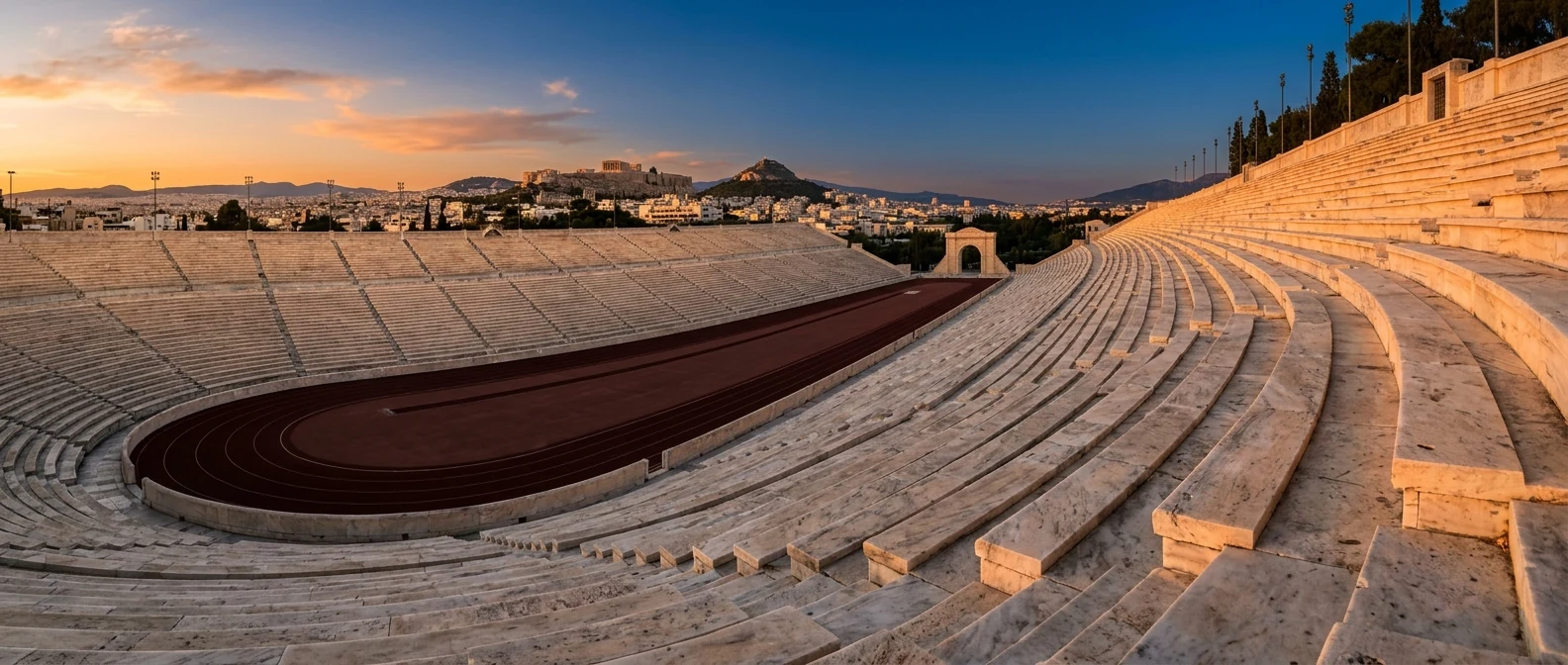
The strongest visual feature of the stadium: white Pentelic marble in a long horseshoe shape. Sit for a moment in the lower rows and look across the track without rushing.
The track
You can walk on the track and immediately feel how different it is from a modern stadium. The curves are tighter and the geometry follows the historical form of the site rather than today's athletic standards.
The Sphendone, or royal box
The marble box at the closed end of the horseshoe was the king's seat in 1896 and is the most photographed spot. You can sit there.
The Olympic torch tunnel
Under the seating there is a tunnel with Olympic torches and material connected to modern events. Do not skip it. It is one of the things that gives the visit more depth.
The Averoff statue
Outside the entrance, the marble statue of Georgios Averoff — by sculptor Georgios Vroutos — has stood since 1896 thanking the man who paid for the reconstruction.
The herm of Hermes
An ancient pillar with the head of Hermes, found during the 1869 excavations. Hermes was the god of athletes, and the marker originally stood on the central axis of the ancient track.
📍 From Angels Athens to Panathenaic Stadium · Kallimarmaro
See at a glance how to get from the apartment at Iouliánou 50. Drag the map and zoom in for details.
The audio guide — take it seriously
Why it matters
If an audio guide is available on the day of your visit, take it. The stadium looks simple at first glance, but its history only opens up when you understand the different phases: ancient stadium, Roman marble version, excavation, reconstruction, the 1896 Olympics, and modern ceremonies. Without some guidance, many visitors leave after fifteen minutes.
Practical visit information
- Address: end of Vasileos Konstantinou avenue, Pagrati. Walk from Syntagma Square through the National Garden — about 15 minutes — or 15 minutes from Akropoli metro (Red Line). Tram stop "Zappeio" is the closest tram option. From Angel Athens, the simplest route is Victoria to Omonia on Line 1, then Line 2 to Syntagma and a walk through the garden.
- Opening hours: these change by season and may also be affected by races, concerts, or ceremonies. Check panathenaicstadium.gr before you go.
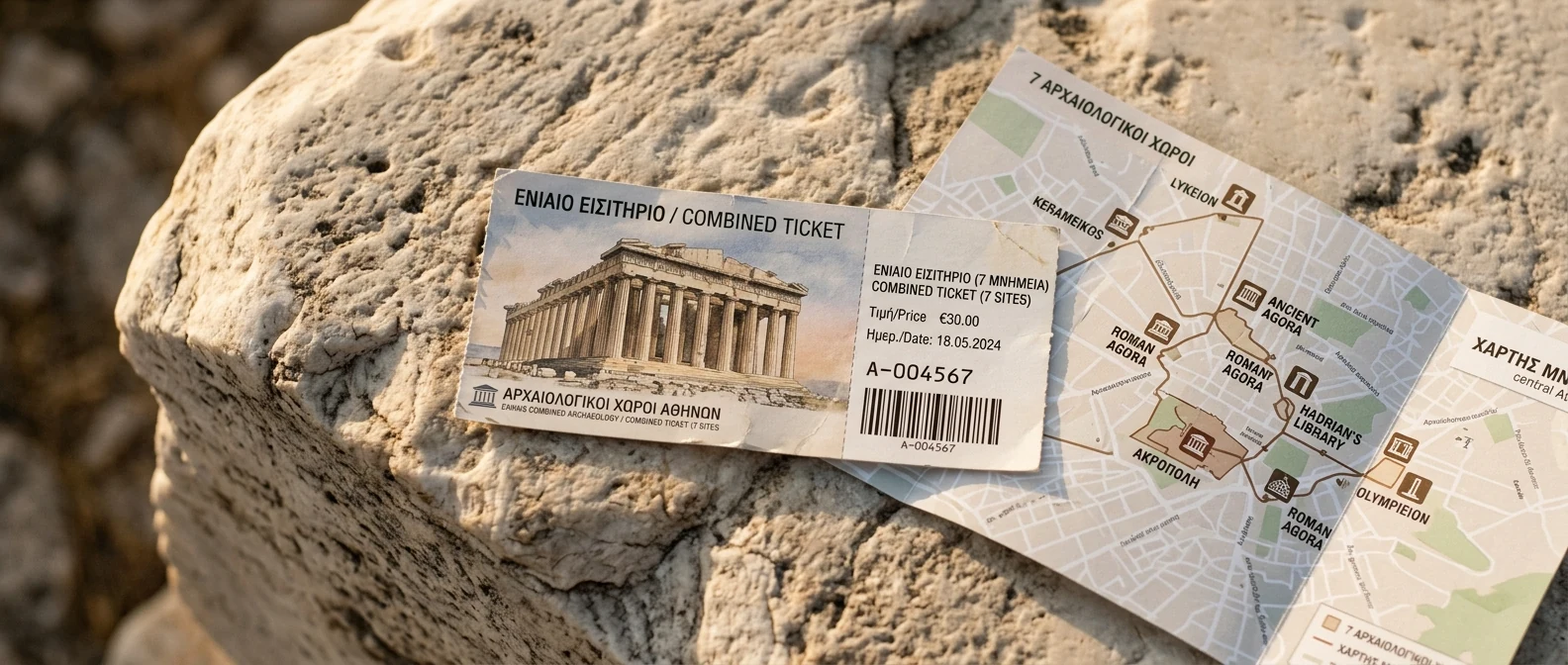
- Tickets: there are standard and reduced tickets, with conditions that should be confirmed on the official site.
- Booking: for a normal visit it is usually not difficult, but the rules may change on event days.
The runner's pilgrimage
For runners, Kallimarmaro carries a particular weight because it is the finish line of the Authentic Athens Marathon, the route that links Marathon to the Panathenaic Stadium. If you are in Athens around race weekend, check road closures and transport changes. The atmosphere at the finish is strong even for people who are not running.
Photography tips
- Best angle: from the southern marble seats, looking north along the curve of the stadium, with the track below and the trees of the National Garden behind.
- The classic shot: from the back row of the closed (horseshoe) end, framing the track and the open city skyline beyond.
- From outside: the best exterior shot is from the small park directly across Vasileos Konstantinou, where you get the entire façade plus the Averoff statue.
What to combine it with
Kallimarmaro sits on the edge of the National Garden and near Pagrati. A natural route looks like this:
- Start at Syntagma Square and watch the changing of the guard at Parliament.
- Walk south through the National Garden to the Zappeion Hall.
- Cross to Kallimarmaro — about 5 minutes from the Zappeion.
- After, walk west 10 minutes to the Temple of Olympian Zeus and Hadrian's Arch.
Alternatively, continue toward Pagrati for food or coffee. It is a good option if you want to step a little away from the most tourist-heavy Acropolis and Plaka axis.
Frequently asked questions
Is it really the only all-marble stadium in the world?
The present image of the stadium is defined by the Pentelic marble of the seating and the 19th-century reconstruction. That is what gave it the name Kallimarmaro. Inside, the impression is unmistakably marble in a way that is rare for a stadium.
Can you run on the track?
Walking on the track is part of the visit. For running or anything more intense, follow the staff instructions and avoid shoes or equipment that could cause wear.
Is it worth it for non-sports fans?
Yes. The architecture and the history are enough for a short but worthwhile visit. If you use the audio guide, you will stay longer; if you go in only for photos, it can be over quickly.
Concert venue?
At times, yes. The stadium can host large events or concerts, which may affect normal visiting hours. Always check the official site before setting out.
— Kathy