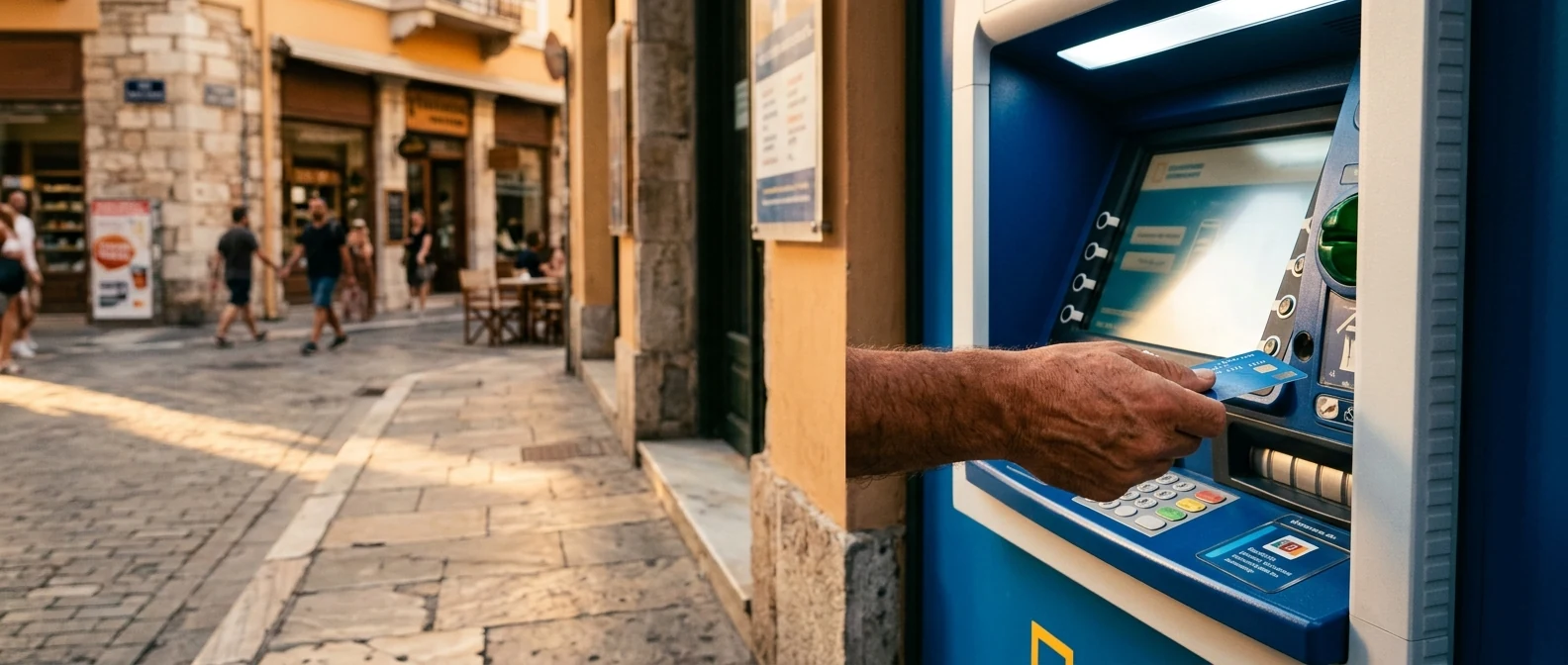
DCC: the option to watch
When you use a foreign card in an ATM, you may see a question such as: "Convert to your home currency?" or "Charge in euros?" Choose charge in euros and continue without dynamic currency conversion (DCC). If you accept the ATM's conversion, the exchange rate is set by the machine operator and is usually worse than the rate from your bank or card provider.
The four ATM categories near Victoria
Major Greek bank ATMs (preferred)
National Bank of Greece, Alpha Bank, Eurobank and Piraeus Bank. Prefer machines attached to a branch or clearly marked with the bank logo. Fees for foreign cards are usually lower than at standalone tourist ATMs.
Euronet / Cardpoint ATMs (avoid)
Standalone machines, often in touristy locations or outside shops. They may charge more and push currency conversion more aggressively. Use them only if there is no bank ATM nearby.
Hotel / shop "convenience" ATMs
Convenient, but often more expensive. Check the fee before you continue.
Currency exchange offices
Useful only if you already have cash in another currency. For everyday use, a good debit card at a bank ATM is usually more practical.
The Victoria Square ATM map
- Victoria Square itself — Eurobank, Alpha Bank and Piraeus Bank are within a short walk of the metro exit. All have outdoor ATMs.
- Heyden stretch — look for Greek bank ATMs along the street and near the Aristotelous junction.
- 3rd Septemvriou — several bank branches with ATMs.
- Acharnon — Eurobank and other major bank ATMs as you walk toward Larissis.
- Watch out: standalone third-party machines on street corners may charge more than bank ATMs.
Typical fees
€2-€3
A common bank ATM fee for a foreign card, charged per transaction.
€5-€8
Possible fee at standalone or tourist-oriented ATMs. Read the screen before you continue.
1-3%
Your own bank's foreign transaction fee. Low-fee cards may charge little or nothing, while traditional banks often charge more.
3-7%
A possible extra cost if you accept dynamic currency conversion. Choose euros instead.
A practical cash strategy
How to reduce fees
- Use a card with low foreign fees, such as Revolut, Wise or an equivalent service from your country.
- Make fewer withdrawals. One larger withdrawal usually costs less than several small ones.
- Avoid DCC at ATMs and card terminals.
- Use Greek bank ATMs, not Euronet.
- Pay by card where possible and keep cash for smaller amounts.
- Pay in euros when the terminal asks whether you want EUR or your home currency.
When you really need cash
- Tipping — €1-€5 in cash for hotel housekeeping, cafe service or taxi drivers. Small businesses rarely let you add a tip on the card terminal.
- Markets — Varvakeios fish/produce stalls and laiki street markets are largely cash-only. (See Varvakeios guide.)
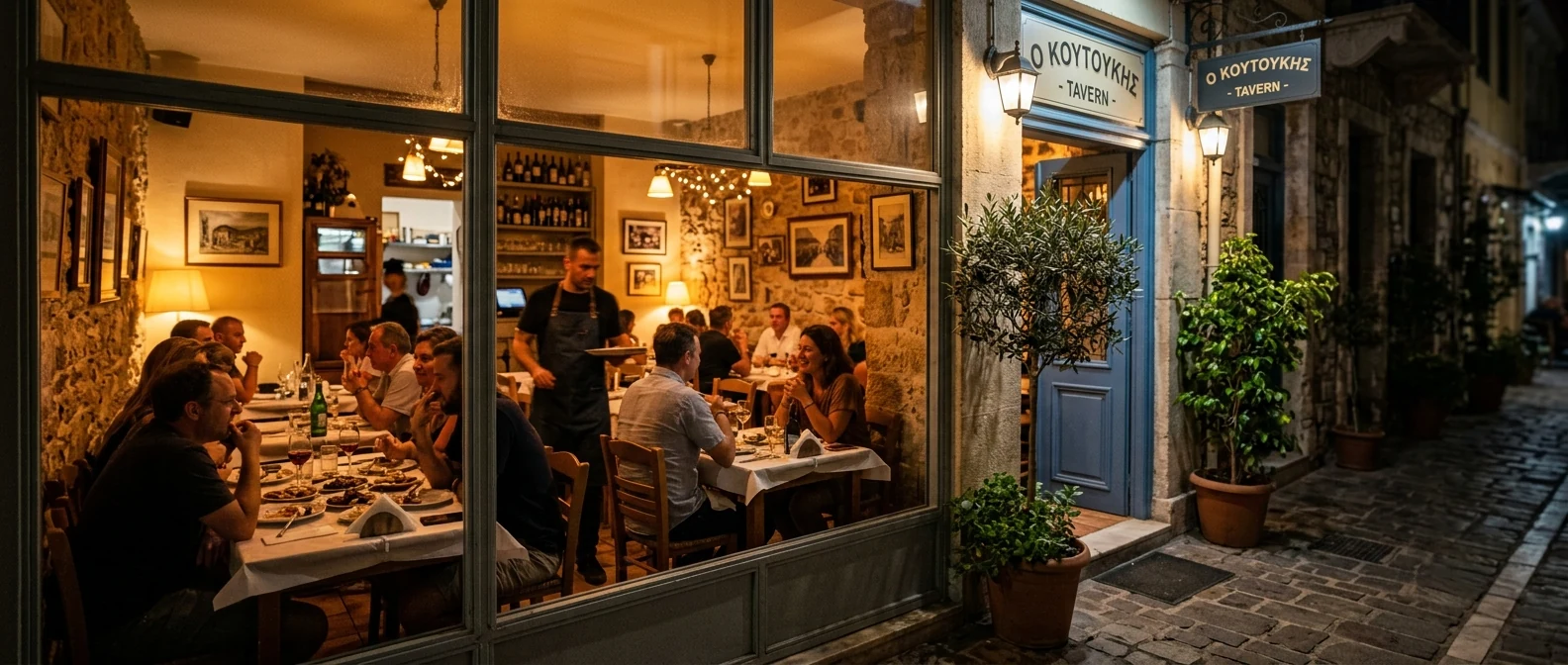
- Small cafes and tavernas — many prefer cash for small bills or occasionally have problems with the terminal.
- Public transport — ticket machines accept cards, but older kiosks may only take coins. Keep €5-€10 in small cash.
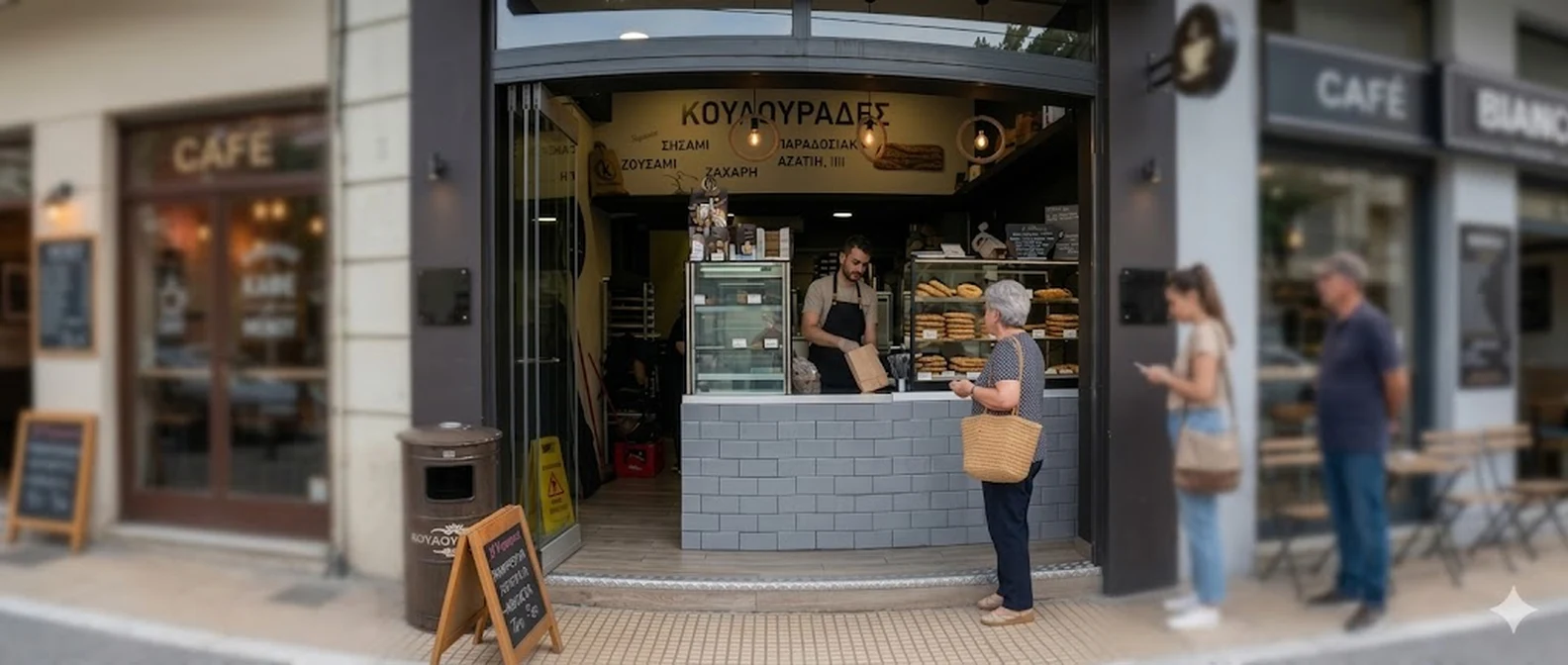
- Souvlaki places and bakeries — purchases under €5 are often easier with cash.
- A small reserve — keep €40-€50 for taxis, a late-night bakery or a shop that cannot take cards at that moment.
A reliable currency exchange office nearby
If you have cash in pounds, dollars or another currency to exchange, a reliable option nearby is just a 3-minute walk from Ioulianou 50: MoneyGram on Patission 71, at the corner of Leoforos Alexandras. It keeps broad hours, stays open until 21:00 on weekdays, and also handles international money transfers:
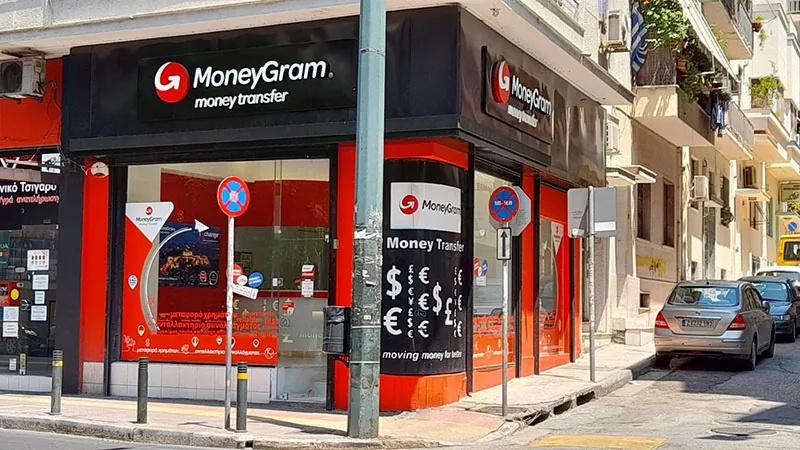
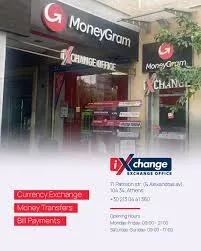
Currency exchange office
A reliable exchange office close to the apartment. It also handles MoneyGram transfers worldwide.
Before agreeing to any exchange, compare the posted rate with a reliable app (Google, XE) and ask whether there is a commission. In Plaka and Monastiraki, rates may be less favourable because of tourist traffic.
Cards Greek shops accept
- Visa and Mastercard — generally accepted anywhere with a card terminal.
- American Express — more likely in hotels, larger restaurants and chains. Small cafes and souvlaki places often do not take it.
- Apple Pay / Google Pay — work wherever contactless Visa or Mastercard works.
- Mobile banking apps (Revolut, Wise) — work as Visa/Mastercard.
Fees and mistakes to watch for
- DCC at card terminals. If the screen asks whether you want to pay in EUR or your home currency, choose EUR.
- Skimming devices on ATMs. Rare in Athens but possible. Cover the keypad when entering PIN; check the card slot for loose attachments.
- "Cash advance" on credit cards. Credit card withdrawals can mean high fees and interest from day one. Use debit cards where possible.
- The wrong amount on a bill. Check the receipt before you pay, as you would anywhere.
What to do if your card stops working
- Call your bank immediately — most banks have 24/7 international fraud lines. Card fraud detection sometimes blocks foreign transactions.
- Try a different ATM — sometimes individual machines are out of service.
- Have a backup card — it helps to carry one Visa and one Mastercard from different banks.
- Wire transfer via Western Union / MoneyGram — emergency only. The MoneyGram on Patission 71 (corner of Leoforos Alexandras, 3 minutes from Ioulianou 50) is the closest and most reliable option in the area.
FAQ
Are euros from other countries accepted?
Yes — euros are euros. €100 from Germany or France works identically in Greece.
Should I bring euros from home or withdraw in Greece?
In most cases, withdrawing in Greece with a low-fee card works out better. Still, it helps to arrive with a small amount of cash for the first hours.
What's the daily ATM withdrawal limit?
Most Greek bank ATMs allow up to €600-€800 per transaction. Your home bank may have a lower limit.
Are ATMs available 24/7?
Outdoor ATMs usually operate 24/7. For a late-night withdrawal, choose a well-lit spot with some movement and avoid isolated machines.
Can I use cryptocurrency?
Some businesses accept Bitcoin via apps but acceptance is rare. Cards and cash dominate.
Sources:
— Kathy