What a magireio is
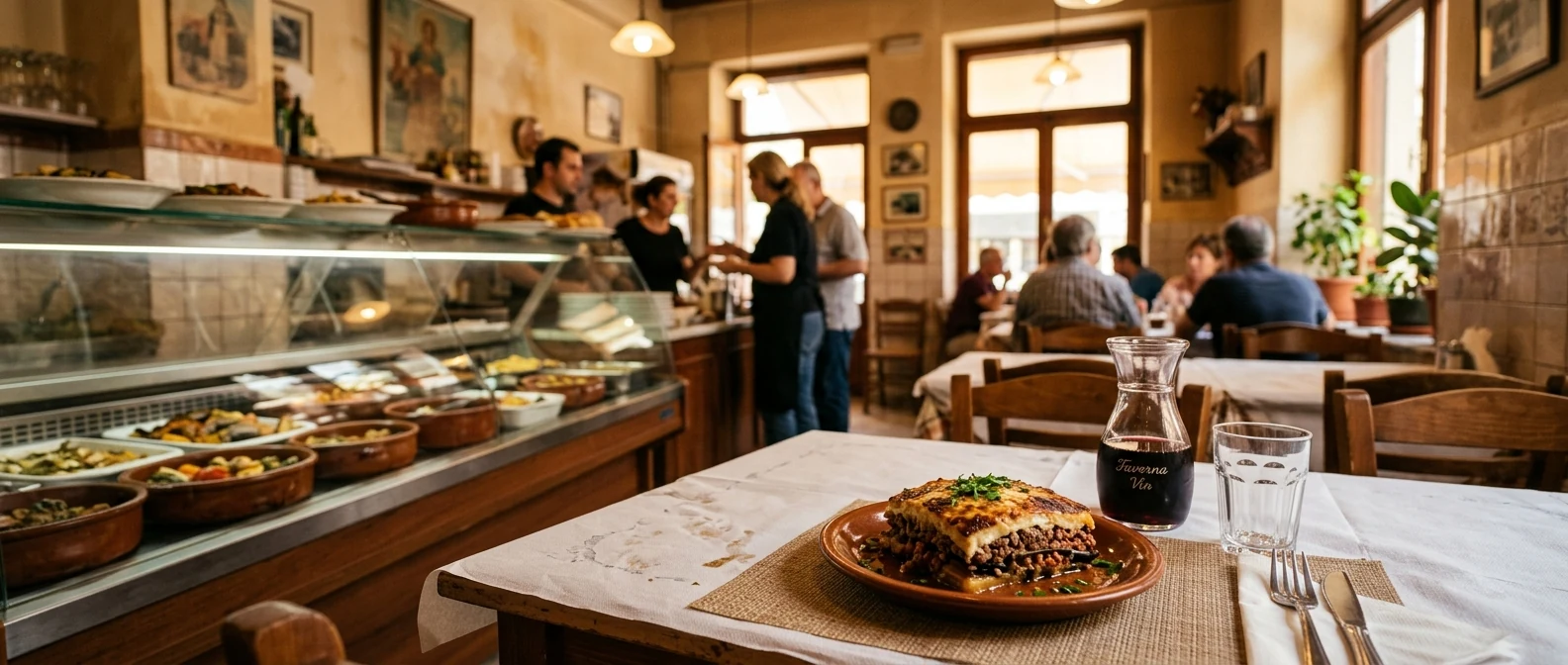
The right word for Krouskas is magireío. Magireía are lunchtime restaurants for home-style cooking, with pot dishes and oven dishes. They do not work like tavernas, which usually focus more on grilled food, meze and evening tables. The difference is clear right away:
- The menu is the trays. You walk in, look at the counter, ask what is there, and point to what you want.
- The food is cooked in the morning. When the trays are empty, many dishes do not come out again the same day. Most magireía close in the early afternoon.
- The food is mageireuta. Pastitsio, moussaka, gemista, gigantes, fasolakia, cuttlefish with spinach, lemon chicken. It is everyday Greek home cooking, made on a larger scale.
Where it is
Krouskas is on Aristotelous Street, two blocks south of Victoria Square, between Heyden and Veranzerou. The entrance is simple, without much restaurant staging. On weekdays you will see people from nearby offices, local residents, students, and visitors looking for lunch near Victoria. The busiest time usually starts around 13:30 and lasts until about 16:00.
What you will usually find on the trays
The selection changes from day to day. That is part of how a magireio works. On a typical visit you may see a combination of the following:
Pastitsio
Macaroni, minced meat with tomato and spices, béchamel on top, baked in a tray. You want a clean slice and a cream that does not feel too heavy.
Gemista
Tomatoes and peppers stuffed with rice, mint and parsley, sometimes with minced meat. A classic summer dish.
Gigantes plaki
Large beans baked in tomato sauce with herbs. A good choice if you want a filling vegetarian plate.
Kotopoulo lemonato
Chicken slow-roasted with lemon, oregano and potatoes. Bone-in; you should be able to pull it apart with a fork.
Soutzoukakia
Smyrna-style meatballs in tomato sauce with cumin. One of the dishes where the Asia Minor influence is easy to notice.
Boiled wild greens (horta)
The plate many Greeks finish a magireio meal with. Lemon and olive oil, nothing more.
What it costs
€7–€10
Single main plate (one tray choice + bread + small salad).
€12–€16
Two-plate lunch (a meat dish + a vegetable side or a starter) + a glass of bulk wine.
€18–€24
Two people, three plates between them, half-litre of wine, water. The realistic Athenian lunch tab.
These prices are close to what you would expect from a neighborhood magireío in Athens. In more touristy areas, the same style of food can cost noticeably more, without necessarily being better.
The bulk wine question
Magireía often serve χύμα κρασί — bulk wine — in half-litre or one-litre carafes. A half litre is usually around €4. Quality changes from place to place, but for a simple lunch it fits better than a heavier bottle. If there is no bulk wine, you will usually find inexpensive Greek table wines.
How to order
- Arrive between 13:30 and 14:30. Earlier, not all dishes may be out; later, some trays may already be finished.
- Go to the counter. Look at the trays before you sit down, especially if there is no printed menu.
- Ask "what do you have today?" It is the most natural question in a magireio and often leads you to the freshest dish.
- Share plates. For two people, three dishes and a salad are usually enough. If you are very hungry, add horta or gigantes.
- Have water and, if you want, bulk wine. A carafe suits this kind of food better than a heavier option.
- Finish simply. Yoghurt with honey or some greens is a more natural ending than a heavy dessert.
What a good magireio looks like
Five signs of a good magireio
- The trays look clean and do not seem tired from too many hours on display.
- The bread basket arrives without you asking.
- There is a daily list, or the staff can easily tell you what came out today.
- The room fills with lunchtime customers, not only passers-by.
- The staff know the dishes. In family-run magireia, that shows immediately in the way they describe the trays.
Combine your lunch with
The area around Victoria Square works well for a quiet walk after lunch:
- The National Archaeological Museum — about 6 minutes on foot to the south. If you want to continue with a cultural stop, see our museum guide.
- Exarchia — about 10 minutes to the east, for coffee after lunch. See also our Exarchia guide.
- Patision and 28is Oktovriou — an everyday Athens axis with apartment buildings, older mansions and steady movement between Victoria and Omonia.
How to get there from Angel Athens (Ioulianou 50)
From Ioulianou 50, walk about 3 minutes to Victoria Square and then another 3-4 minutes toward Aristotelous. The total walk is usually around 6-9 minutes, with no metro or taxi needed.
FAQ
Do I need to book?
At most magireía you do not need a reservation. You walk in, see if there is a table, and wait a little if it is full. A solo visitor will usually find a seat easily.
Is there an English menu?
Usually not, but it is not a big problem. The trays are in front of you, so you can point. Staff in places like this are used to visitors who do not speak Greek.
Vegetarian options?
Usually there are quite a few. Gemista, gigantes, fasolakia, briam, dolmades and horta are classic magireio dishes. If you are vegan, ask whether a dish includes butter, stock or cheese. See also our vegetarian and vegan guide.
Open Sunday?
Many magireía close on Sundays or work shorter hours. Saturday lunch can be busy. If you are going specifically for Krouskas, confirm the hours on the day.
— Kathy