The souvlaki vocabulary
In English, "souvlaki" often gets used for several different things. In Athens, the words are a bit more specific:
Kalamaki
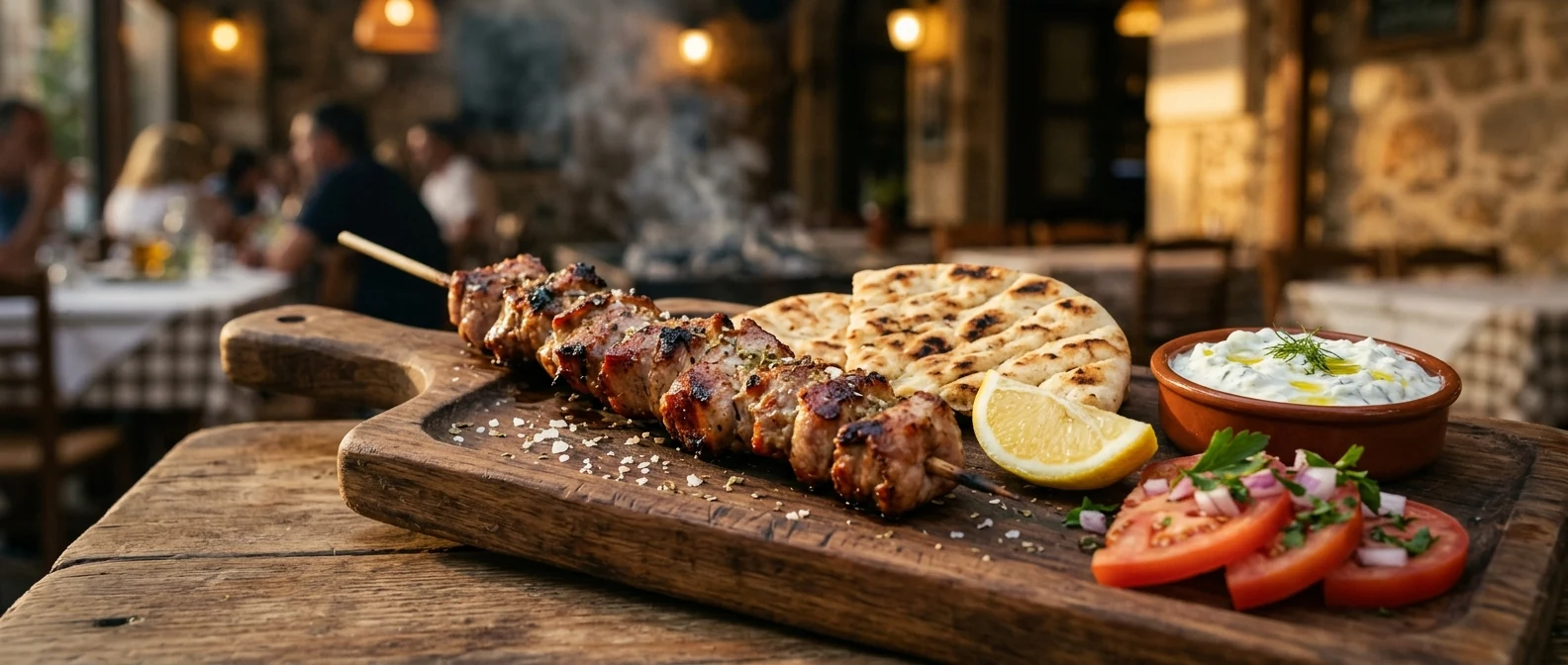
Pieces of meat, usually pork or chicken, grilled on a small wooden skewer. You can eat it on its own with bread or have it inside a pita. Usually €2.00-€2.50 each.
Gyros
Marinated meat on a vertical rotisserie, sliced into thin pieces as it cooks. Usually pork or chicken. It is similar in style to doner or shawarma, but with different seasoning and usually served in pita.
Pita ap' ola
A warm pita with meat, tomato, onion, fries and tzatziki. This is the most common order. If you do not want one of those ingredients, just say it clearly: "without onion", "without fries". Usually €3.50-€4.50.
Souvlaki merida
A plate with two or three kalamakia, or a portion of gyros, with pita, fries, tzatziki and tomato-onion salad. This is what you order if you are sitting at a table. Usually €9-€14.
Pork, chicken or kebab?
Three meats dominate Athens souvladzidika:
- Pork — the most classic choice for kalamaki and gyros. Usually marinated with olive oil, lemon, oregano and garlic.
- Chicken — very common, especially for gyros. Milder and less fatty than pork.
- Kebab — minced meat, usually beef with lamb, seasoned with cumin, paprika and herbs. It has roots in the Asia Minor tradition and is often served with yoghurt or a different sauce.
In Athens, gyros is usually pork or chicken. You will not easily find lamb gyros at a classic souvlaki place. For lamb and goat traditions, see the guide to Cretan cuisine.
Souvlaki around Victoria Square
The blocks around Victoria Square, toward 3is Septemvriou, Aristotelous, Heyden and Patission, have quite a few small souvlaki places. Most have the vertical rotisserie in the window, a few tables and a counter for takeaway. Many open around midday and stay open late, especially on Friday and Saturday.
Pita gyros
€3.50-€4.50 — the basic order. Cash helps, but many places also take cards.
Two kalamákia + pita
€5.50-€7.00 — a good option when you want something more filling without ordering a full plate.
Merída (sit-down plate)
€9-€14 — a full plate, salad, large beer, a proper meal.
Add-ons
Extra tzatziki €0.80, extra fries €1.50, beer (Mythos / Alpha) €3.00, soft drink €1.50.
Two nearby souvlaki places
Among the many souvlaki places in the area, two nearby options that are especially convenient are To Kalamaki tis Kyra-Sofias and «Tylixe to» — Gyros Souvlaki Victoria. Both are less than 5 minutes on foot from Ioulianou 50.
To Kalamaki tis Kyra-Sofias
A classic neighbourhood souvlaki place in the heart of Victoria, just north of the square. Its main strength is the charcoal-grilled pork kalamaki, marinated with olive oil, oregano and lemon. The tzatziki is thick with visible cucumber, the fries are freshly fried and the pita is warmed on the griddle. It is a good choice for a quick lunch or a simple takeaway dinner.
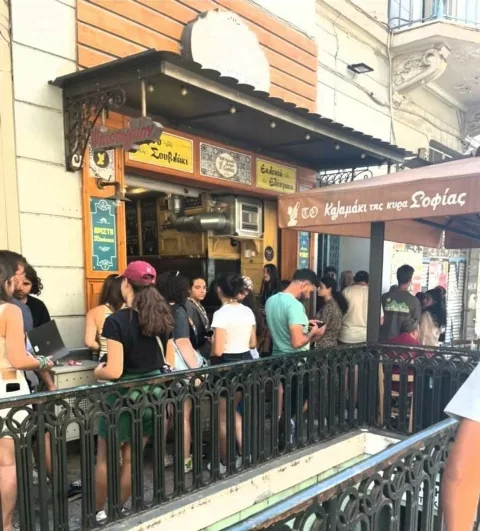
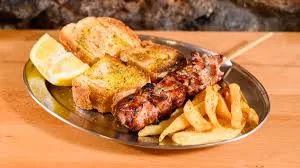
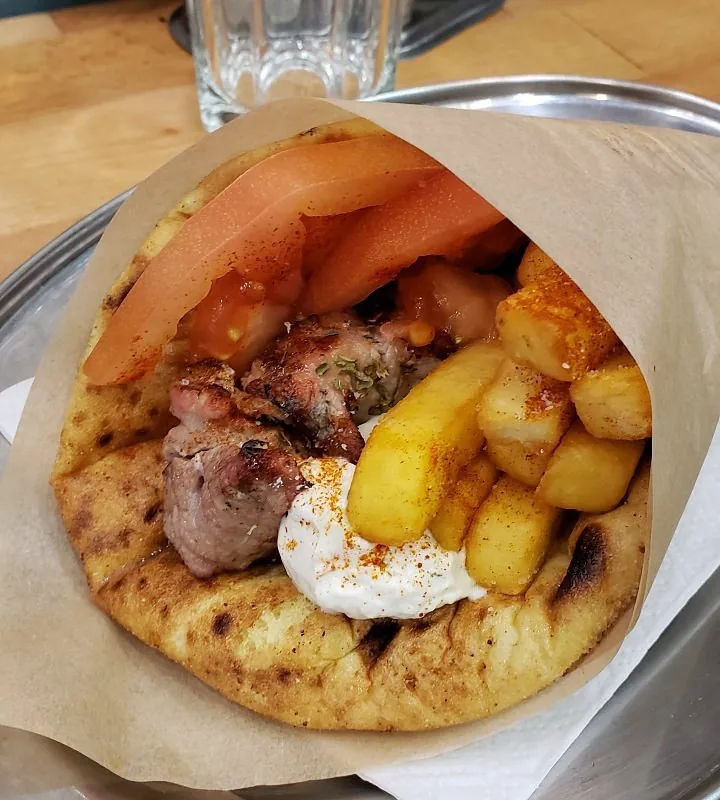
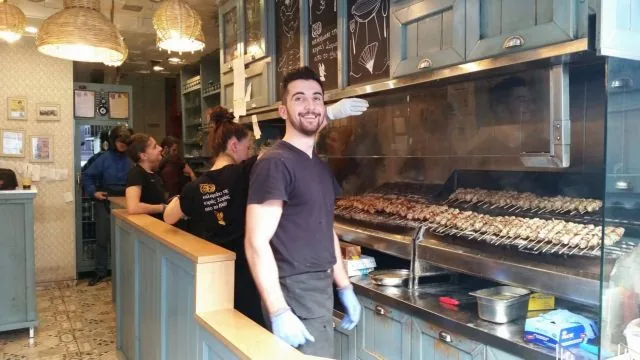
To Kalamaki tis Kyra-Sofias
Tiny grill serving authentic Greek souvlaki — chicken or pork, on the skewer or wrapped. A must-try in the neighbourhood.
«Tylixe to» — Gyros Souvlaki Victoria
Just a block away from Kyra-Sofias, «Tylixe to» puts the focus on the wrap itself: gyros pitas that are full and tightly wrapped, so they are easy to eat by hand. It has pork and chicken gyros, a kebab option and a choice of sauces such as tzatziki, spicy sauce or yoghurt. It stays open late, serves quickly and is especially convenient after a night out.
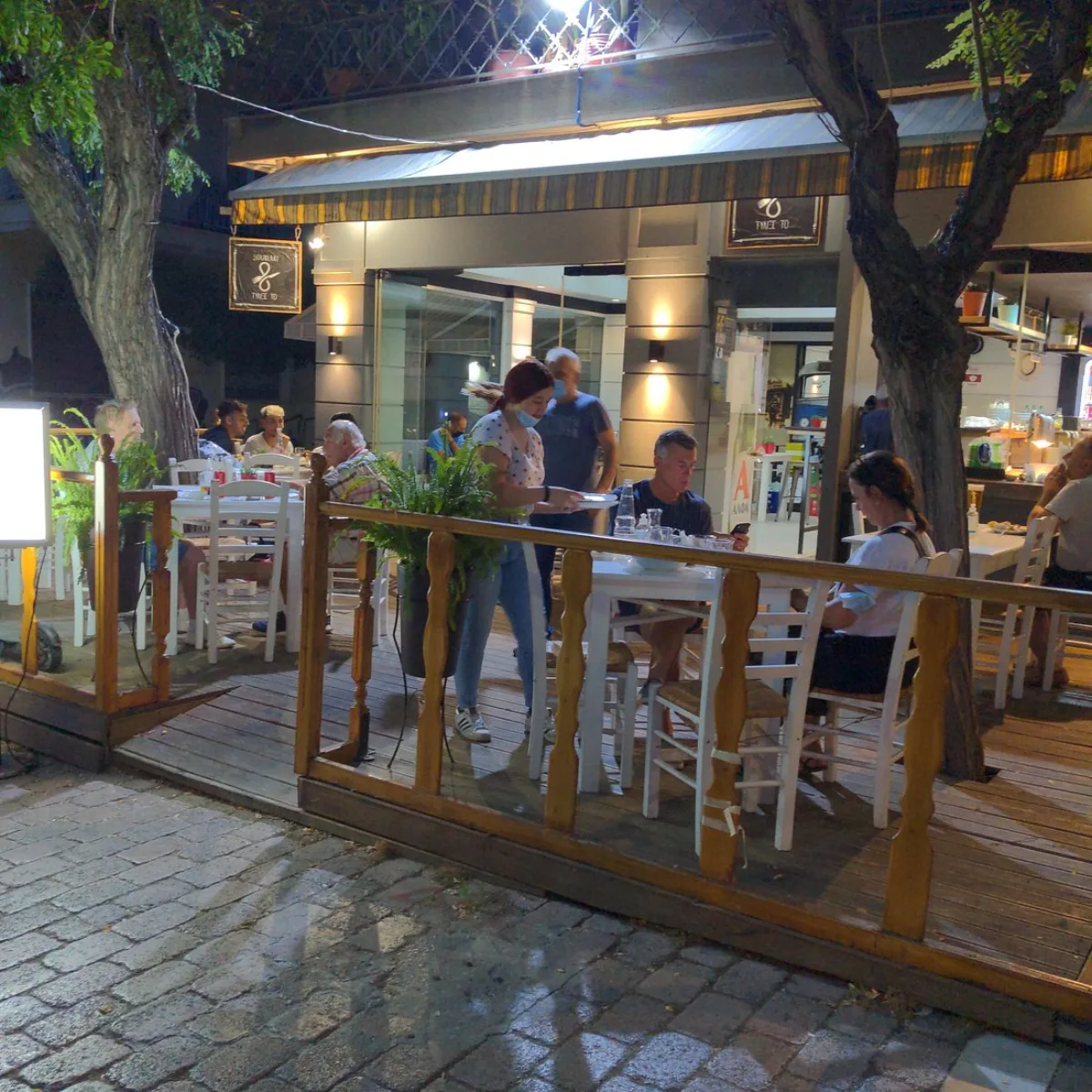
«Tylixe to» — Gyros Souvlaki Victoria
Gyros joint focused on the wrap. Pork or chicken gyros, daily kebab and your choice of sauce (tzatziki, spicy, yogurt). Quick service, great for late-night.
The pita makes a difference
The pita makes a big difference. Good places warm it properly on the griddle, often with a little oil, before they fill it. A good pita should be soft but steady, lightly toasted and not split when wrapped. If it is dry, cold or bends like cardboard, the rest of the meal is usually not very careful either.
The tzatziki test
How to judge a souvladziko
Tzatziki tells you a lot about the place. A good one should be:
- Thick — made with strained yoghurt, not runny;
- With grated cucumber pieces — visible, not a smooth puree;
- With a little olive oil on top, not dry;
- Garlicky in balance, so you still taste the yoghurt and cucumber.
If it is thin, too sweet or tastes like mayonnaise, the pita is usually not especially careful either.
The thing with fries
In Athens, fries usually go inside the pita. Around Victoria, you will see them in the wrap almost every time. Ideally they are freshly fried and not left sitting too long. If you do not want them, just say "without fries".
What to drink
- Mythos / Alpha / Vergina beer — Greek lagers, €2.50–€3.50.
- Retsina — pine-resin wine, sometimes available chilled in 500 ml bottles. €4–€6.
- Soft drinks — Coca-Cola, Fanta, or a Greek orange soda (portokalada).
- Water — €1 for a 500 ml bottle, free tap water if you ask.
When to go
- Lunch (13:00–15:30) — a good time for fresh gyros and quick service.
- Dinner (20:00–23:00) — busier and more social, with families and groups at the tables.
- Late-night (00:00–02:00) — after the bars, queues get longer but usually move quickly. Keep a little cash with you just in case. See also the late-night Athens guide.
How to get there from Angel Athens (Ioulianou 50)
From Ioulianou 50, the souvlaki places around Victoria Square are about 3-6 minutes on foot. Toward Aristotelous and Omonia, the walk is closer to 8-12 minutes. You do not need the metro for a normal neighbourhood souvlaki stop.
Frequently asked questions
Is gyros halal?
Usually not, because classic Greek gyros is pork. Some places also have chicken gyros, but that does not automatically mean halal. If you need a halal option, look for a place that says so clearly on the sign or menu.
Vegetarian souvlaki?
You will find it in quite a few places, usually as a pita with vegetables, grilled mushroom, halloumi or feta. Vegan versions are less common, but you will find more of them in Exarchia. See the vegetarian and vegan guide.
How much should two people pay?
Two pita gyros plus two beers and a side usually comes to about €13–€16 total. A sit-down merída for two with wine is closer to €25–€32.
Are there gluten-free options?
Limited. The pita is wheat-based and there is no standard gluten-free pita. The kalamákia themselves may work, but ask about marinades and cross-contamination on the grill. A plate with meat and salad is usually the safest option if the shop can explain it clearly.
— Kathy