The 15-minute walk, step by step
- Exit Victoria metro / square heading south. Walk down 3rd Septemvriou or Heyden toward the centre.
- Cross Patission (28 Octovriou Street). The major north-south boulevard.
- Enter the National Archaeological Museum block. The museum is on your left at 44 Patission. (See museum walking guide.)
- Continue west on Tositsa Street, passing the museum's south side. The neighbourhood begins to change: more graffiti, smaller shops and more independent cafes.
- Reach Themistokleous Street. You're now in central Exarchia. Continue south to Exarchia Square (Plateía Exarchíon).
- Total: 15-18 minutes, mostly flat with a slight downhill grade. The walk is fully on regular streets — no parks, no pedestrian zones.
What Exarchia is, in 60 seconds
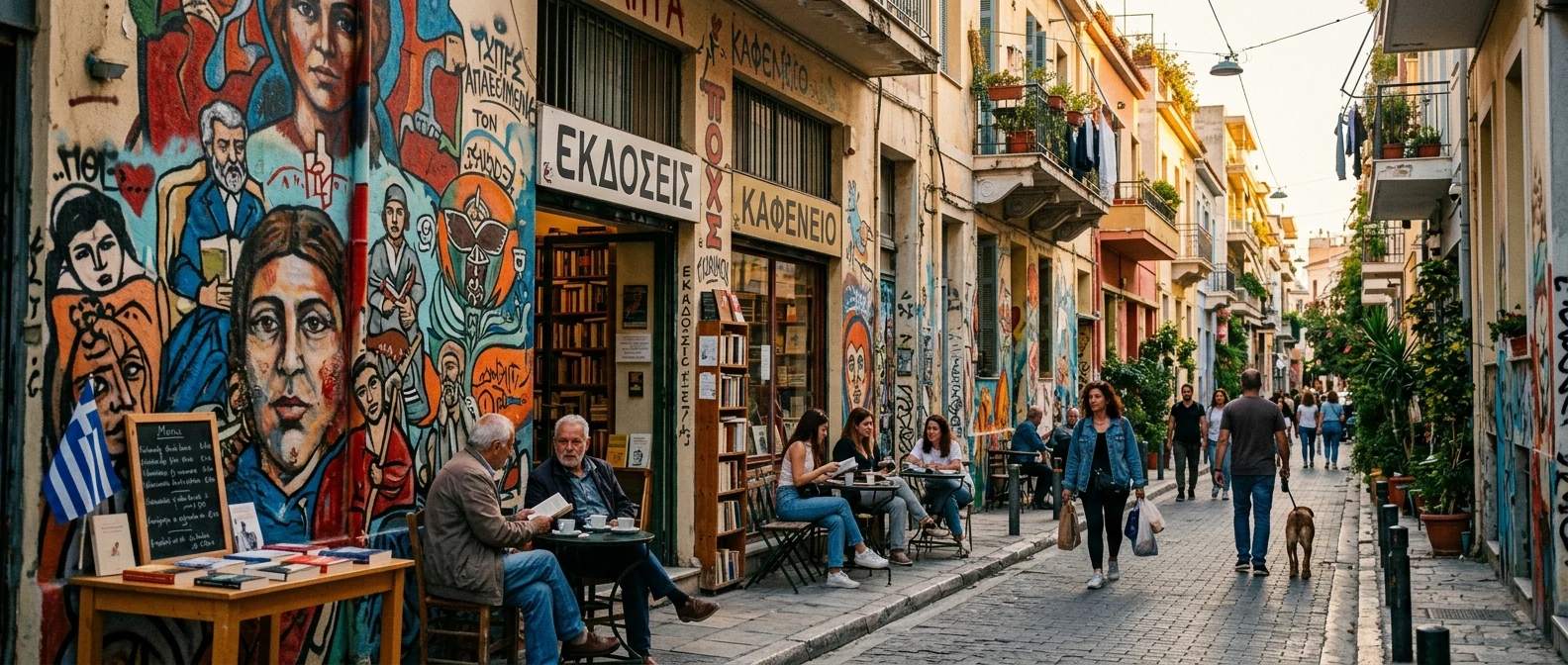
Exarchia is closely associated with student life, left-wing politics, independent bookshops, music and Athens counter-culture. The name is usually linked to Exarchos, a 19th-century merchant active in the area. The Polytechnic, on the eastern edge of the neighbourhood, became a symbol of resistance after the November 1973 uprising. Today the area remains intense, with political slogans on the walls, small cafes, bars, bookshops and many vegan options.
🚶 Walking route: Victoria → Exarchia
The fifteen-minute walk from our doorstep to Exarchia Square, with the main waypoints along the way.
Five stops
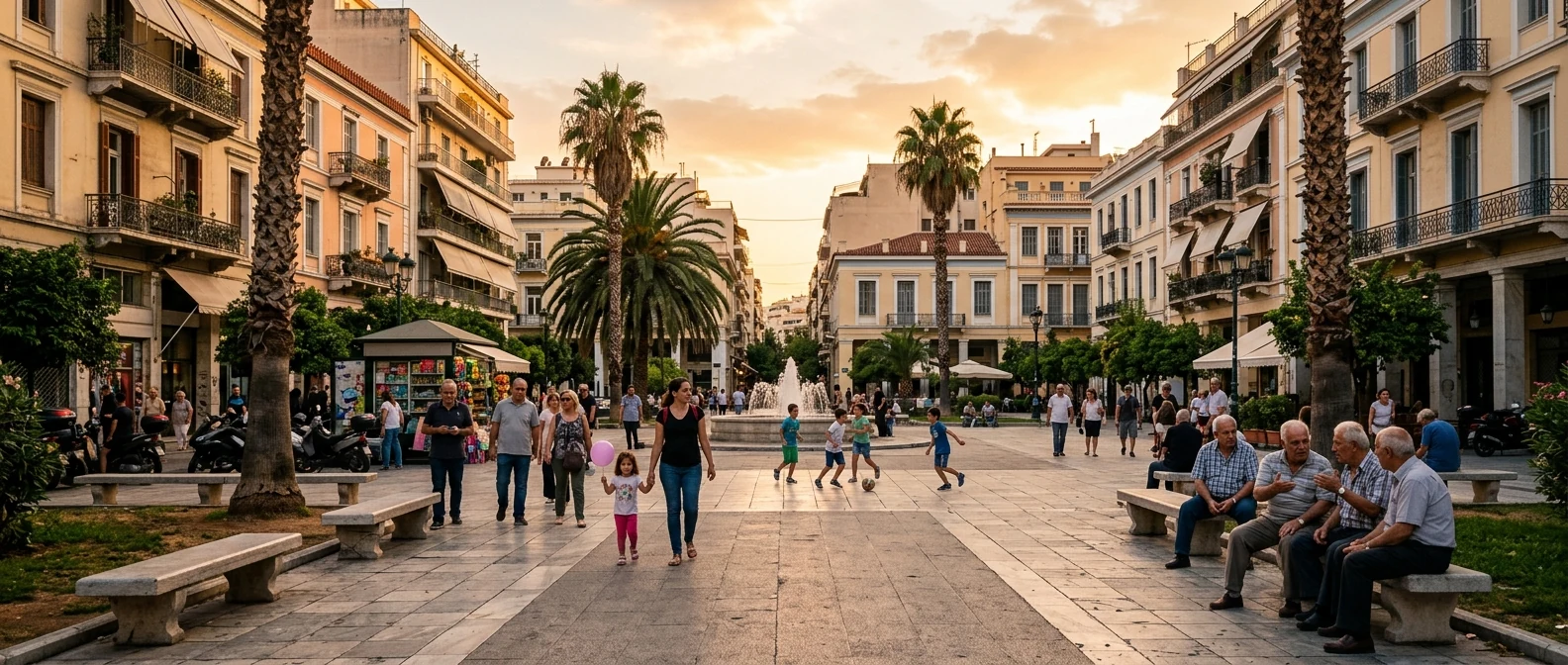
Exarchia Square (Plateía Exarchíon)
The central plaza. Cafés around the perimeter, often political graffiti at the centre, occasional gatherings or protests. Watch life happen with a freddo.
Athens Polytechnic (Politechneío)
The historic university campus on Patission, on Exarchia's eastern edge. The memorial to the 1973 uprising is inside. If the gate is open, go in respectfully.
Strefi Hill (Lófos Strefí)
A small hill above Exarchia with views over the centre. It takes about 10 minutes uphill from the square and feels more informal and local than an organised park.
Themistokleous, Solomou, Stournari streets
Streets with bookshops, small publishers, record shops, cafes and bars. Good for slow walking without a fixed plan.
Neapoli / Asklipiou
On the edge of Exarchia, toward Neapoli, the atmosphere becomes quieter. It is a useful escape if you want a calmer cafe or meal.
Cafes worth the walk
- Boúna / Kountoura / TAF (The Art Foundation) — independent cafes with strong third-wave coffee and the relaxed atmosphere many Exarchia regulars like.
- Kafenio Loukoumi — old-school neighbourhood style, Greek coffee in a briki and locals over chess.
- Vegan and ethical cafes — Exarchia has many vegan options in the centre. See the vegan Athens guide.
- Prefer independent cafes. Chains exist on the edges, but the neighbourhood's character shows more clearly in smaller places.
Eating in Exarchia
€8-€15
Souvlaki / pita meal at a neighbourhood spot.
€10-€18
Vegan / vegetarian lunch at one of the dedicated spots.
€18-€30
Sit-down dinner at a meze or modern Greek taverna.
€2-€4
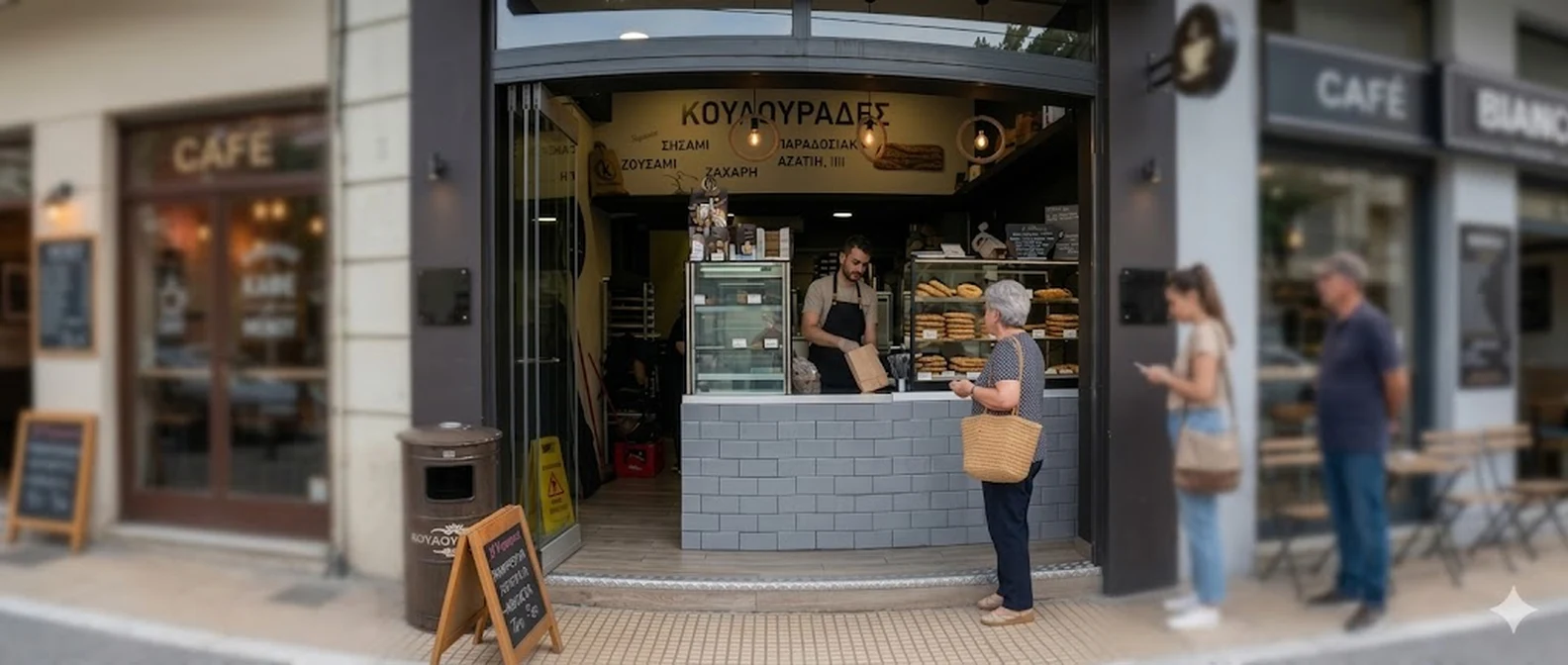
Spanakopita or cheese pie from a corner bakery, usually cheaper than in the more touristy centre.
Street art walk
In Exarchia you will see a lot of graffiti, posters, stencils and large murals. Walk Themistokleous, Stournari, Tositsa, Charilaou Trikoupi and Solomou at a slow pace. Photographing the walls is common, but ask before photographing people or groups.
Safety reality (the honest version)
Is Exarchia safe?
During the day and in the early evening, most visitors move around Exarchia without problems. The neighbourhood has a strong political reputation and sometimes hosts gatherings, so it still calls for ordinary city awareness and a quick check of the news on anniversary dates.
- Daytime and early evening: cafes, shops, students, residents and visitors keep the streets active.
- Late at night: some streets quiet down. Stay around Exarchia Square, Themistokleous and the main streets with bars and small venues.
- Demonstrations occasionally close streets, especially around 17 November and 6 December. On those dates, check the news before visiting; otherwise the neighbourhood is usually calm.
- Watch your wallet and phone as you would in any central Athens neighbourhood.
- If a march or tense moment feels uncomfortable, change route and keep walking toward Patission or Omonia.
The bookshops
Exarchia's bookshops range from political/anarchist presses to academic to mainstream literary. Worth exploring:
- Politeia — large, mainstream-academic, multiple branches near the Polytechnic.
- Lemoni — independent, eclectic, small.
- Anarchist / radical bookshops — several on Themistokleous and side streets, with English-language sections.
- Records / vinyl — small specialist shops on Solomou Street.
Exarchia at night
After 21:00, Exarchia changes rhythm. Cafes stay full, bars open up more and small music venues play jazz, punk, rock or Greek repertoire. In many places, entry is around €5-€10 or included with a drink.
Getting back to Victoria
- Walk back via the same route — 15-18 minutes. Pleasant in evening, lighter traffic.
- Metro — Omonoia (Line 1 or 2) is 10 min walk south of Exarchia Square; Victoria is 1 stop on Line 1.
- Taxi — €5-€7 from Exarchia to Victoria. Use an app if you do not speak Greek.
- Bus 224 — runs through Exarchia toward Patission; useful late at night when walking feels long.
How to get to Angel Athens (Ioulianou 50)
From Exarchia Square, walk north via Themistokleous → Tositsa → Patission → Victoria Square → Ioulianou 50. It is the same route in reverse and takes about 15-18 minutes. Alternatively, take bus 224 or a taxi. Ioulianou 50 works well as a base if you want Exarchia close, but not right outside your door.
FAQ
Are protests dangerous to bystanders?
Most marches pass without problems for passers-by, but they are not a sightseeing attraction. If you see a gathering, do not walk into the crowd. If there is tension or tear gas, move away toward a main road.
Is Exarchia gentrifying?
Yes, to some extent. Property prices have risen, tourism has grown and some older spots have changed. Even so, the political and independent character of the neighbourhood is still visible.
Best time to visit?
Late afternoon, around 16:00-19:00. There is still daylight for street art, the cafes fill up and you can continue for food or drinks.
Is the Polytechnic open?
The site is often open during weekday daytime hours, but that can change. Respect the memorial and avoid photographing students or people without permission.
What about Sunday?
Quieter than weekdays — many independent shops close, but cafés and tavernas remain open. Good for a peaceful walk.
Sources:
— Kathy