The walk from Victoria
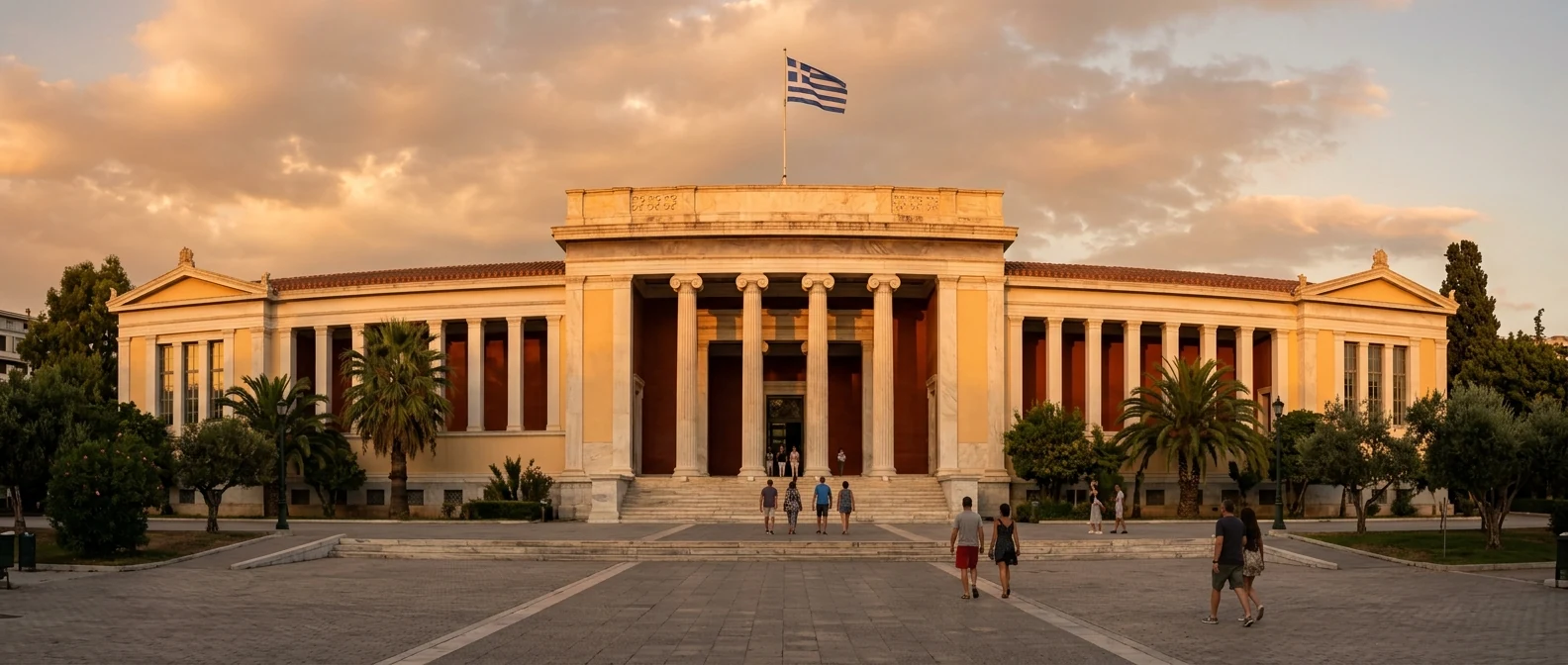
From Victoria Square and the Heyden area to the National Archaeological Museum at 44 Patission, the walk is short and almost flat:
- Start toward Patission from Heyden or 3 September Street.
- Reach Patission / 28th October Street, the main road running toward the centre.
- Turn south on Patission. The museum's neoclassical facade appears a little farther down on the left.
- Cross at the lights toward the entrance. The main entrance sits behind the forecourt.
- Allow 8-10 minutes at a normal pace.
The museum, in one paragraph
The National Archaeological Museum is a key museum for ancient Greek art and antiquity. Its collections include Cycladic figurines, Mycenaean finds, the so-called Mask of Agamemnon, Archaic and Classical sculpture, the Antikythera Mechanism, Hellenistic and Roman works, Egyptian antiquities and pottery. The collection is large, so for a meaningful first visit allow at least 2.5-4 hours. See the top exhibits guide.
📍 From Angels Athens to National Archaeological Museum
See the route at a glance from Ioulianou 50. Drag the map and zoom in for details.
Tickets and entry
€12 / €6
Full / reduced ticket, according to the museum's current policy. Check the official site before you go.
Free entry days
There are selected free-entry days, including 18 May and 28 October. See the free museum days guide.
08:30–20:00
Typical summer hours, with seasonal changes. Winter hours are shorter. Always check the official site.
Closed
Closed on major holidays such as 1 January, 25 March, Easter Sunday, 1 May and Christmas. Some holidays run on reduced hours.
Why it is worth going on foot
- It really is close. You do not need the metro, a taxi or any waiting. From a morning coffee in the neighbourhood, you can be at the museum entrance a few minutes later.
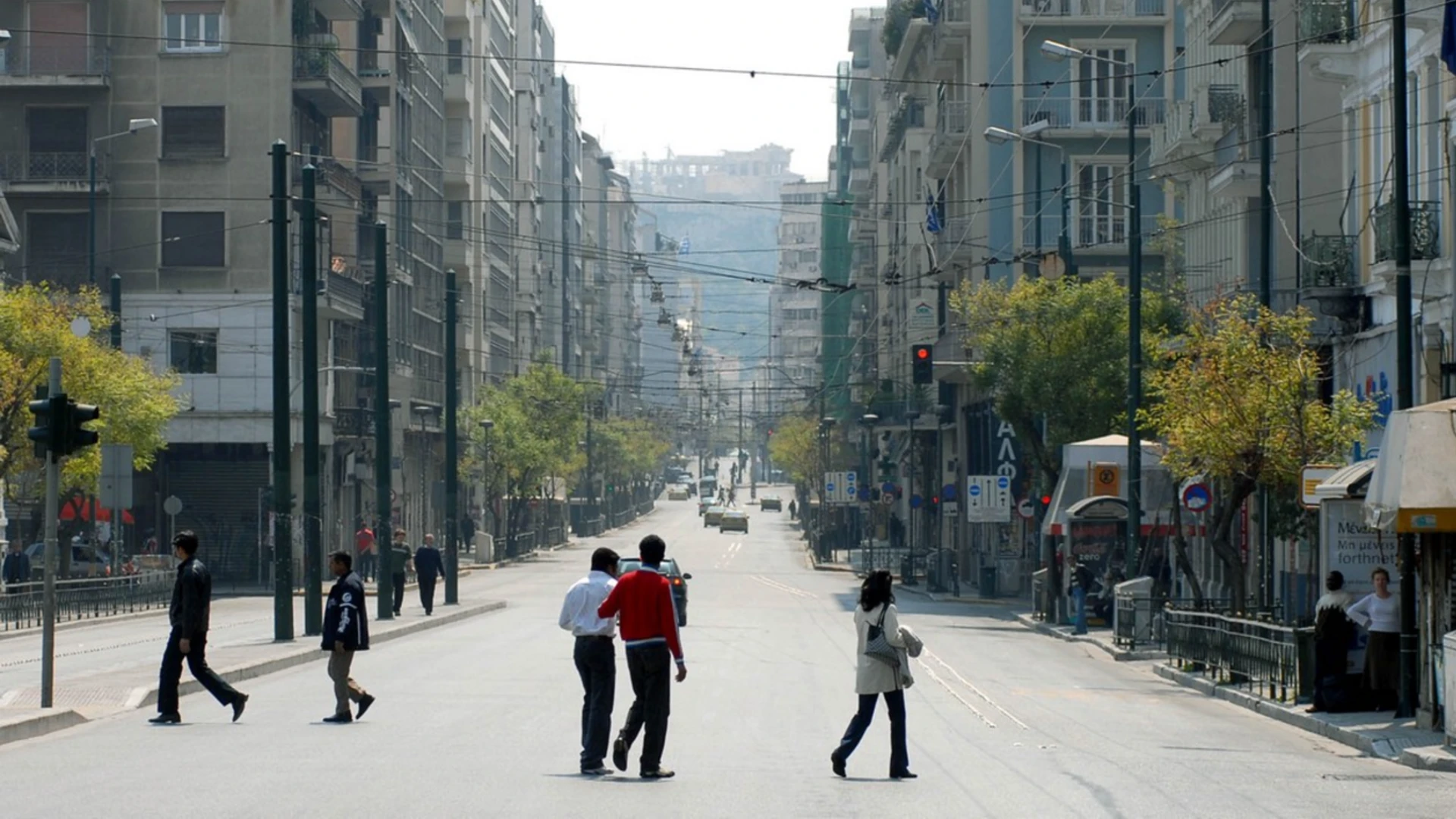
- Patission shows everyday Athens. On the way you see traces of neoclassical Athens, 20th-century apartment buildings, buses, bakeries and the movement of a big central avenue.
- You can split the visit. If the museum feels heavy, it is easy to come back another day for a second pass through specific rooms.
Exhibits worth your time
The Mask of Agamemnon
A Mycenaean gold funerary mask from the 16th century BC, found by Schliemann at Mycenae in 1876. The link to Agamemnon is a 19th-century interpretation; the mask is older than the period usually associated with the Trojan War.
The Antikythera Mechanism
A bronze astronomical calculator, probably from the 2nd-1st century BC, recovered from the Antikythera shipwreck in 1901. Its complexity still impresses historians of technology.
The Artemision Bronzes
The "Zeus or Poseidon" and the Jockey of Artemision are among the best-known surviving ancient bronzes. Recovered from shipwrecks, they show how demanding large-scale bronze casting was.
Cycladic figurines
Marble figurines from the Early Bronze Age in the Cyclades. Their stripped-down form influenced the way several 20th-century artists looked at ancient art.
The Kouros statues
Life-size male statues from the Archaic period, including the Kouros of Sounio and the Kouros of Anavyssos. They are a good starting point for seeing how Greek sculpture gradually changes before the Classical period.
The Thera frescoes
Bronze Age frescoes from Akrotiri on Santorini, around 1600 BC. You see colour, sea life and scenes of everyday activity that give a different feel to the prehistoric collection.
Visit planning
How to organise a 3-hour visit
- Hour 1 — Prehistoric and Mycenaean wing. Cycladic figurines, Mycenae, gold finds and the so-called Mask of Agamemnon.
- Hour 2 — Sculpture rooms. Kouroi, Classical sculpture, the Artemision bronzes and other key statues.
- Hour 3 — Bronzes, Antikythera, pottery. Keep time for the Antikythera Mechanism and, if open, the Thera frescoes.
- If time is short: leave the Egyptian wing, coins, jewellery and much of the Roman section for another visit.
Eating before or after
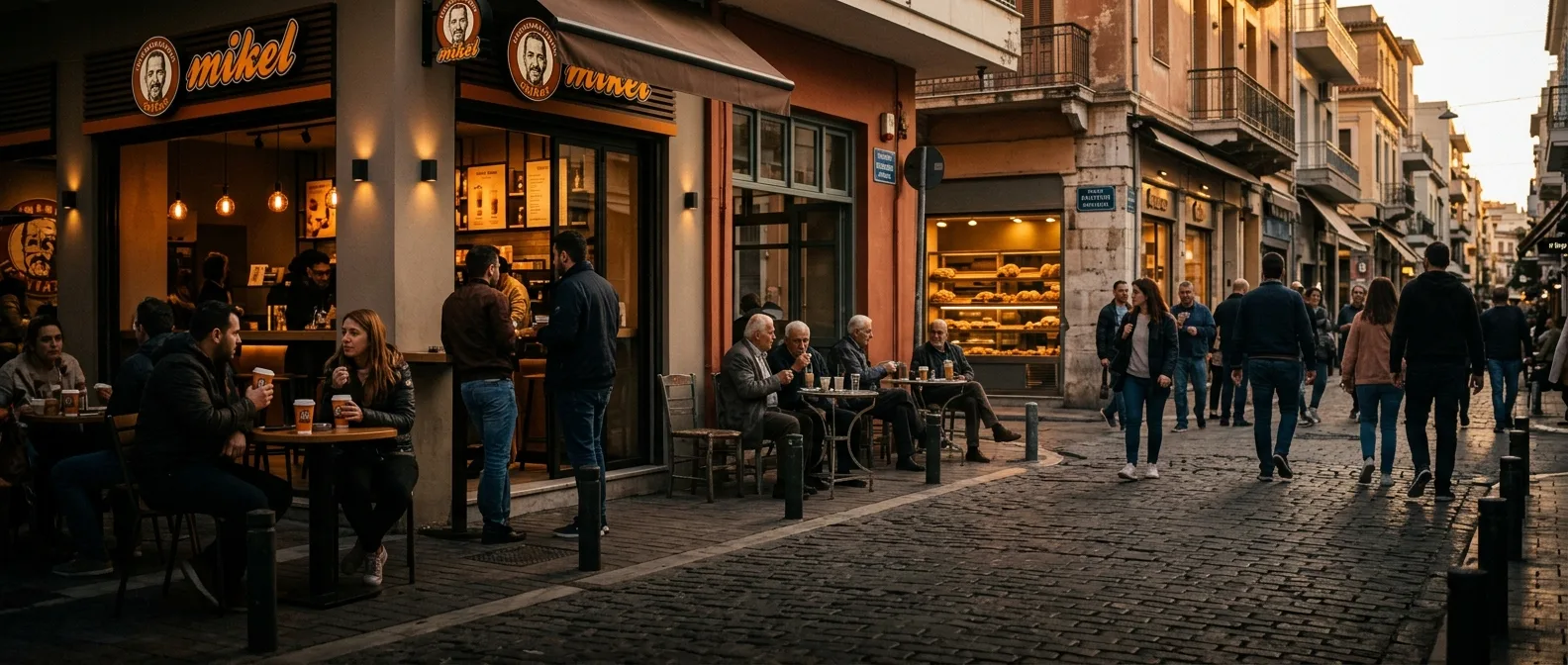
- Before: pick up a spanakopita or koulouri and a coffee from a neighbourhood bakery if you want something quick before going in.
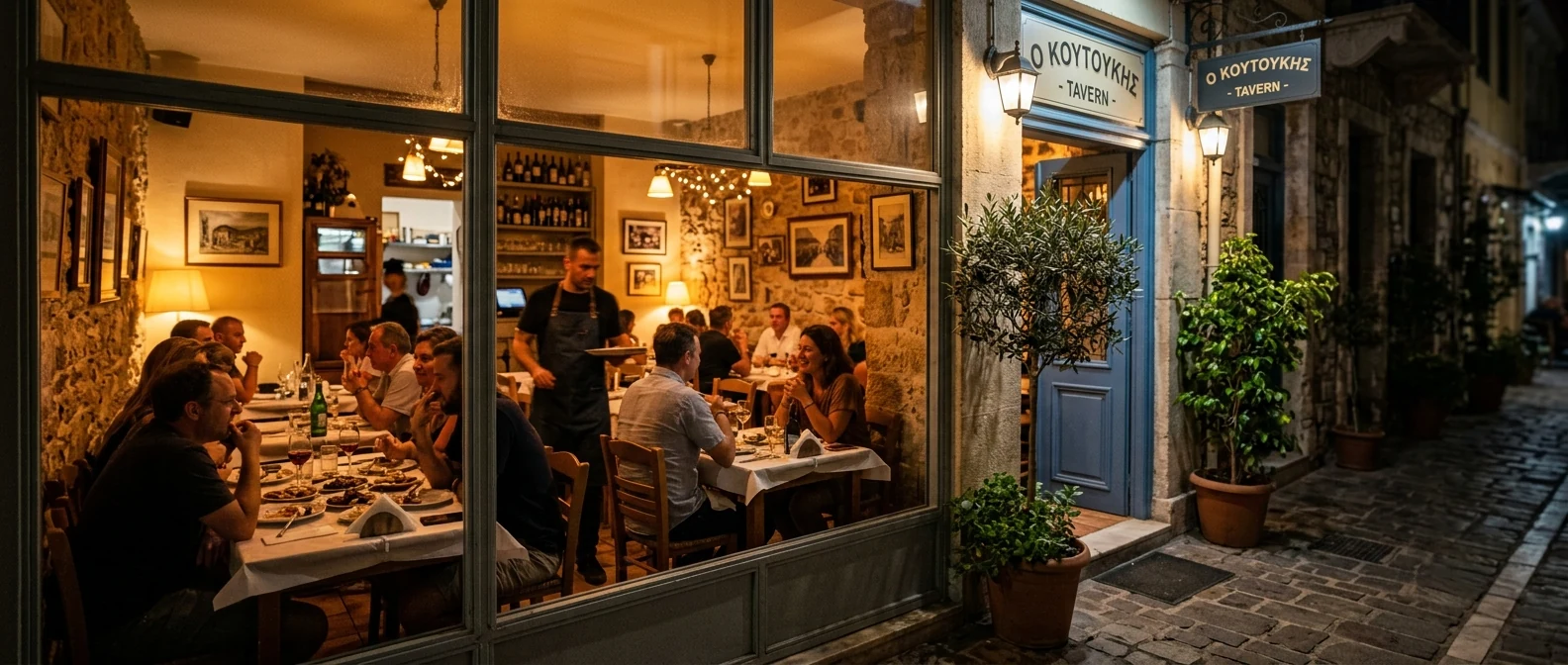
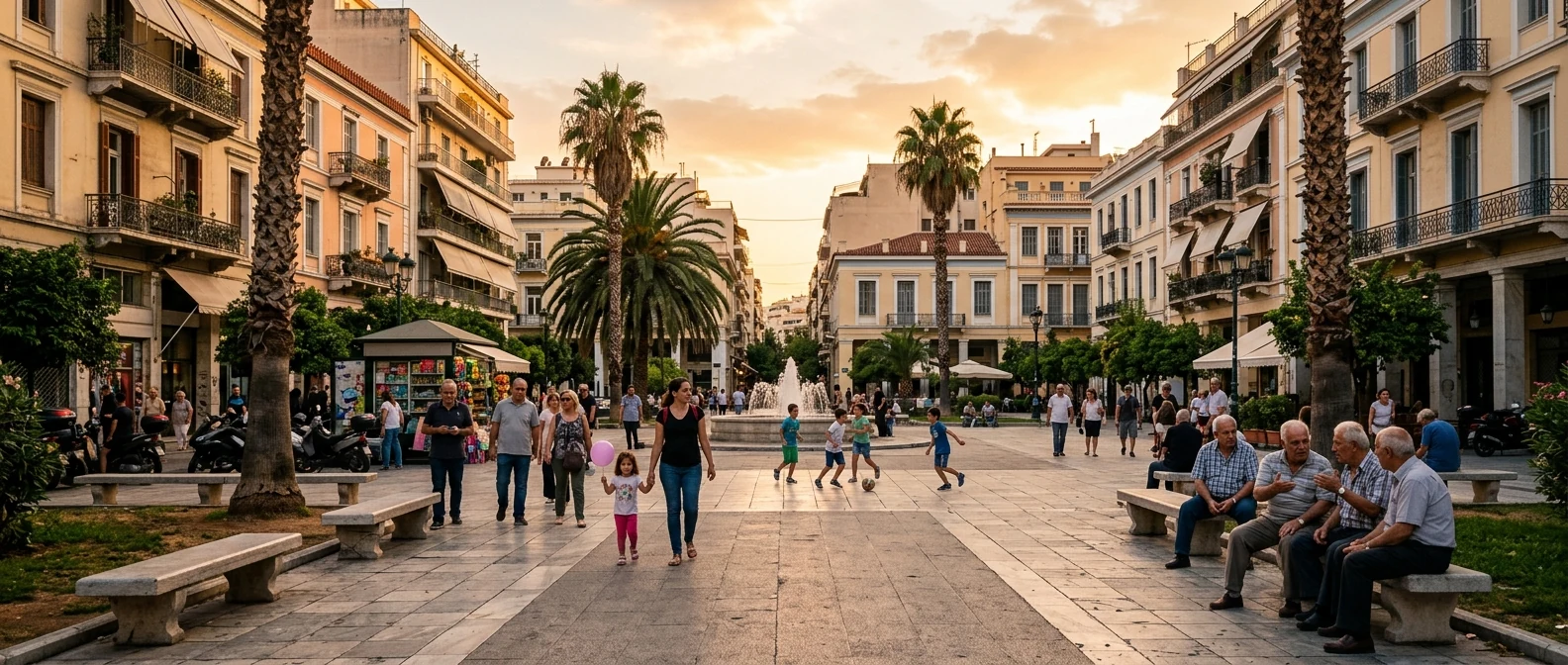
- After: walk back to Victoria for lunch in a local taverna or cafe.
- Inside the museum: there is a cafe in the courtyard for coffee, water and light snacks.
- Small detour: on the way back, you can head toward Mavromichali or Kallidromiou for coffee on the edge of Exarchia. See the Exarchia walk guide.
Photography rules
Personal photography without flash is allowed through most of the museum. Tripods, professional equipment or commercial use require prior permission. Do not touch sculptures or cases; the rules are taken seriously.
Accessibility
The museum has gradually become more accessible. Lifts connect the main floors, although some rooms have small level changes. Staff can point out alternative routes. For a wheelchair or special assistance, contact the museum before your visit.
If you can, split the visit
The museum is large, and after about three hours concentration drops. If you are staying in Victoria, it can be more pleasant to see it in two smaller visits:
- First visit, about 3 hours: the main exhibits such as the Mask of Agamemnon, the Antikythera Mechanism, the Artemision bronzes and the Cycladic rooms.
- Second visit, 1.5-2 hours: whatever interests you more, such as pottery, the Thera frescoes, the Egyptian wing or Hellenistic and Roman sculpture.
- Cost: allow for a second ticket unless you catch a free-entry day or a special re-entry policy.
Audio guide and tours
At the entrance there may be an audio guide or information about available tours. Private tours can be useful if you want historical context without feeling lost in the galleries. The museum shop also has official guides and catalogues.
Back to Angel Athens (Ioulianou 50)
From the museum exit, walk north on Patission toward Victoria Square and continue via Heyden or 3 September Street to Ioulianou 50. The walk back takes about 8-10 minutes. If you want to see the museum comfortably, that short distance is genuinely practical.
FAQ
Is the museum kid-friendly?
Yes, especially for children who already care about mythology or history. For younger children, keep the route shorter and plan a break at the cafe.
How does it compare to the Acropolis Museum?
The two museums have different focuses. The Acropolis Museum is dedicated mainly to finds from the Acropolis and the Parthenon. The National Archaeological Museum covers a much wider range of ancient Greek art, from prehistory to Roman times. See the Acropolis Museum guide.
Combined ticket?
The Athens combined archaeological-sites ticket does not include the National Archaeological Museum. The museum has its own ticket.
Can I leave luggage?
There is a cloakroom for small bags and coats, but large suitcases are usually not accepted. It is better to leave them at your accommodation.
Best time of day to visit?
Opening time is usually the quietest. Later in the morning more groups arrive. Summer afternoons can also be calmer, as long as you confirm the day's opening hours.
Sources:
— Kathy