📞 The essential numbers
112 — Pan-EU Emergency
Police, ambulance, fire. English-speaking operators. Free from any phone (incl. blocked SIM). Use this first.
166 — Ambulance (EKAB)
Direct ambulance service. Greek-speaking primarily; ask for English. Free.
100 — Hellenic Police
Direct police number. For non-emergency: theft reports, lost documents.
1571 — Tourist Police
Multilingual. Tourist-specific issues, scams, lost items, info. Highly effective.
199 — Fire Service
Direct fire service. For wildfires + structural fires. Free.
1414 — Coast Guard
Maritime emergencies. Beach, ferry, swimmer in distress.
🏥 Hospitals — when to go where
Public vs private hospitals
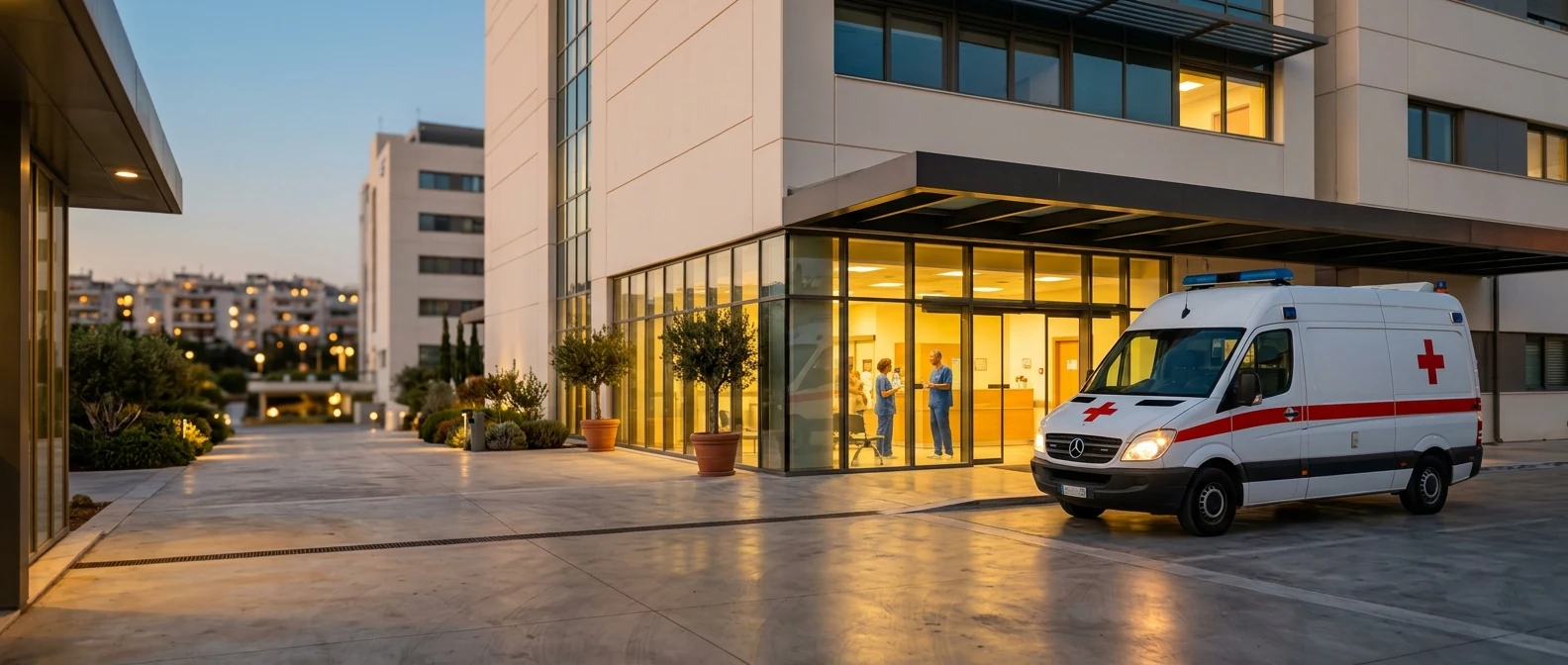
Greece has both public hospitals (ESY) + private clinics. Public hospitals provide free emergency care to anyone (incl. tourists, with EU EHIC card or insurance). Quality of medical care is generally good but waiting times in ER can be long, and conditions vary. Private hospitals charge for everything but are faster, more comfortable, and have English-speaking staff. For serious emergencies (heart attack, stroke, severe trauma) call 112 — they will route to nearest appropriate hospital. For non-emergency or moderate issues, private clinics often the better tourist option.
🏥 Major hospitals in Athens
- Evangelismós (public) — central, near Kolonáki. Major teaching hospital. Excellent quality. ER busy.
- Hippokratíon (public) — large central hospital. Good quality.
- Athens General Hospital "G. Genimatas" (public) — west Athens. Major.
- Aglaía Kyriakou (public) — children's hospital, near central Athens.
- Mitéra (private) — Maroúsi, premier private hospital. Maternity + general. English-speaking.
- Iaso (private) — Maroúsi, premier maternity + general private hospital.
- Hygeia (private) — Maroúsi, large private. General + specialised.
- Bioiatriki (private) — multiple locations, diagnostic + outpatient.
- Errikos Dynan Hospital Center (private) — central Athens.
- Athens Medical Center (private) — multiple branches, comprehensive.
💉 What's covered for EU + non-EU travellers
- EU citizens with EHIC card (European Health Insurance Card) — same care as Greek citizens at public hospitals: free emergency care + reduced costs for treatment. Bring physical card or app version.
- Non-EU + non-EHIC: pay for emergency care at public hospitals (still relatively low, €50-€200 typical visit). Travel insurance reimburses.
- Private hospitals: full payment, then claim from insurance. Travel insurance recommended.
- Prescription medicines: pharmacies (farmakío) widely available. Some require prescription; many over-counter that need prescription elsewhere.
💊 Pharmacies (farmakío)
- Easy to find — green cross sign. Multiple per neighbourhood.
- English-speaking — most pharmacists in tourist areas. Pharmacy degree-trained, give competent advice.
- Hours: typical 08:30-21:00 weekdays; some Saturday morning. Pharmacy "on-call" rotation provides 24/7 service in each area.
- "Διανυκτερεύον" (overnight pharmacy): posted on every pharmacy door listing nearest pharmacy currently on overnight + Sunday duty. Apps + websites also list (efimerevontes.gr).
- Prescriptions: bring photo of bottle/label if possible. Pharmacist can often dispense if you have the chemical name + dose.
- OTC items widely available: ibuprofen, paracetamol, antacids, basic antibiotics in some cases (regulations changing — typically need Rx now).
🦷 Dentist + specialised care
- Private dentists — English-speaking common in central + tourist Athens. €30-€80 for emergency consultation.
- SOS Médicins — international house-call medical service in Athens. €100-€200 for visit. Speak French + English.
- Hotel doctor — major hotels have arrangements with private doctors who can visit room. Useful for moderate issues.
- Telemedicine: insurance-app remote consultation for minor concerns.
📊 At a glance
112
Universal EU emergency. English-speaking. Use first.
EHIC card
Free emergency care for EU citizens at public hospitals.
Travel insurance
Strongly recommended for all travellers. Covers private hospital + repatriation.
Pharmacies = competent
Pharmacists provide first-line advice for minor issues.
🛂 Lost passport / consular emergencies
- Report theft to police immediately — get official report.
- Contact your embassy/consulate:
- US Embassy Athens: +30 210 720 2414
- UK Embassy Athens: +30 210 727 2600
- Canadian Embassy: +30 210 727 3400
- Australian Embassy: +30 210 870 4000
- Bring: police report, photo ID copy, proof of citizenship (driver's license + birth certificate copy useful), passport photos.
- Emergency travel document issued for return journey if needed. 24-72 h typically.
🦟 Common medical issues for tourists
- Heat illness / dehydration — see summer heat guide. Most common July-August.
- Sunburn — Greek sun is intense. Pharmacies have aftersun + treatments.
- Stomach upset — usually mild + 24 h self-limiting. Pharmacy products work.
- Mosquito bites — summer evenings. Repellent + antihistamine cream from pharmacy.
- Sea urchin spines — beach injury. Pharmacist or doctor can extract.
- Cuts + scrapes — pharmacy first aid; hospital ER for deep cuts.
- Heatstroke — medical emergency, call 112.
- Cardiovascular events — major hospitals have excellent cardiology.
- Allergic reactions — bring own antihistamines + EpiPen.
📅 If something happens — the playbook
Step-by-step for medical emergency
- Call 112. State language preference + location + situation. Operator routes appropriately.
- If conscious + ambulatory: hotel can call private hospital admissions or call private taxi.
- For pharmacy-level issues: walk in to any pharmacy, describe problem.
- Insurance card: bring to all medical interactions.
- Documentation: keep receipts + medical reports for insurance claims.
- Repatriation: travel insurance handles serious emergencies; verify policy details before travel.
🛡️ Practical preparedness
- Travel insurance — not optional. Verify medical + repatriation cover.
- Photo of EHIC card / insurance card on phone.
- Photocopy passport — keep separate from original.
- Embassy phone in phone — pre-saved.
- Translation apps (Google Translate, Greek voice + camera) for medical conversations.
- Common medications — bring small supply of regular meds + paracetamol/ibuprofen.
- Allergies/medical conditions — translated card in Greek (apps generate).
- Hotel front desk — first stop for non-emergency questions; usually English-speaking + helpful.
🎯 What NOT to do
- Don't ignore symptoms hoping they pass — better to see pharmacist or doctor early.
- Don't pay for "private ambulance" via random taxi/car — call 112 for legitimate ambulance.
- Don't avoid Greek hospitals from fear — public ESY hospitals are competent + free in emergencies for EU.
- Don't drive after alcohol — Greek police strict; legal limit 0.5g/L.
- Don't mix unknown medicines — confirm with pharmacist if combining.
🎯 FAQ
Is medical care good in Greece?
Generally yes. Public ESY is competent + free for EU emergencies. Private clinics excellent. Specialist care (cardiology, oncology) world-class.
Will doctors speak English?
Most younger doctors + hospital staff in Athens speak good English. Pharmacy + younger urban Greeks fluent. Older/rural less reliable.
Travel insurance — necessary?
Strongly recommended. Major hospital procedures + repatriation costs are unaffordable without insurance.
Lost prescription — replacement?
Pharmacies often dispense regular medications without Rx if you have label/photo + consultation with pharmacist. For controlled substances, see Greek doctor.
How quick is ambulance response?
Central Athens 5-15 min typically. Outside urban areas longer. EKAB (166) operates competent service.
Best private hospital for emergency?
Mitéra (Maroúsi) + Iaso (Maroúsi) + Athens Medical Center are top-tier. English-speaking, modern, comprehensive.
Sources:
— Kathy