The size comes first
Crete covers 8,336 km². It is the largest Greek island and the fifth-largest in the Mediterranean. That changes how you travel. The Heraklion-Chania drive takes about 2 hours on the northern road, depending on traffic and stops, and end to end can mean 4 to 5 hours of driving. The southern routes are slower and often more beautiful, but also more tiring. With a population of around 635,000, Crete does not live only in summer: Heraklion, Chania, Rethymno and Agios Nikolaos all have their own year-round rhythm.
East or west, in simple terms
East — Heraklion and Lasithi
Drier in feel, more tied to archaeology, and in some places more organised for tourism. This is the side of Knossos, the Heraklion Museum, Lasithi, Agios Nikolaos, Sitia and Vai.
West — Chania and Rethymno
More mountainous, greener in several places, and more tied to the Venetian image. This is the side of Chania, Rethymno, the White Mountains, the gorges, Sfakia, Balos, Elafonissi and Falassarna.
East Crete
- Knossos: about 5 km south of Heraklion. It is the best-known Minoan site, and Arthur Evans's reconstruction is still debated. Even so, the site has real power.
- Heraklion Archaeological Museum: one of the most important museums in Greece for the Minoan period.
- Agios Nikolaos and Mirabello Bay: a calmer, more maritime part of the island.
- Spinalonga: opposite Elounda, carrying heavy history as a former leper colony.
- Lasithi Plateau: old windmills, agricultural movement and the Dikteon Cave for those who want the Zeus myth too.
- Sitia and Vai: the far eastern end needs time.
- The east as a whole: it works best when it is not trying to prove that it can also fit the west.
West Crete
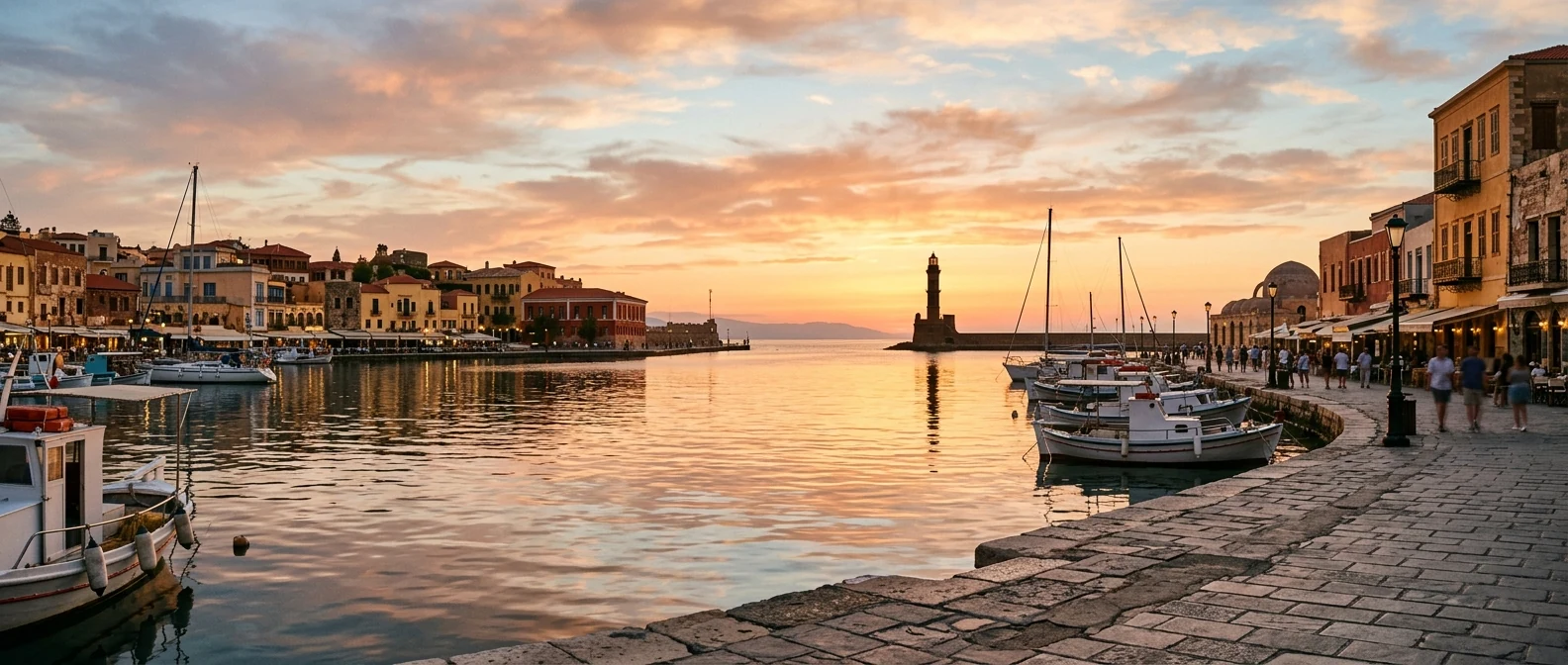
- Chania: the main reason many travellers choose the west. Beautiful, yes, but also crowded and more expensive in summer.
- Rethymno: smaller and often easier to manage. A good middle stop between Chania and Heraklion.
- Samaria Gorge: about 16 km long and usually open from May to October. It is a demanding hike, not a casual stroll.
- Balos and Elafonissi: iconic places, but they need good timing and realism because they fill up in summer.
- Falassarna: a broader and easier choice if you want space and a good sunset.
- The White Mountains: dozens of peaks above 2,000 metres, with Pachnes at 2,453 metres.
- Sfakia and Loutro: a stricter, stonier and less easy side of Crete.
- The west as a whole: it suits travellers who want villages, mountain roads and more direct contact with the landscape.
Four things to know before you choose
8,336 km²
Crete is the size of a small country.
~260 km
Length from east to west.
2 airports
Heraklion and Chania for most travellers.
7-10 days
A good amount of time for one side without rushing.
🍽️ Cretan cuisine
The Cretan table
Cretan food works best as a table, not a checklist: olive oil, rusks, tomatoes, greens, cheeses, meat when there is a reason, and raki at the end. Dakos, kalitsounia, graviera, mizithra, anthotyro, antikristo and gamopilafo all belong here. Raki or tsikoudia is not a dare for tourists. It is a gesture of hospitality and is best taken slowly.
📜 History layers
- Neolithic (~7000 BCE): earliest farming.
- Minoan civilisation (~2700-1100 BCE): Europe's first advanced culture. Knossos, Phaistos, Malia, Zakros palaces. Linear A + B scripts.
- Mycenaean takeover (~1450 BCE): possibly after Thera/Santorini eruption. Linear B = early Greek.
- Greek + Roman + Byzantine: long periods.
- Arab emirate (824-961 CE): Crete briefly Muslim.
- Venetian Crete (1204-1669): cultural flourishing. El Greco born Heraklion 1541. Venice fortified harbours.
- Ottoman Crete (1669-1898): mosques + minarets added.
- Independence + union with Greece (1898 / 1913).
- WWII (1941): Battle of Crete — German airborne invasion + Cretan resistance. Heavy reprisals + village destructions.
Getting around Crete
- A car is almost essential, unless the trip stays strictly in one city and a few organised outings.
- The northern road is the main road spine of the island and links Chania, Rethymno, Heraklion and Agios Nikolaos.
- The routes toward the south cross mountains. They are slower and more tiring, but often lead to the best parts of Crete.
- KTEL buses work well between the larger cities and the main routes, but a car gives much more freedom for villages, gorges and southern beaches.
From Athens to Crete
- The two main gateways are Heraklion Airport (HER) and Chania Airport (CHQ). The flight from Athens takes about 1 hour.
- From Ioulianou 50 in Athens, walk to Victoria, take Line 1 to Monastiraki and then Line 3 to the airport. Allow about 1 hour, depending on the waiting time.
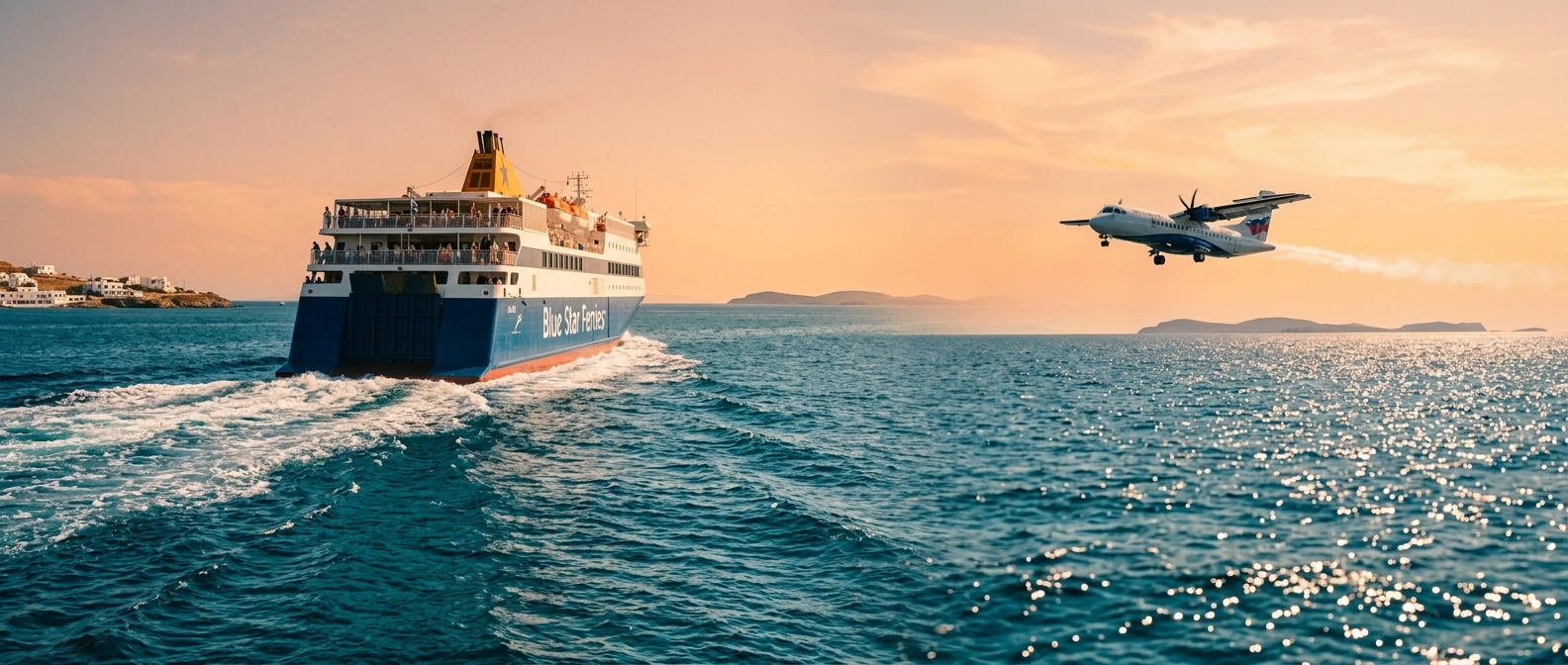
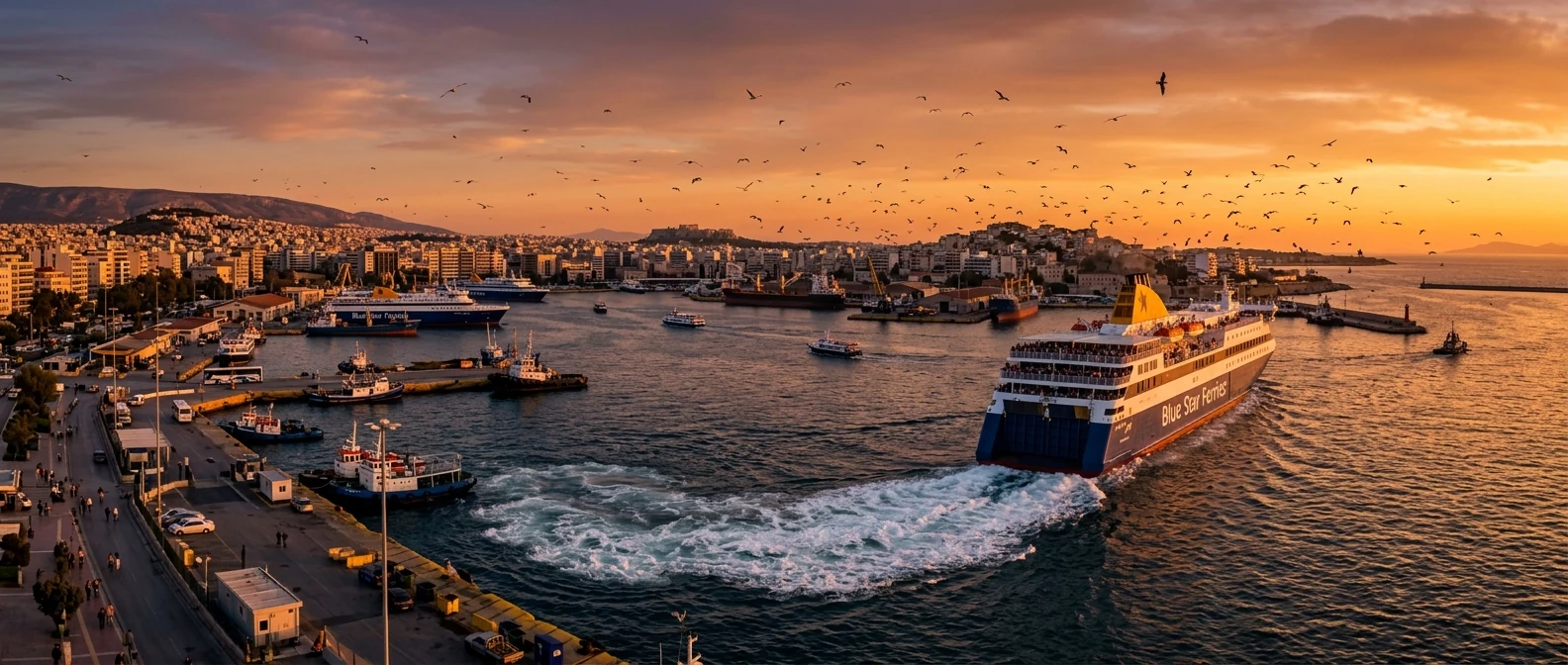
- The ferry from Piraeus to Heraklion or Chania is the classic choice for travellers who want an overnight trip or who are taking a car. The journey is about 9 hours.
- If your goal is the east, Heraklion is the better arrival point. If your goal is the west, Chania saves you hours on the road.
When it works best
- April and May are good months for hiking, villages and archaeological sites.
- Samaria Gorge usually opens in May, depending on conditions.
- June and September are often the most balanced months for sea and moving around.
- July and August mean full season, heat and more people.
- October can still be good, especially in the south, but several tourist services begin to reduce after mid-month.
Which side suits which trip
- For a first meeting with Minoan Crete: the east gives a cleaner line through Heraklion, Knossos, the museum, Phaistos or Lasithi, and Agios Nikolaos.
- For cities with atmosphere, gorges and mountain interior: the west usually fits better.
- For families who want easier beaches and organised infrastructure: the eastern and northern zone often works more easily.
- For couples or travellers who want villages, mountain roads and slower days: the west gives more space.
- If the trip is under 7 days: it is usually better to stay on one side.
A realistic week
- Day 1: arrive in Heraklion and stay around the museum and the harbour.
- Day 2: Knossos and either Phaistos or a southern stretch.
- Day 3: Lasithi or Agios Nikolaos, depending on the rhythm you want.
- Day 4: move west, with Rethymno as the natural break on the way.
- Day 5: Chania and a slower day in town.
- Day 6: Samaria, Imbros or a western-beach day with realistic timing.
- Day 7: one last western stop and departure from Chania.
Frequently asked questions
Which side is better for a first trip?
For archaeology, Heraklion and the east. For Chania, gorges and a more mountainous image, the west. If the trip is under 7 days, staying on one side usually works better.
How many days does Crete need?
Five days is the minimum for one side. Seven to ten days gives a better rhythm. Two weeks lets you do east and west without rushing.
Do you need a car?
Yes, for most trips. Without a car, you can manage a city stay and a few organised outings. With a car, villages, southern beaches and mountain routes open up properly.
Which is the best beach?
There is no single answer. Balos and Elafonissi are the most photographed. Falassarna is practical and large. Vai has the palm forest. Preveli gives you the river and the southern feel.
Is Crete safe?
Yes. The main risk for travellers is driving: long distances, bends, farm vehicles, motorbikes and animals on rural roads.
What about raki?
Raki or tsikoudia often comes at the end of the meal as a gesture from the house. It is strong and it is best taken slowly, in a small amount.
Sources:
— Kathy